South Korea's Foreign Exchange Reserves Decline in May
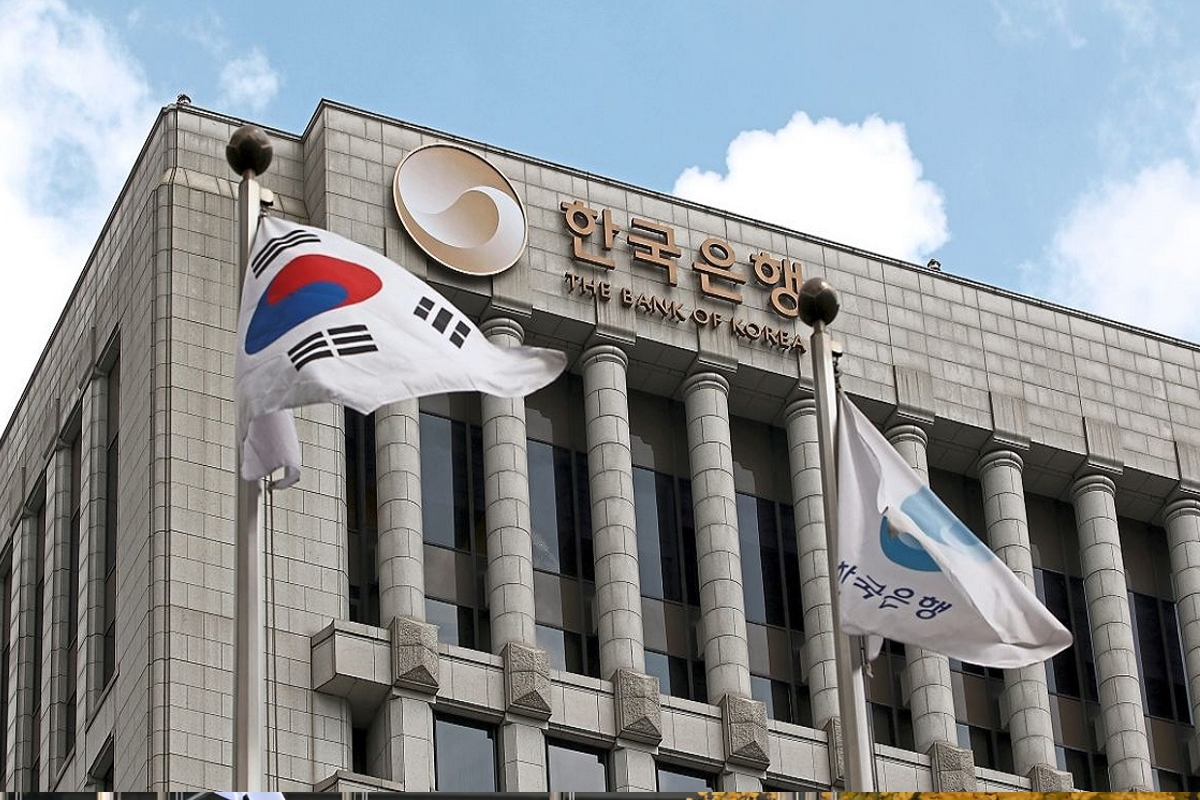
South Korea's foreign exchange reserves fell by the end of May due to exchange rate management measures.
Translated by Alqyas from Al-Jarida — Original source
South Korea’s foreign exchange reserves declined slightly last month as authorities attempted to manage currency exchange rate volatility.
A report released by the Bank of Korea on Thursday showed that the country’s foreign exchange reserves stood at $426.99 billion at the end of May, a decrease of $880 million from the previous month.
South Korean news agency Yonhap noted that foreign exchange reserves had risen by $4.22 billion in April, following a $3.97 billion drop in March, which marked the largest monthly decline in about a year.
The central bank stated that the monthly decline in foreign exchange reserves last month was due to authorities’ measures to stabilize the market, such as foreign currency swaps with the National Pension Service.
Since May 15, the Korean won has traded against the U.S. dollar above the psychologically significant level of 1,500 won per dollar for foreign exchange market participants, amid ongoing tensions in the Middle East and net sales of local stocks by foreign investors.
The value of South Korea’s foreign exchange reserves, including U.S. Treasury bonds, declined by $3.39 billion from the previous month to reach $380.68 billion at the end of May, accounting for 89.2% of South Korea’s total foreign reserves.
In contrast, the value of foreign currency deposits rose by $2.59 billion to $21.35 billion, while Special Drawing Rights (SDRs) held with the International Monetary Fund (IMF) increased by $30 million to $15.78 billion. The value of gold reserves remained unchanged at $4.79 billion.
Data also showed that South Korea’s reserve position with the IMF decreased by $60 million compared to the previous month, reaching $4.4 billion at the end of last month.
At the end of April, South Korea ranked twelfth globally in terms of foreign exchange reserves, with China leading the list, followed by Japan, Switzerland, Russia, and India, according to the Bank of Korea.
