Will the Dollar Return to Below 50 Egyptian Pounds?
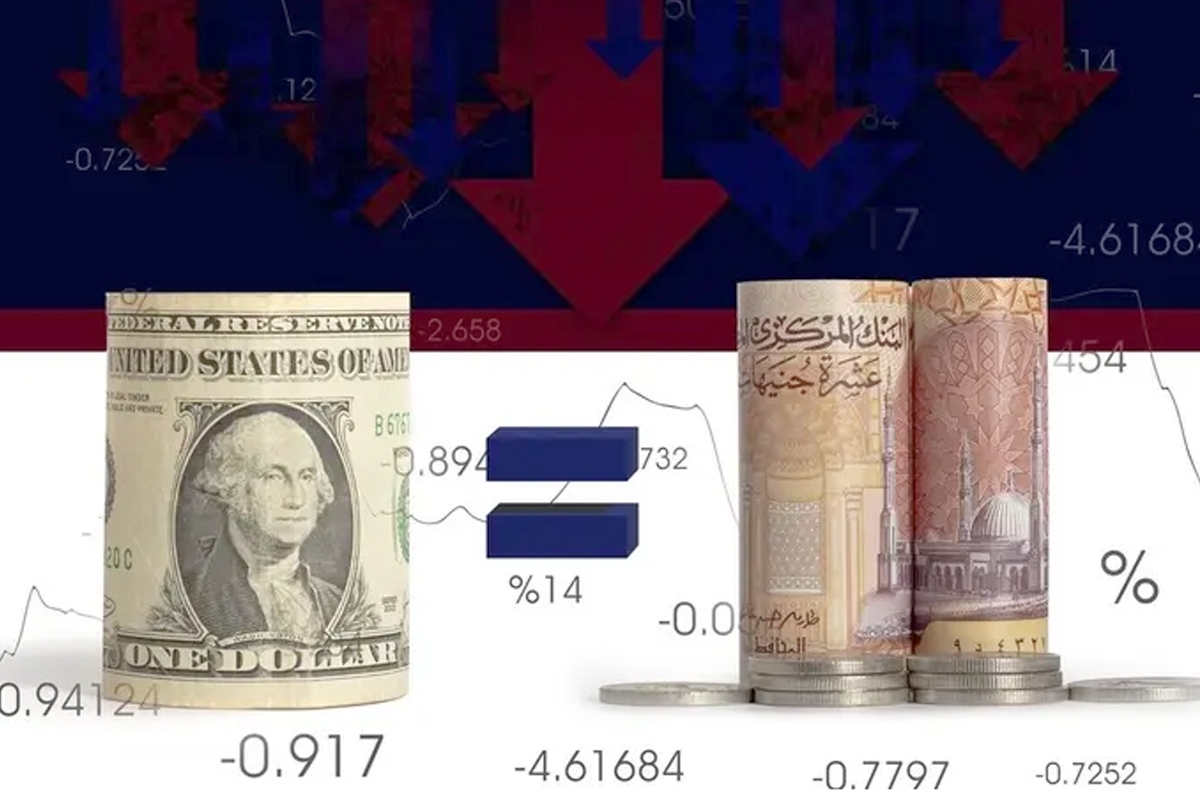
The dollar fell against the Egyptian pound following an agreement between the US and Iran, sparking expectations of its price returning below 50 pounds.
Translated by Alqyas from Al-Jarida — Original source
The US dollar fell by approximately 1.2% against the Egyptian pound to 52.3 pounds during the first 48 hours following US President Donald Trump’s announcement that Washington and Iran had completed “a significant amount of negotiation” on a memorandum of understanding regarding a peace deal that would reopen the Strait of Hormuz.
The notable decline of the US currency raised questions about the Egyptian pound’s ability to resume its recovery path and regain pre-war levels, when it traded at less than 50 pounds per dollar, especially given the improved risk appetite toward emerging markets and the prospect of renewed foreign inflows.
Since the onset of the Iran war in late February, the Egyptian pound has faced strong pressures, driven by escalating regional tensions and the exit of a portion of foreign investments in local debt instruments (“hot money”), pushing losses in the local currency to around 13.9% at the peak of pressures, before receding to approximately 11.4% as fears gradually subsided.
Hany Genina, head of research at Al Ahly Faros, stated that reaching a serious agreement ending tensions between the United States and Iran would quickly reflect on foreign investment flows to emerging markets, with the Egyptian market leading the way.
Genina told “Al Arabiya Business” that hot money remains the fastest factor in supporting the supply of foreign currency, given its investment nature based on rapid movement in search of high returns in emerging markets.
He predicted that this inflow would soon impact daily trading volumes in the interbank dollar market, which typically ranges between $200 million and $300 million on normal days, but could surge to over $1 billion in the event of strong investment inflows.
He noted that foreign investors view current dollar levels as above the fair value of the Egyptian pound, explaining that current estimates place the fair value of the US currency between 45 and 50 pounds, based on inflation differentials between Egypt, the United States, and trading partner countries.
Mahmoud Nagla, CEO of fixed income markets at Al Ahly for Financial Investments, agreed, stating that any de-escalation in the Middle East, particularly with stabilized navigation in the Strait of Hormuz or a US-Iran agreement, would positively reflect on investors’ appetite for emerging markets, including Egypt.
Nagla told “Al Arabiya Business” that dollar price movements in the Egyptian market remain primarily linked to supply and demand mechanisms, noting that new foreign investments increase the supply of dollars, pushing the US currency down against the pound.
He added: “Some foreign investors temporarily reduced their financial positions in debt investments as a hedge, but the market did not experience waves of mass exits; rather, some institutions quickly returned after fears subsided, which was already reflected in the exchange rate.”
Foreign investors recorded net purchases worth $868 million in government debt instruments in the secondary market last week, compared to over $1 billion in the preceding week, following a selling wave of $550 million two weeks prior.
Egyptian Exchange data also showed that foreigners turned to net buying of approximately $2 billion in April, compared to net sales of $4.6 billion in March.
For his part, economist and capital markets expert Mustafa Shafie said that early indicators regarding the imminent conclusion of an agreement ending the war carry positive implications for global markets, which is already evident in movements in global oil and dollar prices.
He added that the US dollar has already begun to decline against a basket of major currencies, which could positively impact the Egyptian pound as investor appetite for emerging markets improves.
He emphasized that the success and continuation of the US-Iran agreement without military escalation would facilitate the return of foreign capital flows to Egyptian debt instruments, thereby increasing the supply of US dollars and easing pressure on the foreign exchange market.
For his part, Mohamed Anis, a member of the Egyptian Association for Economics and Legislation, stated that the Egyptian pound could experience gradual improvement against the dollar if an agreement is reached to end tensions related to the Iran war, stability is restored in the Strait of Hormuz, and oil prices decline.
Anis told “Al Arabiya Business” that the Egyptian pound’s value improves with each partial return of some indirect foreign investments, reflecting the direct impact of foreign capital flows on the foreign exchange market.
He clarified that the past three months have seen increasing pressure on the Egyptian pound due to the exit of a portion of indirect foreign investments from the Egyptian government bonds market, noting that the total amount of these outflows did not exceed $10 billion.
Genina predicted that the disappearance of fears related to regional tensions would trigger a surge in foreign capital flows into Egyptian debt instruments, taking advantage of the high interest rate differential, which could push the US dollar to gradually decline to levels below 50 pounds during the third quarter of this year.
Nagla agreed, considering that a return to levels below 50 pounds per dollar is not excluded in the near future, especially with the resumption of foreign investments in the Egyptian market over the coming months.
Shafie believed that a rapid return of the US dollar to levels of 46 and 47 pounds requires full stability in regional conditions and the continuation of the agreement without any new escalation, stating that reaching pre-war levels might require two or three months of actual stability.
As for Anis, he ruled out the possibility of the US dollar returning to pre-war levels near 46.5 pounds, considering that continued de-escalation and the return of indirect foreign investments could push the US currency to decline toward levels touching 50 pounds in the near future.
