Finance Minister: Strengthening Gulf Economic Integration to Face Regional Challenges
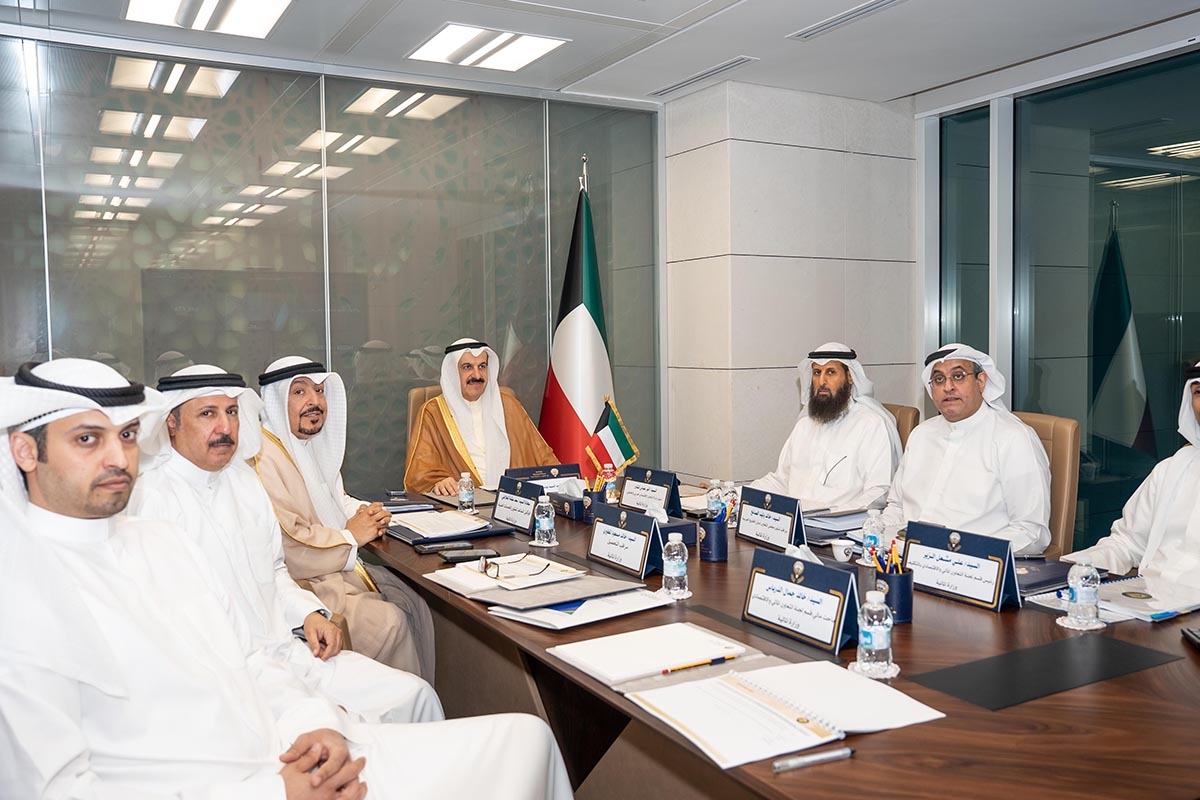
The Finance Minister emphasized the importance of economic integration to face regional challenges.
Translated by Alqyas from Al-Jarida — Original source
The Financial and Economic Cooperation Committee of the Gulf Cooperation Council (GCC) held its 125th meeting via video conference, presided over by Bahrain’s Minister of Finance and National Economy, Sheikh Salman bin Khalifa Al Khalifa, with the participation of the finance ministers of the GCC states, GCC Secretary-General Jassem Al-Budaiwi, and the Kuwaiti delegation led by Minister of Finance Yaqoob Al-Rufai.
In his opening remarks, Bahrain’s Minister of Finance and National Economy welcomed the participants, emphasizing the importance of continuing to strengthen GCC economic cooperation and integration amid current regional and international developments, in a manner that supports economic stability and helps achieve the sustainable development goals of the GCC states.
For his part, Kuwait’s Minister of Finance Yaqoob Al-Rufai stressed that the rapid regional developments and their direct and indirect economic repercussions on GCC states resulting from Iran’s blatant aggression necessitate enhancing GCC economic integration and continuing joint efforts to protect the economic and developmental gains of the GCC states. This is particularly crucial given the disruptions in supply chains, rising shipping and insurance costs, and the impact on trade flows through vital waterways due to the closure of the Strait of Hormuz, as well as energy market fluctuations that pose challenges to growth rates and economic stability.
The Minister added that the cooperation and integration achieved among GCC states, particularly in ensuring the continuity of supply flows and supply chains, activating logistical alternatives, and enhancing integration in the management of ports and trade routes, have helped mitigate the repercussions of the Strait of Hormuz closure and maintain the smooth flow of trade and essential services. He emphasized the importance of building on this experience to address existing obstacles in various fields, particularly regarding the completion of requirements for the Customs Union and the Common Market, and enhancing GCC economic integration to keep pace with regional and international challenges and developments.
The ministers discussed measures taken in light of the current regional situation, the latest updates on the GCC Economic Unity Program, and several topics of mutual interest related to economic and financial affairs. They also reviewed the implementation of decisions from the 124th meeting of the Financial and Economic Cooperation Committee.
The ministers agreed on a number of strategic topics and decisions aimed at advancing financial and economic cooperation and GCC integration among the member states. Key among these were the outcomes of meetings of the Central Bank Governors Committee, the Customs Union Authority, the Committee of Heads and Directors of Tax Authorities, and the Common Market Committee, along with several topics related to the GCC Economic Unity tracks.
At the conclusion of the meeting, the finance and economy ministers of the GCC states reaffirmed their shared commitment to enhancing the trajectory of economic cooperation and integration, pushing it toward higher levels of integration and sustainability that serve the interests of the peoples of the GCC states and strengthen their economic standing regionally and internationally.
The meeting was also attended by Assistant Undersecretary for Technical Services Affairs Saad Al-Alawi and several officials from the Ministry of Finance.
