Iran Threatens to Increase Enrichment... Trump Bets on Chinese Pressure
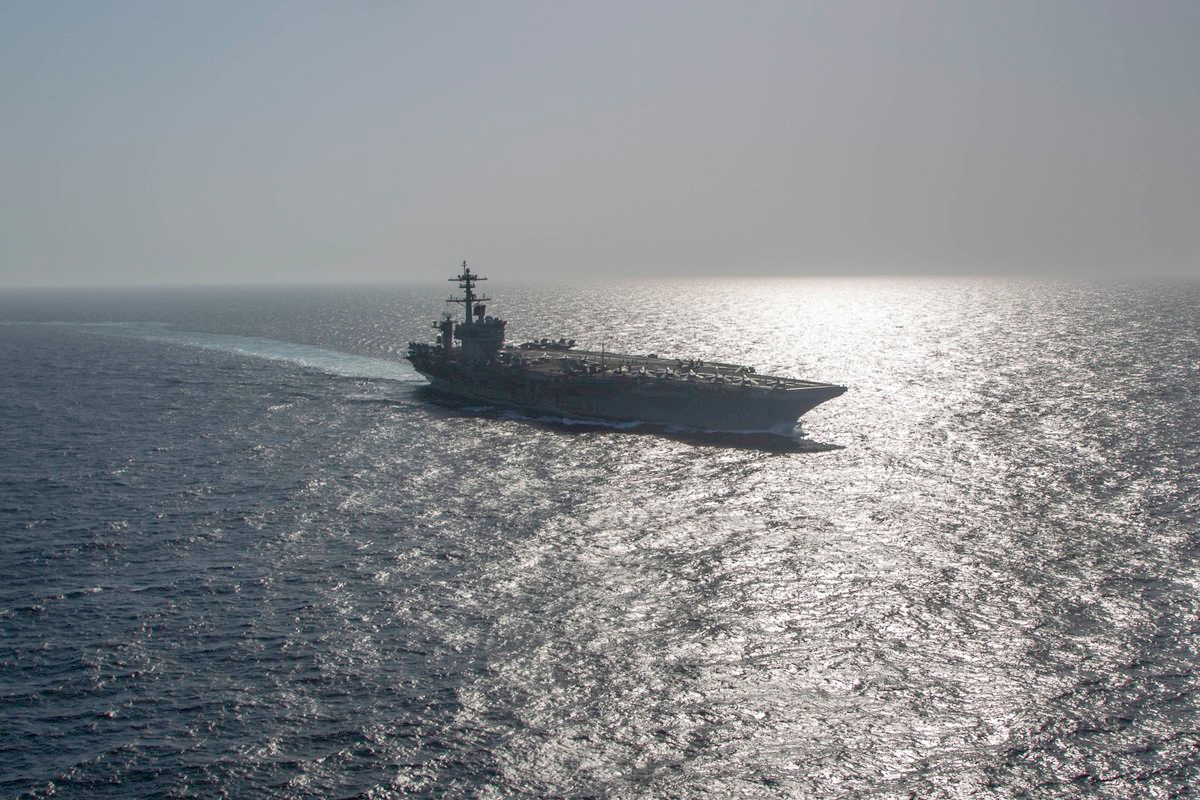
Iran announces the lifting of enrichment to 90% and expansion of the Strait of Hormuz, while Trump shows displeasure with the negotiations.
Translated by Alqyas from Al-Jarida — Original source
Amid anticipation for the summit between U.S. President Donald Trump and Chinese President Xi Jinping, and its potential outcomes in light of U.S. expectations that Beijing will pressure Tehran to make concessions to avoid a resumption of war, Ibrahim Rezaei, spokesperson for the parliamentary National Security Commission, yesterday hinted at raising uranium enrichment levels to 90 percent, which is required for manufacturing nuclear weapons, in the event of renewed combat against the Islamic Republic by Israel and the United States.
In a clear defiance of U.S. President Donald Trump’s requirement that any potential peace agreement include zero uranium enrichment, Rezaei stated that increasing enrichment from 60 percent to the nuclear weapons threshold is “under study within parliament” as one of the options to respond to any new military escalation.
In the same context, a parliamentary source told Al-Jarida that Supreme Leader Mojtaba Khamenei, who remains in seclusion, held a meeting the day before yesterday with veteran and new commanders of the Islamic Revolutionary Guard Corps (IRGC), attended by Parliament Speaker Mohammad Bagher Qalibaf. During the meeting, the fatwa prohibiting nuclear weapons issued by the late Supreme Leader Ali Khamenei was discussed.
According to the source, some commanders asked Mojtaba Khamenei for his opinion on the possibility of amending the fatwa in light of recent developments in the country. His response was largely aligned with his father’s position, as he emphasized that there is no need to amend or abandon it unless the country faces an existential threat.
On the other hand, the source clarified that the Supreme Leader expressed his belief that the U.S. President is seeking an exit from the “Iranian impasse” before the midterm elections scheduled for November next year. He instructed Qalibaf to convey a verbal message to Trump, stating that Tehran is ready to propose a “decent exit” that could positively impact his electoral standing, but this would come at a price and be based on negotiations grounded in mutual give-and-take, not the imposition of ultimatums.
According to the source, Qalibaf asked Khamenei specifically what he had in mind regarding this potential exit and what the possible counter-offer might be, but Mojtaba merely indicated the need to wait for a response from the White House.
On the night of Monday-Tuesday, Qalibaf warned Washington against facing failure if it insisted on rejecting Tehran’s 14 demands.
In a provocative move, which is the second of its kind during the fragile ceasefire between Tehran and Washington, Mohammad Akbarzadeh, Deputy Political Commander of the IRGC Navy, announced the expansion of Iran’s definition of the Strait of Hormuz to become a “wide operational zone,” significantly exceeding its previous scope before the war.
He explained that the strait is now defined as a strategic area extending from the city of Jask in the east to Sirri Island in the west. Fars and Tasnim news agencies reported that the width of the strait now ranges between 200 and 300 miles, whereas it previously ranged between 20 and 30 miles. The IRGC Navy had published a map on the 4th showing a new control zone extending along much of the UAE’s coastline on the Gulf of Oman.
This coincided with announcements by IRGC and army commanders raising the state of alert to maximum readiness in anticipation of a new attack from Washington or Tel Aviv.
The Iranian alert came as reports from Washington indicated that Trump, who is preparing for his first visit to China during his second term, has become increasingly frustrated with how Iran is managing negotiations. Several of his advisors confirmed that in recent days, he has become more serious about studying the option of resuming large-scale military operations.
However, Trump’s statements contradicted some media reports; he affirmed yesterday that he is not in a hurry, noting that the U.S. naval blockade on Iranian ports prevents Tehran from accessing any funds.
The day after he confirmed that the ceasefire had “entered the intensive care unit,” officials told Axios that Trump is likely to delay issuing the attack order he favors until after his anticipated return from his upcoming visit to Beijing. China holds influential leverage that, if secured, could enable him to pressure Tehran into making concessions and avoid resorting directly to military action once again.
CNN also reported, citing informed sources, that Trump is frustrated by the Islamic Revolutionary Guard Corps’ continued closure of the Strait of Hormuz, as well as what he perceives as divisions within the Iranian leadership that complicate the negotiation process and the prospect of securing major concessions on the nuclear, ballistic missile, and regional influence files.
The network noted that Iran’s latest response, which Trump described as “stupid,” has raised doubts among U.S. officials about Tehran’s readiness to take a serious stance in the ongoing negotiations.
With the diplomatic track stalling, reports indicated that Trump’s close associates are urging Pakistani intermediaries to convey clearer and firmer messages to Iran. Some U.S. officials believe that Islamabad is not adequately conveying the true extent of Trump’s frustration with the negotiation process to Tehran.
Two sources also stated that some officials in Washington view Pakistan as presenting the U.S. administration with a more positive picture of Iran’s positions than reality warrants.
A regional official noted that several countries in the region, along with Pakistan, have intensified their communications to inform Tehran that Trump is angry and that this may be Iran’s “last chance” to seriously engage in the diplomatic track. However, current indicators suggest that the Islamic Republic is not taking these warnings seriously enough.
On the other hand, the Pakistani Foreign Ministry clarified that Islamabad “categorically rejects” a CBS News report claiming the presence of Iranian aircraft at Nur Khan Air Base. It added that the aircraft, including Iranian military fighters, arrived during the ceasefire to facilitate logistics related to negotiations and the movement of diplomats, and remained there.
Meanwhile, influential Republican Senator Lindsey Graham entered the fray, seizing the opportunity to question Islamabad’s role as a mediator, particularly after Fox News previously published a report alleging ties between Pakistani Army Chief General Asim Munir and the Islamic Revolutionary Guard Corps.
In the meantime, Qatari Foreign Minister Mohammed bin Abdulrahman Al Thani and Turkish Foreign Minister Hakan Fidan urged Iran to avoid using the Strait of Hormuz as a weapon, and affirmed their support for Pakistan’s mediation efforts aimed at resolving the “difficult crisis” facing the region. Al Thani stated that “Iran must not use the Strait of Hormuz to pressure or blackmail Gulf states.”
