Washington and Tehran: Caution and Talk of Concessions
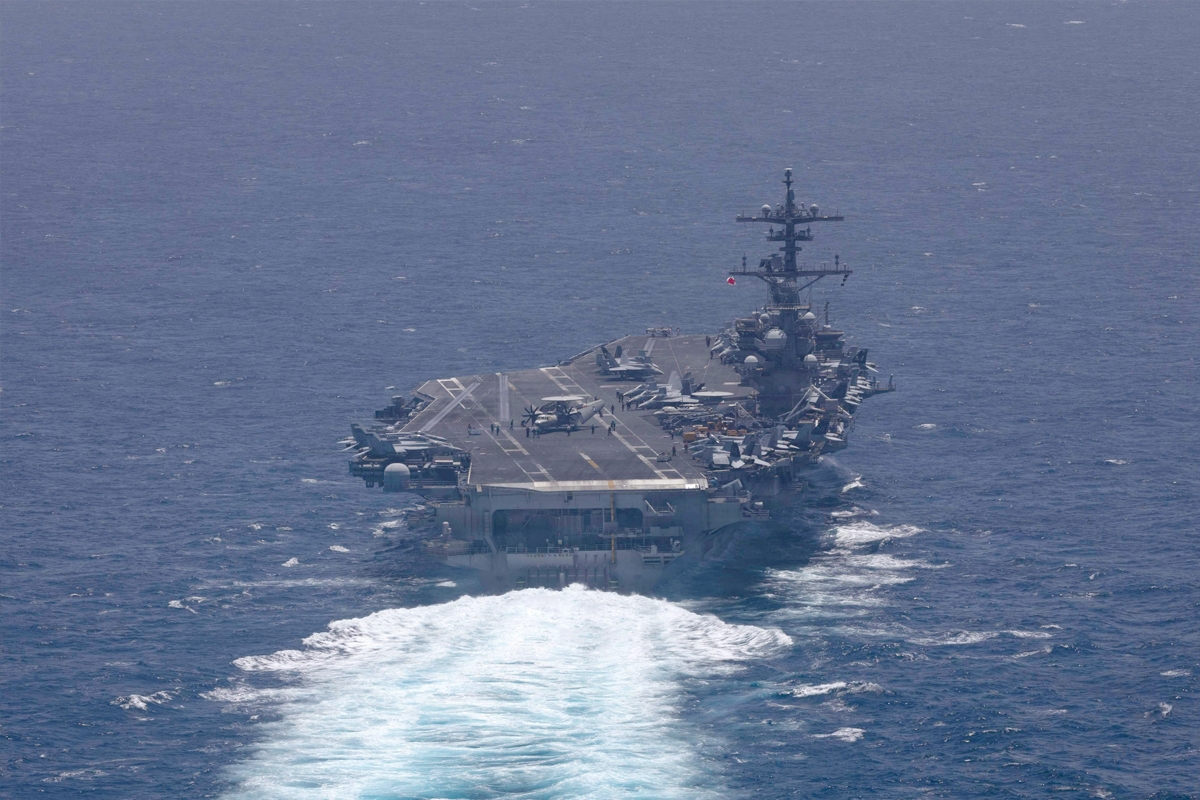
Demands for concessions are being discussed regarding the nuclear file, amid ongoing tensions over ending the war and lifting sanctions.
Translated by Alqyas from Al-Jarida — Original source
Positive sentiment surrounding the prospects of reaching a comprehensive agreement between the United States and Iran, which would end the war that erupted in late February last year and address other outstanding points of contention, particularly the nuclear file, has strengthened.
However, caution remains the prevailing tone, given that some gaps persist in the demands and conditions of both sides, requiring further work to bridge them, alongside the ongoing ambiguity surrounding the terms of the proposals under discussion.
A high-ranking diplomatic source told Al-Jarida that Tehran continues to insist on ending the war in Iran and the region first, while the American side seeks a comprehensive agreement.
The source pointed to a new proposal calling for the simultaneous signing of an agreement to end the war and another agreement regarding the nuclear file. If Iran agrees to this, it would be considered a concession on its condition of ending the war first, in exchange for concessions from the US side, including allowing Iran to gradually return to uranium enrichment at the same levels that were prevalent under the 2015 agreement.
Amid continued statements from the Pakistani mediator about momentum, a state of ambiguity and caution persists, making it difficult to speak of an imminent agreement. The source confirmed that the US side agreed to process highly enriched uranium within Iranian territory by reducing its enrichment level under the supervision of the International Atomic Energy Agency (IAEA). This contradicts firm statements by US President Donald Trump, who confidently asserted that the uranium would be transferred not only out of Iran but to the United States itself.
Regarding the suspension of enrichment, the source stated that Iran agreed to halt enrichment operations for three years, and might agree to five years if that is the final point obstructing the deal. Conversely, the source emphasized that the US side still demands a suspension lasting 20 years.
Nevertheless, the source noted a significant retreat from what he described as "unreasonable US demands," adding that communications and message exchanges continue around the clock among all concerned parties.
Meanwhile, Iranian Foreign Minister Abbas Araghchi faced sharp domestic attacks, receiving a death threat from Bagher Kharazi, who claims to lead the hardline fundamentalist group "Ansar Hezbollah." Bagher Kharazi is the nephew of Kamal Kharazi, the former Iranian Foreign Minister and advisor to the Supreme Leader on foreign affairs, who was killed in an Israeli airstrike.
Majid Nabavian, a member of the parliamentary National Security Commission, wrote on the "X" platform: "Given the US track record of breaking promises, and the presence of those responsible for the humiliating previous nuclear deal alongside Speaker of Parliament Mohammad Bagher Ghalibaf in the negotiations, there is no hope for negotiating or reaching an agreement suitable for Iran." Without naming Araghchi, Nabavian stated: "It is essential for Ghalibaf to completely exclude those responsible for the catastrophic nuclear deal from the negotiating team."
On another front, Iranian President Masoud Pezeshkian mentioned that he met with Supreme Leader Mojtaba Khamenei on an unspecified date. Mojtaba Khamenei has not appeared publicly since his appointment in early March following the assassination of his father, Ali Khamenei, at the beginning of the war. Pezeshkian said, "What struck me most during the two-and-a-half-hour meeting was witnessing the Supreme Leader's modest and sincere approach."
Nevertheless, caution remains the prevailing tone, given the persistence of certain gaps in the demands and conditions of both sides that require further work to bridge, as well as the ambiguity still surrounding the terms of the proposals under discussion.
A high-ranking diplomatic source told Al-Jarida that Tehran continues to insist on ending the war in Iran and the region first, while the American side seeks a comprehensive agreement.
If Iran agrees to this, it would be considered a concession on its condition of ending the war first, in exchange for American concessions, including allowing it to gradually return to enriching uranium at the same levels that were prevalent under the 2015 deal.
Amid continued statements from the Pakistani mediator about momentum, a state of ambiguity and caution persists, making it difficult to speak of an imminent agreement. The Iranian diplomatic source confirmed to Al-Jarida that the American side agreed to process Iran’s highly enriched uranium within Iranian territory by reducing its enrichment level under the supervision of the International Atomic Energy Agency (IAEA). This contradicts the firm assertions of U.S. President Donald Trump, who confidently stated that the uranium would be transferred not only out of Iran, but to the United States itself.
Regarding the suspension of enrichment, the source said Iran agreed to halt enrichment activities for three years, and might agree to five years if that is the final point blocking the deal. In contrast, the source emphasized that the American side still demands a suspension lasting 20 years.
Nevertheless, the source pointed to a significant retreat from what he described as “unreasonable American demands,” noting that communications and message exchanges continue around the clock among all concerned parties.
Amid anticipation of Tehran’s response to the latest American proposal delivered by the Pakistani mediator, U.S. President Trump expressed his belief that the war would end soon during an event yesterday.
Trump said, “When you look at what is happening, you find that we are doing it for a very important reason: we cannot allow them to possess a nuclear weapon,” adding that “most people realize that what we are doing is right, and it will end quickly.”
This came as the Wall Street Journal reported that the Trump administration presented a new negotiating framework to Iran, which includes a series of demands Washington considers “red lines.” These include dismantling major nuclear facilities, banning any underground nuclear activity, allowing immediate and unconditional inspections, and handing over enriched uranium stockpiles. According to the information, Tehran’s acceptance of the proposed framework would lead to 30 days of negotiations to draft a detailed agreement. Meanwhile, U.S. sanctions, the mechanism for easing them, and the release of frozen assets would remain tied to Iran’s actual behavior, not merely the signing of an agreement.
On the other side, Iranian Foreign Minister Abbas Araghchi stated that his country remains committed to working toward a comprehensive and just end to the “imposed war” and entering serious talks to achieve lasting peace.
Araghchi, via the X platform, emphasized that peace cannot be achieved amid “the disregard of Iran’s legitimate security concerns and the continuation of illegal sanctions,” calling for an end to the war through “genuine and comprehensive negotiations based on mutual respect, justice, and the lifting of sanctions.” He noted that despite the fragile ceasefire reached last April, some parties are once again escalating tensions, threatening regional stability.
Araghchi’s diplomatic remarks regarding the possibility of reaching an understanding with Washington came as the minister faced sharp internal attacks, having received a death threat from Bagher Kharazi, who claims leadership of the hardline fundamentalist group “Ansar Hezbollah.” Kharazi is the nephew of Kamal Kharazi, Iran’s former foreign minister and advisor to the Supreme Leader on foreign affairs, who was killed in an Israeli airstrike.
As internal conflicts intensified over how to handle the unprecedented crisis facing the country, amid the ongoing US naval blockade and a state of “neither war nor peace,” Mahmud Nabavian, a member of the parliamentary National Security Committee, wrote on the X platform: “Given the United States’ record of breaking promises, and the presence of the architects of the humiliating previous nuclear deal alongside Parliament Speaker Mohammad Bagher Qalibaf in the negotiations, there is no hope for negotiations or reaching an agreement suitable for Iran.” Without naming Araghchi, Nabavian added: “It is essential for Qalibaf to completely exclude the architects of the catastrophic nuclear deal from the negotiating team.”
Meanwhile, Iranian President Masoud Pezeshkian stated that he met with Supreme Leader Mojtaba Khamenei on an unspecified date. The Supreme Leader has not appeared publicly since his appointment in early March, following the assassination of his father, Ali Khamenei, at the outset of the war.
Pezeshkian said, “What struck me most during the two-and-a-half-hour meeting was witnessing the Supreme Leader’s modest and sincere approach.”
Pezeshkian warned that “US officials are publicly speaking about intensifying economic pressure on the Iranian people to create a state of discontent,” calling on Iranians to unite and maintain cohesion to prevent division.
In the meantime, Deputy Commander of the Islamic Revolutionary Guard Corps (IRGC), Brigadier General Yadollah Javani, emphasized that the war is not over, stressing the necessity of “reaching a point where no state or power dares to encroach upon our country.”
In the context of international efforts to reopen the Strait of Hormuz, French President Emmanuel Macron held telephone talks with Pezeshkian, during which he affirmed that any “negotiations regarding the full reopening of the strait require the lifting of the US blockade.”
For his part, the French president stated that he expressed concern over the ongoing escalation and condemned the unjustified attacks targeting infrastructure in the UAE and several ships.
He noted that the multinational mission formed by France and Britain could help restore the confidence of shipowners and insurance companies in the strait’s transit, independent of the warring parties.
He clarified that he urged Pezeshkian to seize this opportunity, pointing out that a return of calm to the strait would contribute to advancing negotiations on Iran’s nuclear file, ballistic armament, and the regional situation, where European parties would play a crucial role in lifting sanctions imposed on Tehran.
On the ground, the Kaisen website reported that a large tanker carrying refined products, owned by a Chinese shipping company, was attacked in what was the first such incident since the war began. The attack occurred off the port of Jir in the UAE on the 4th of the current month, near the entrance to the Hormuz Strait.
