Trump: Iran Working to Reorganize Its Leadership
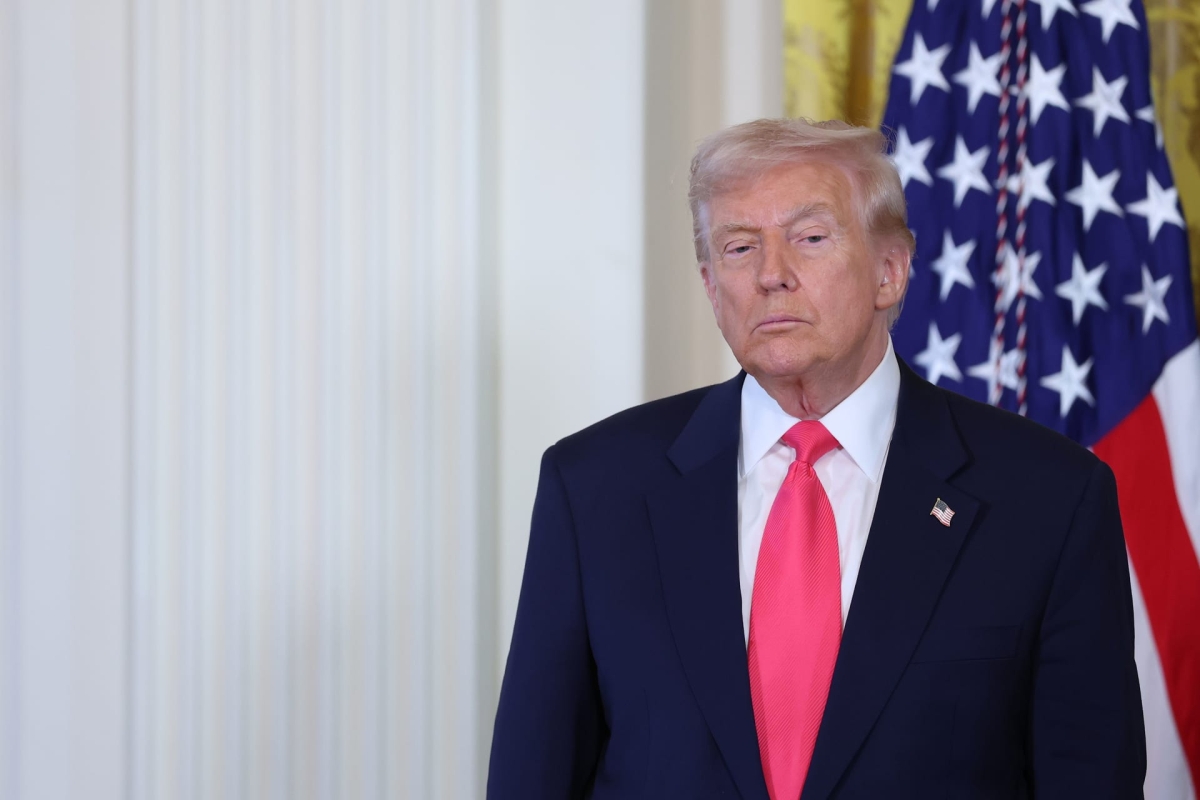
Trump points to Iranian collapse and calls for opening the Strait of Hormuz
Translated by Alqyas from Al-Jarida — Original source
Efforts to end the conflict with Iran reached a deadlock on Tuesday as U.S. President Donald Trump expressed dissatisfaction with Tehran’s latest proposals, stating that Iran had informed the United States it was in a “state of collapse” and was in the process of reorganizing its leadership.
Iran’s latest proposal to resolve the conflict, which erupted two months ago, calls for postponing discussions on its nuclear program until after the war ends and disputes over maritime shipping in the Gulf are settled. A U.S. official familiar with Trump’s meeting with his advisors on Monday said the president wants to address the nuclear file first.
Trump wrote in a post on the Truth Social platform on Tuesday: “Iran just informed us that it is in a ‘state of collapse.’ It wants us to ‘open the Strait of Hormuz’ as soon as possible while it tries to sort out its leadership (and I think it will be able to do so!). Thank you for your attention to this matter!” It was unclear from Trump’s post how Iran conveyed this message, and Tehran had not yet responded to Trump’s claims.
Earlier, a spokesperson for the Iranian military told state media that Iran does not consider the war to have ended.
Since the war began on February 28, Tehran has imposed a near-total ban on maritime navigation through the Strait of Hormuz, a vital artery for global energy supplies, except for its own vessels. The United States began asserting control over Iranian ships this month.
Hopes of reviving peace efforts in the conflict, which has killed thousands, disrupted energy markets, and interrupted global trade routes, have dimmed after Trump canceled the visit of his son-in-law Jared Kushner and his special envoy Steve Witkoff to Pakistan, which is mediating the dispute.
Following the killing of several prominent Iranian political and military figures in U.S.-Israeli airstrikes, Iran no longer has a single, undisputed clerical ruler at the top of its power structure, a situation that could harden Tehran’s negotiating stance.
Iranian officials and analysts say that the killing of former Supreme Leader Ayatollah Ali Khamenei on the first day of the war and the appointment of his son, Mojtaba, as his successor, have granted more power to hardline commanders of the Islamic Revolutionary Guard Corps.
Senior Iranian officials, speaking on condition of anonymity, told Reuters that the proposal presented by Iranian official Araghchi to Islamabad earlier this week includes phased talks that would not initially address the nuclear issue.
The first step in the proposal is to end the U.S.-Israeli war against Iran and provide assurances that Washington will not reignite it. Negotiators would then work to lift the U.S. blockade on Iranian maritime trade and determine the future of the Strait of Hormuz, which Iran seeks to keep under its control after its reopening.
Only then would talks address other issues, including the long-standing dispute over Iran’s nuclear program. Tehran continues to seek some form of U.S. recognition of its right to enrich uranium.
This position recalls the nuclear deal Iran reached with several other countries, including the United States, which placed significant restrictions on Tehran’s nuclear program.
Trump unilaterally withdrew from the agreement during his first presidential term. With his popularity waning, Trump is now facing domestic pressure to end a war for which he has provided mixed justifications to the American public.
The World Bank expects energy prices to surge by 24 percent in 2026 to their highest levels since Russia’s full-scale invasion of Ukraine four years ago, provided that the severe disruptions caused by the war in the Middle East subside next month. The United Arab Emirates announced on Tuesday its withdrawal from OPEC and the OPEC+ alliance, revealing divisions among Gulf Arab states over their stance toward Iran.
Anwar Gargash, the UAE president’s diplomatic advisor, criticized the Arab and Gulf response to Iranian attacks during a panel discussion at the “Gulf Influencers” event on Monday. The Emirates News Agency (WAM) quoted Gargash as saying, “Cooperation among Gulf Cooperation Council (GCC) countries during this episode was historically the weakest compared to the acute crises and challenges the region has faced, particularly given the nature and scale of Iran’s brazen attacks on regional countries and the response they require. Moreover, cooperation from the Arab League did not meet the level demanded by the situation.”
Market analysts said that operating outside OPEC and OPEC+ would allow the UAE to leverage its position as a supplier of some of the world’s lowest-cost and lowest-carbon-emission oil, once the Strait of Hormuz reopens.
Ship-tracking data showed that at least six Iranian oil tankers were forced to return to Iran in recent days due to U.S. sanctions, highlighting the war’s impact on shipping movements.
However, Iranian government spokesperson Fatemeh Mohajerani told state media on Tuesday that Iran is using northern, eastern, and western trade routes that do not rely on Gulf ports to neutralize the effects of sanctions. Typically, between 125 and 140 vessels transited the strait daily before the war, but ship-tracking data from Kpler and satellite data analysis from Sinosat indicate that only seven vessels passed through yesterday, none of which were carrying oil bound for the global market.
