Trump and Tehran Face Critical Hours: Minimal Understanding or Risk of Renewed Confrontation
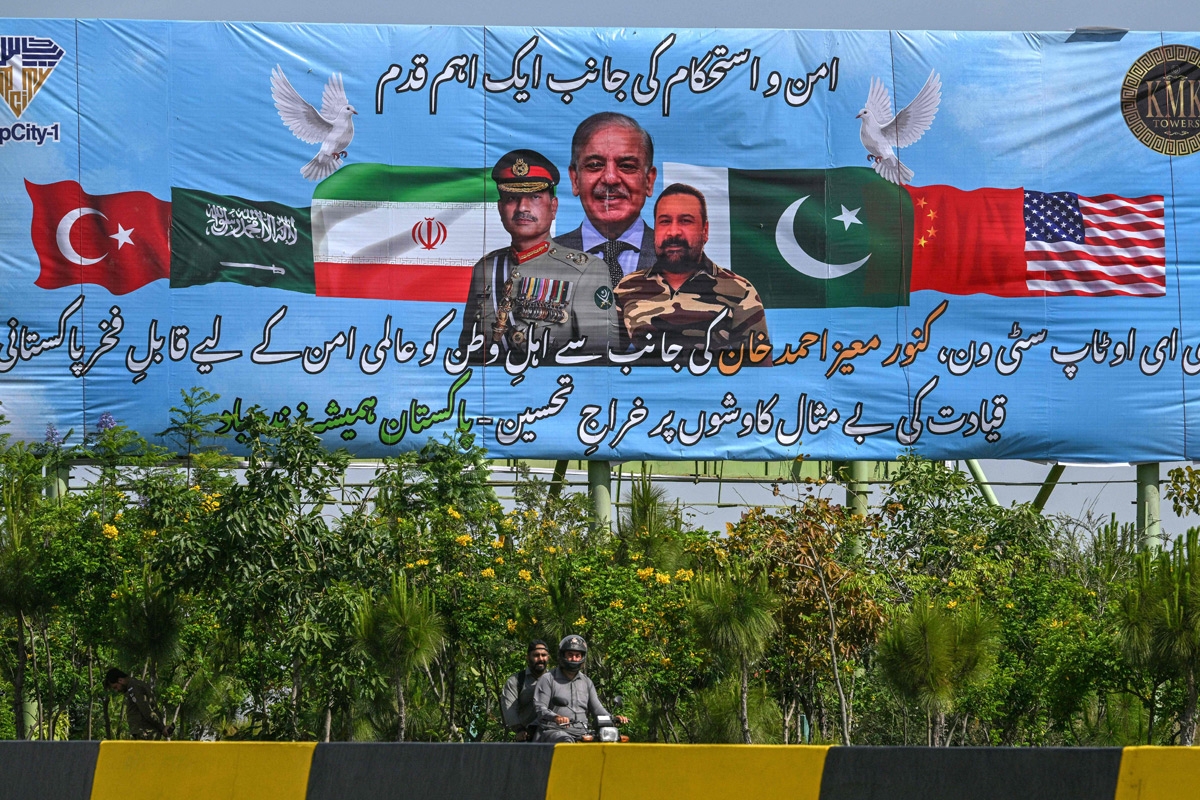
Trump insists on a peace agreement in Islamabad, while Tehran refuses to negotiate under sanctions.
Translated by Alqyas from Al-Jarida — Original source
As the US-Iran confrontation enters its critical hours today, awaiting the success of efforts to convene a second round of negotiations in Islamabad, President Donald Trump expressed confidence that this round would lead to a “major deal,” while simultaneously hinting at a return to war and rejecting an extension of the truce, which is now considered effectively expired if Tehran does not attend. Tehran, through its chief negotiator Mohammad Bagher Qalibaf, had affirmed its rejection of the dialogue table being merely a “surrender table.”
Amid continuing uncertainty over whether the new round of negotiations will take place, amid leaks suggesting the Pakistani mediator received US and Iranian assurances of attendance today, estimates point to four scenarios: the successful convening of negotiations before the truce expires; extending the truce to ensure negotiations take place; otherwise, the third and least likely scenario is extending the truce without reaching an agreement on negotiations; and the final scenario involves not extending the truce and not proceeding to negotiations, which means entering the danger of renewed military confrontation. Meanwhile, an informed Iranian source revealed to “Al-Jarida” that Tehran still, in principle, insists on lifting the naval blockade on its ports before entering any new talks.
The source clarified that Washington presented a new proposal to Tehran, stipulating that the anticipated second round of negotiations, since the outbreak of war in late February, would be limited to the nuclear file and the release of frozen Iranian assets, along with a 60-day truce extension to conduct detailed talks to address contentious points.
According to the source, the US side proposes that Iran suspend uranium enrichment for a specified period and agree to transfer highly enriched uranium (above 60 percent) to a third country. In return, Washington would extend the easing of restrictions on Iranian oil, with the release of part of the assets, provided these funds remain under supervision ensuring their use for humanitarian and reconstruction purposes, and not for purchasing military equipment.
He confirmed that Tehran has not yet responded to this proposal, noting that the prevailing trend leans toward not entering negotiations as long as the naval blockade continues.
Hours before the expiration of the truce that halted the US-Israeli war on Iran, President Donald Trump expressed confidence that peace talks would be held in Pakistan today, involving his Vice President JD Vance and an Iranian delegation, leading to a peace agreement. However, signals from the Islamic Republic indicated hesitation in confirming participation, as well as in concluding the deal regarding curbing its nuclear ambitions and regional influence, especially after chief negotiator and Parliament Speaker Mohammad Bagher Qalibaf warned that his country refuses to negotiate under threat and blockade.
Trump renewed his accusations against Iran for repeatedly violating the ceasefire in a brief post on his official “Truth Social” page yesterday.
At a time when Tehran publicly stated it had not decided on its participation in the second round of talks due to “US behavior,” Trump told CNN that Iran has no choice but to send a delegation to the negotiations, adding that he has no time to spare and does not wish to extend the truce, which ends at dawn tomorrow.
He revealed that the ship “Tuska,” intercepted by US forces the day before yesterday, was carrying some equipment to Iran, considering it “not a very nice move, as it appeared to be a gift from China.”
He continued, saying, “I thought I had reached an understanding with Chinese President Xi Jinping, but that’s okay, this is the nature of wars.”
He added that he is “surprised” by the Chinese stance, despite describing his relationship with the Chinese president as “very good.”
Amid the uncertainty, Trump reverted to a military tone, stating: “Myself and the military are ready to intervene militarily against Iran. Our weapons are heavily armed with ammunition, making us much stronger than we were four or five weeks ago,” while affirming that the US blockade of Iranian ports is successful.
He viewed the option of bombing Iran as a “better beginning,” noting that the US military is the strongest in the world, having been strengthened during his previous term. He reiterated his statements about eliminating Iran’s naval and air forces and its commanders, saying that “the new leaders are more rational.”
He continued: “Our military forces are truly amazing; what we have achieved in Iran is unbelievable. If we withdraw from Iran now, reconstruction could take 20 years.”
Meanwhile, US Chief of Staff General Dan Kaine affirmed yesterday that Washington is ready to resume major combat operations against Iran at any moment.
This came as the US Department of War announced that it had boarded the MT Tiffany, a sanctioned vessel transporting Iranian oil, during the night in the Indian and Pacific Oceans.
The ministry emphasized that it would continue its efforts “in the field of global maritime law enforcement to disrupt illegal networks and intercept sanctioned vessels providing material support to Iran, wherever they operate.”
Qalibaf, via the X platform, said: “Trump wants to turn the negotiating table into a surrender table, according to his illusions, or justify a resumption of hostilities, by imposing a blockade and violating the ceasefire. We have been preparing over the past two weeks to reveal new cards on the battlefield.”
Amid reports of sharp disagreements among Iranian leadership and strong opposition from IRGC commander Ahmad Vahidi to pursuing an agreement pushed by Qalibaf with Washington, hardline head of the judiciary Gholam-Hossein Mohseni Ejei stated that Tehran must “maintain readiness at 100%” in case the Trump administration and Israel launch new attacks.
Ejei said there is a “strong possibility” of further attacks, adding that the United States has not yet achieved its military objectives, despite killing many senior Iranian officials. Ejei called for the release of the ship Tuska and its crew, threatening that Iran would respond to the detention of Tuska, which flies the Iranian flag in the Gulf of Oman, as a violation of the ceasefire.
Nevertheless, the Associated Press reported that Pakistan and mediators received confirmation from US Vice President JD Vance and the Iranian parliament speaker of their arrival in Islamabad on Wednesday morning to participate in negotiations.
A Pakistani official source stated that the second round of negotiations would take place as scheduled today, confirming the simultaneous arrival of US and Iranian delegations in Islamabad.
In this context, Chinese ambassador Jiang Zaidong, during a meeting with Pakistani Foreign Minister Ishaq Dar in Islamabad, affirmed Beijing’s support for the mediation track between Tehran and Washington, as the two sides discussed the latest regional developments.
Meanwhile, Israeli Prime Minister Benjamin Netanyahu affirmed yesterday that his country had eliminated the threat posed by the Iranian regime, which had planned to destroy it with nuclear bombs and thousands of ballistic missiles, but he considered that “the mission is not yet complete.”
Netanyahu said: “We have removed the threat of the Iranian regime, which targeted our existence, in coordination with the United States,” adding, “We have shown our true nature by responding forcefully against enemies.”
Netanyahu pointed to two joint military operations between Israel and the United States: the first was the 12-day war in June 2025, and the second is the current operation that began in February 2026, emphasizing that both dealt the “most severe blows” to the Iranian regime and the “axis of evil” in their history.
