Israel threatens to use "full force" in Lebanon if its soldiers are threatened
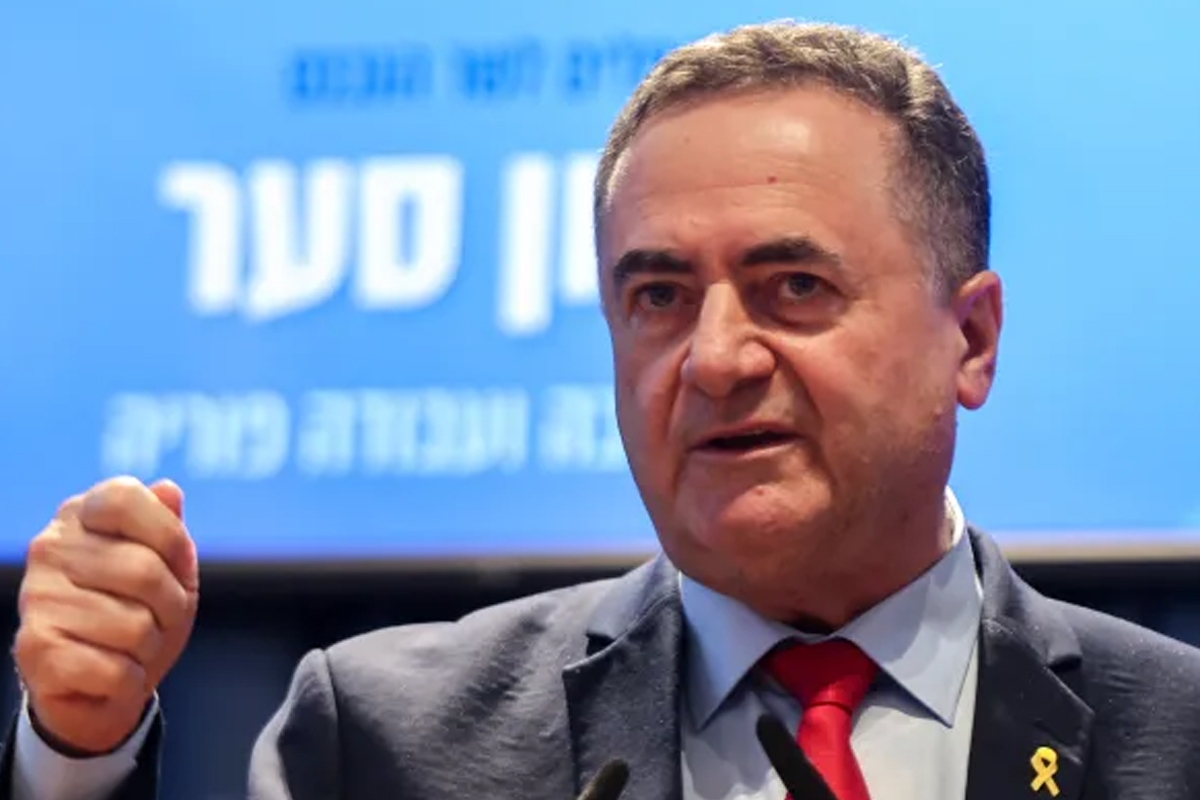
Israel Katz calls for the army to use full force in Lebanon if its soldiers are threatened
Translated by Alqyas from Al-Jarida — Original source
Israeli Defense Minister Yisrael Katz vowed on Sunday to use his country’s “full force” in Lebanon, despite the ceasefire with Hezbollah, if Israeli soldiers are threatened, reiterating the Jewish state’s resolve to destroy homes it accuses the group of using in border villages.
Speaking at a ceremony in a settlement in the occupied West Bank, Katz said, “I and Prime Minister Benjamin Netanyahu have ordered the Israeli military to use full force, both on the ground and from the air, even during the ceasefire, to protect our soldiers in Lebanon from any threat.”
He also instructed the army “to demolish homes in villages near the border that were, in every respect, used as Hezbollah terrorist staging areas and posed a threat to Israeli communities.”
Katz said on Sunday that “the overall goal of the campaign in Lebanon is to disarm Hezbollah and remove the threat to northern towns through a combination of military and diplomatic measures.”
He added, “If the Lebanese government continues to fail to fulfill its commitments, the Israeli military will continue to do so through military operations.”
Lebanon’s official National News Agency reported that the Israeli army “is still destroying the remaining homes in the city of Bint Jbeil.”
Bint Jbeil, located about five kilometers north of the border, saw intense fighting between Israeli forces and Hezbollah fighters for several days before the ceasefire took effect on Friday.
The areas referred to are all located behind the “Yellow Line,” which the Israeli army declared it had established in southern Lebanon to separate areas where it is deployed from others.
On Sunday, the Israeli army published a map showing the “scope of the forward defense line,” marking in red the areas where it is operating “to destroy Hezbollah infrastructure in the region and prevent a direct threat to northern Israeli towns.”
Diplomatically, Lebanese Prime Minister Nawaf Salam is visiting the Élysée Palace on Tuesday, according to announcements by the Lebanese government and the French presidency, following the killing of a soldier from the French battalion of the United Nations Interim Force in Lebanon (UNIFIL) in a southern Lebanon attack.
Paris had said on Saturday that “all indications point to Hezbollah being responsible for this attack.”
The Lebanese army clarified in a statement that it “has fully opened the Khardali-Nabatieh road and partially opened the Burj Rahal-Sour bridge,” while “work is underway to rehabilitate the Tayr Falaseh-Sour bridge in cooperation with the National Authority for the Litani River (..) following damage caused by the Israeli aggression.”
The Lebanese army reported hours before the ceasefire took effect at midnight on Thursday that Israeli airstrikes on bridges over the Litani River, about 30 kilometers north of Israel, had isolated the area south of the river from the rest of the country, after the Jewish state had previously destroyed other bridges.
Many residents of the south appear hesitant to return, given the fragility of the ceasefire that halted fighting that erupted on March 2.
In the village of Dibbine, adjacent to the occupied town of Khiam, a France Press (AFP) correspondent observed a man inspecting damage to his home and people walking near the ruins of destroyed buildings.
In Sarafa, another correspondent saw people unloading their belongings as they returned to this southern village.
In other areas, an AFP correspondent observed people leaving the south again after retrieving some of their belongings from their homes.
The Israeli army announced on Sunday that one of its soldiers was killed “during clashes in southern Lebanon,” without providing further details.
According to an AFP tally based on military data, the total number of Israeli soldiers killed in the six-week-old war between Israel and Hezbollah has risen to 15.
The conflict, which has lasted more than six weeks, has resulted in the deaths of approximately 2,300 people and displaced over a million, according to authorities, particularly from Beirut’s southern suburbs and the country’s south, areas that are among Hezbollah’s strongholds.
