Al-Jarida: Reveals Iranian Proposal for Second Round of Negotiations
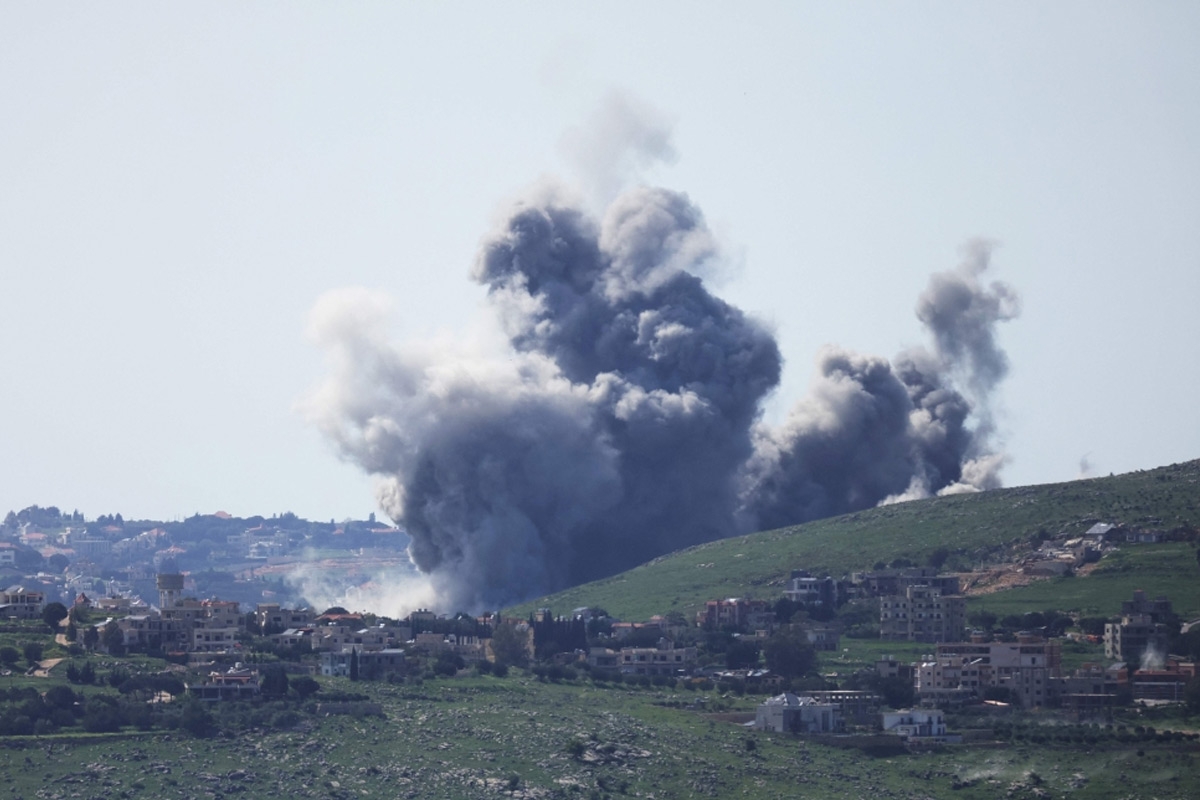
Iran presented a proposal to end the war with the United States, including a ceasefire and reduced enrichment, but disputes over the nuclear program persist
Translated by Alqyas from Al-Jarida — Original source
An official in the Iranian Ministry of Foreign Affairs told Al-Jarida that Iranian officials presented a proposed Iranian framework agreement aimed at ending the war with the United States to Pakistani Army Chief General Asim Munir during his visit to Tehran, where he met Parliament Speaker Mohammad Bagher Ghalibaf and Foreign Minister Abbas Araghchi.
The source noted that the Pakistani side is expected to convey this proposal to Washington, which it is visiting today, to present it to the American side.
The proposal includes the following points:
1. A comprehensive, permanent, and guaranteed ceasefire in Iran and across the region, including Lebanon, as a precondition for convening the second round of negotiations.
2. Stabilizing the ceasefire through a binding United Nations Security Council resolution that condemns the attack on Iran, explicitly names the aggressor parties, and affirms the principle of compensation.
3. Retention of the stockpile of highly enriched uranium, with readiness to lower enrichment levels under the supervision of the International Atomic Energy Agency (IAEA).
4. Reiteration that a permanent halt to enrichment activities within Iranian territory is not acceptable, while remaining open to negotiating timeframes for phased suspensions.
6. Refusal to provide any commitments regarding severing ties with allies or disarming them, with readiness to offer guarantees against initiating aggressive acts unless attacked.
9. Continuation of sovereignty over the portion of the Strait of Hormuz within Iranian territorial waters, including regulating traffic and imposing service fees, while prohibiting the passage of warships.
10. Lifting the US naval blockade on Iranian ports prior to resuming negotiations.
The source revealed that the Pakistani Army Chief reiterated the idea of holding a meeting between US President Donald Trump and Iranian President Masoud Pezeshkian to sign the agreement, should one be reached, following the completion of negotiations at the level of high-level delegations or technical teams.
He stated that General Munir held an undisclosed meeting in Tehran with Islamic Revolutionary Guard Corps (IRGC) Commander Ahmad Vahidi and several senior IRGC and Iranian Army commanders.
The source noted that Vahidi emphasized to Munir that the Iranian military establishment does not trust the United States or Israel, viewing the negotiation process merely as a tool for Washington and Tel Aviv to buy time to enhance US military presence in the region and provide Israel with additional defensive and missile systems before resuming military operations against Iran.
The source added that Vahidi stressed that armed forces commanders oppose any extension of the ceasefire if no agreement is reached, considering such an extension to benefit the other side.
He noted that Vahidi affirmed that if no agreement is reached before the ceasefire deadline expires, the Iranian armed forces will be ready to resume military operations immediately.
The trajectory of an emerging understanding between Iran and the United States has collided with an intractable knot, primarily consisting of disagreements over the future of Tehran’s nuclear program and the inclusion of a ceasefire between them in Lebanon, amid Israel’s insistence on continuing its military campaign against Hezbollah.
Reuters quoted a senior Iranian official as saying that Pakistani Army Chief General Asim Munir’s visit to Tehran helped narrow differences with the United States on some points, but indicated that fundamental disagreements remain regarding nuclear issues.
The official added that following the visit, there is great hope for extending the truce and holding a second round of talks, clarifying that there are core differences regarding nuclear issues, and that the fate of enriched uranium and the duration of nuclear restrictions remain unresolved and undecided.
Pakistani reports leaked that Munir carried a message from Washington, containing updates related to efforts to reach a ceasefire in Lebanon, noting that Tehran was waiting for an Israeli announcement regarding a ceasefire against Hezbollah before deciding on its response to the message, insisting on linking it to the broader negotiation track and assessing Washington’s commitment to the undertakings put forward in the understanding proposal that began with the first round of negotiations in Islamabad.
Yesterday, the Chief of the Pakistani Army held in-depth talks with Foreign Minister Abbas Araghchi and the head of the Iranian negotiating delegation, Parliament Speaker Mohammad Bagher Qalibaf, in Tehran, while the Pakistani Foreign Ministry confirmed that Lebanon remains part of the existing ceasefire and that peace there is essential for talks between Tehran and Washington.
A Pakistani security source stated that the Army Chief will travel to Washington today to convey Tehran’s response to President Donald Trump, as part of broader diplomatic moves involving Egypt and Turkey, aimed at bridging differences between the Americans and the Iranians.
Meanwhile, Tehran’s leaders continued to issue rigid public stances. Qalibaf, in a call with Lebanese Parliament Speaker Nabih Berri, insisted that the ceasefire must include Lebanon “before anything else.” Meanwhile, a senior Israeli official stated that the Benjamin Netanyahu government estimates that “within a few days, it will have no choice but to implement a full ceasefire in Lebanon for at least a week,” under increasing American pressure that bets on pushing direct negotiations between the Lebanese government and the Israeli state, in addition to helping end the war with Iran.
In parallel, Iranian Vice President Mohammad Eshaq Jahangiri (Note: The text says "Mohammad Aref", but the current VP is Jahangiri; however, strictly translating the name provided: Mohammad Aref) emphasized that his country “will never surrender to the enemy’s excessive demands,” referring to Washington’s requirement to halt uranium enrichment on Iranian soil and transfer the stockpile of highly enriched uranium to a third party to finalize any agreement.
Aref believed that the equations in the region will change after the war, and the sanctions imposed on his country will become “meaningless,” considering that the Strait of Hormuz, which is partially closed by “Revolutionary Guard” forces, must be redefined and managed in the interest of Iran.
Military advisor to the Iranian Supreme Leader, Mohsen Rezaee, stated that his country will not relinquish control of Hormuz “before fully securing its rights,” affirming that Iran is “fully prepared for a long war and has experience in it, unlike the United States, which fears prolonged wars.”
Rezaee downplayed the importance of the American naval blockade on his country, affirming that Tehran will not retreat from its strategic positions under pressure, and claimed it could bypass and break it. Meanwhile, the Army spokesperson, Major General Mohammad Akrami, confirmed that if there is a land attack on Iran, no attacker will remain alive.
This coincided with the emergence of an Iranian trend to maintain partial control over the international strait, through which about 20% of the world’s fuel exports pass. Reuters quoted a source saying that the Islamic Republic may be considering allowing ships to sail through the Omani side of Hormuz without interference or attack as part of an agreement with Washington. The source, described as close to Tehran, added that Iran would retain control over its waters in Hormuz, and Muscat would decide regarding its side of the strait.
In response, the US Navy announced that the military had expanded the naval blockade imposed on Iran to include shipments deemed smuggled, stating that any ship suspected of attempting to reach Iranian territory would be subject to verification and inspection, noting that “ships, regardless of their location, will be subject to inspection, boarding, and seizure of goods.”
While U.S. Central Command (CENTCOM) stated that the blockade does not include the Strait of Hormuz, U.S. Secretary of Defense Pete Hegseth affirmed that American forces in the region are on high alert to resume combat operations if Iran chooses the wrong path and fails to reach an agreement. He added, “Our message to Iran is that we are watching you and we know what military assets you are moving.” He noted that the United States believes the new Supreme Leader, Mojtaba Khamenei, is injured but alive.
U.S. Ambassador to the United Nations, Mike Waltz, condemned Tehran’s attempt to punish the world by closing the Strait of Hormuz and attacking civilian shipping vessels, emphasizing that Washington has a range of options to strip Iran of any leverage, spanning from the current status quo to any form of ground combat.
On the international front, Chinese Foreign Minister Wang Yi urged his Iranian counterpart to make every possible effort to restore normal navigation in the Strait of Hormuz, describing it as in the interest of the entire international community. He pointed out that the situation is at a critical turning point and that the window for peace is beginning to open.
