Lebanon on the Path to a Ceasefire
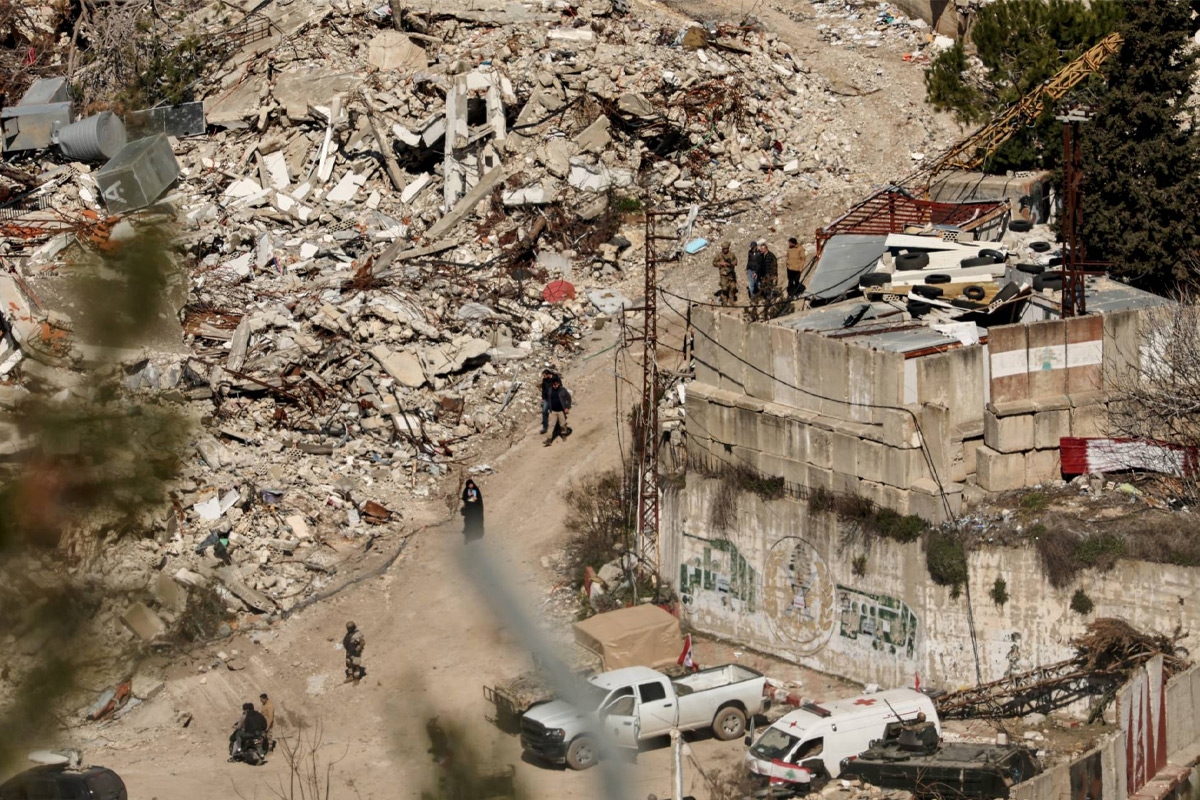
A ceasefire in Lebanon has become a realistic possibility following talks in Washington
Translated by Alqyas from Al-Jarida — Original source
The ceasefire in Lebanon, which seemed impossible just two days ago, has become a viable possibility in the coming hours, amid the involvement of multiple regional and international parties pushing for its implementation. Lebanese President Joseph Aoun considers the potential ceasefire a personal achievement, following the success of his negotiation initiative with Israel, capped by a productive meeting in Washington. Meanwhile, Iran has claimed credit for this development, asserting that it made the ceasefire a precondition before proceeding to a second round of negotiations with Washington. Hezbollah, for its part, frames this within its steadfast adherence to the principle of linking the Iranian and Lebanese fronts, a stance it has maintained by engaging in the war in support of Tehran.
Reuters quoted a senior Lebanese official as saying that the United States exerted pressure on Israel, including during Washington talks the day before yesterday, to push for a ceasefire in Lebanon.
According to sources, American-Lebanese communications took place, with the Lebanese side emphasizing the necessity of halting the bombardment as a precursor to holding a second meeting with Israelis next week, prior to setting an official date for direct negotiations between the two countries, forming the Lebanese negotiating delegation, and selecting the venue for talks.
Conversely, a diplomatic source stated that Tehran informed its allies and Lebanese Parliament Speaker Nabih Berri that it would not abandon its demand for a ceasefire in Lebanon, and that it would insist on this demand in exchange for its consent to open the Strait of Hormuz.
Ibrahim al-Mousawi, a prominent Hezbollah MP, claimed that Iranians exerted intense pressure on the Americans, setting conditions that Lebanon be included in the ceasefire, and warning that if this were not done, they would continue their blockade of the Strait of Hormuz.
According to sources, Saudi Arabia played a role in ceasefire efforts, having recently received Ali Hassan Khalil, Berri’s deputy; Wael Abu Faour, representing Walid Jumblatt; and Melhem Riachi, representing Samir Geagea. These meetings were framed around preserving internal stability and striving to achieve a ceasefire in exchange for upholding Lebanese government decisions to confine Hezbollah’s weapons and implement them.
In parallel, Saudi Foreign Minister Faisal bin Farhan and Iranian Foreign Minister Abbas Araghchi held communications in recent days, during which the Lebanese file was discussed.
Coinciding with progress in preparations for a second round of Iranian-American negotiations, and following the first direct meeting between Lebanese and Israeli officials in decades in Washington to prepare for direct bilateral talks, Lebanon is moving toward a ceasefire, at the request of the United States from Tel Aviv.
Two senior Lebanese officials stated they were briefed on ongoing efforts to reach a ceasefire in Lebanon, but they did not disclose the start date or duration of such a halt.
They added that the duration of the ceasefire would likely be tied to the duration of the truce between the United States and Iran.
One of them noted that the United States exerted pressure on Israel, including during Washington talks the day before yesterday, to push for a ceasefire in Lebanon.
Lebanon’s Ambassador to the United States, Nada Hamada Mouawad, had called for a ceasefire during the Washington meeting the day before yesterday.
For his part, Ibrahim al-Mousawi, a prominent Hezbollah MP, claimed that “diplomatic efforts being made by Iran” and other countries in the Middle East could lead to a ceasefire in Lebanon soon.
Al-Mousawi added that Iranians are exerting intense pressure on the Americans and have set their conditions that the Americans include Lebanon in the ceasefire, warning that if they do not, they will continue their blockade of the Strait of Hormuz, considering it an economic card.
He added that Iranians had opened communication channels with several regional and international parties to achieve this goal.
In response, Israel’s public broadcasting authority, Kan, citing an Israeli source, revealed the existence of ceasefire talks on the Lebanese front. According to Kan, the US administration formally requested Israeli Prime Minister Benjamin Netanyahu to study a temporary ceasefire in Lebanon as a goodwill gesture toward the Lebanese government, amid ongoing negotiations.
A senior Israeli source told Israel’s Channel 12 that the decision had not yet been made and would be discussed at a cabinet meeting. Meanwhile, the Israeli website Kipa indicated that the ceasefire was likely to begin within hours.
Coinciding with official Lebanese efforts, Saudi Arabia is seeking to play a role in halting the war in Lebanon. This was reflected in Riyadh’s reception of Ali Hassan Khalil, a representative of Speaker of the Parliament Nabih Berri, at the request of Saudi Arabia, to discuss finalizing a ceasefire agreement.
