Washington and Tehran prepare for second round of negotiations
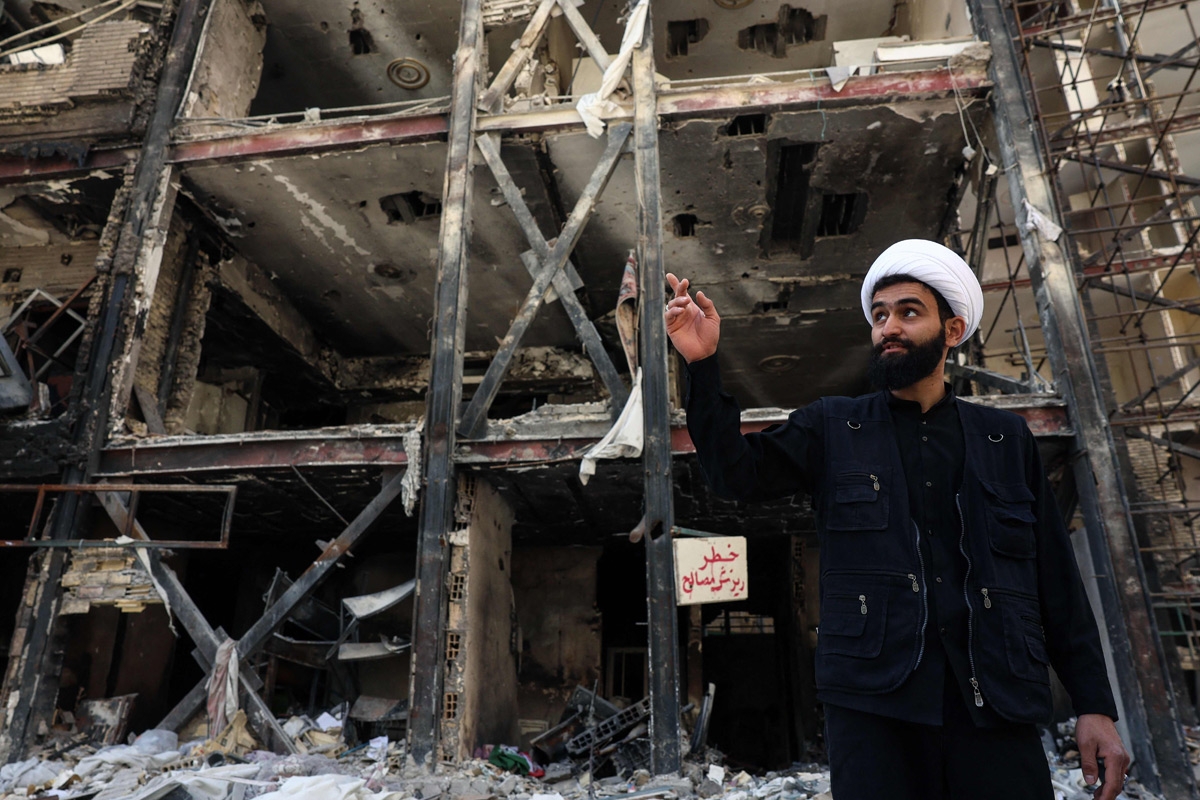
Tehran and Washington are conducting second-round negotiations following a naval blockade on the Strait of Hormuz, with Pakistan's intervention and support from China and France.
Translated by Alqyas from Al-Jarida — Original source
As US forces begin implementing a comprehensive naval blockade targeting Iran’s ports and its vital oil artery, amid fears that the repercussions could impact the region and global energy and trade markets, international and regional efforts and calls to bring Tehran and Washington back to the negotiating table have intensified. Bloomberg reported that Tehran is considering a temporary suspension of shipping operations through the Strait of Hormuz to avoid challenging US restrictions and to thwart a potential round of peace talks.
Bloomberg cited an official familiar with Tehran’s deliberations as saying that avoiding a test of the US Navy’s resolve to enforce the blockade ordered by President Donald Trump reflects the Iranian authorities’ desire to prevent an immediate escalation during a sensitive diplomatic phase in which all parties are arranging logistical details for a new direct meeting between Iranians and Americans, similar to the first such meeting hosted by Islamabad last Saturday to put an end to the war.
This coincided with France Press citing a source as saying that Pakistan is making efforts to bring the two sides back to the negotiating table, “but the location and date of the meeting have not yet been finalized.”
The source indicated that Islamabad is seeking to extend the ceasefire that began last Wednesday and lasts for two weeks, to allow more time for diplomatic efforts aimed at bridging the gaps between Tehran and Washington regarding an agreement covering all points of contention between the two countries.
While Reuters quoted a Pakistani official as confirming that his country had received a positive response indicating Iran’s openness to holding a second round of talks, which could take place tomorrow, Thursday, an Iranian official denied that any official decision had been made to resume negotiations with Washington.
This came as the Financial Times revealed that Pakistani Army Chief Asim Munir is working to find common ground between the US and Iranian proposals on the fate of enriched uranium, one of the main points of disagreement between the two countries.
On the night of Monday-Tuesday, US Vice President JD Vance, who led his country’s delegation in the Pakistan negotiations, stated that Washington had made significant progress in talks with the Iranians.
When asked about the possibility of further talks, Vance said, “The ball is in Iran’s court,” adding that Tehran’s participation at this level of officials in the negotiations held in Islamabad was “a positive thing.”
Although he had previously announced that Tehran had rejected US conditions during the talks, Vance clarified that “Iranian negotiators were unable to reach an agreement and had to return to Tehran to obtain approval from the Supreme Leader or someone else.” He added that the United States expects Iran to make progress in opening the Strait of Hormuz, which is partially closed by the Revolutionary Guard forces, and warned that negotiations would change if Tehran did not do so.
He noted that the Iranians had been informed that “they must remove nuclear materials from their country,” and that “we have made our red lines clear.” This came after Trump confirmed that Tehran wants to reach an agreement and that he would not approve any agreement allowing it to possess a nuclear weapon, following the collapse of the first round of direct talks between the two countries.
On the other side, Iranian President Masoud Pezeshkian confirmed that negotiations between Iran and the United States “had reached understandings at the expert level, but the intransigence and lack of political will among senior U.S. officials prevented reaching a final agreement.” During a phone call with his French counterpart Emmanuel Macron, Pezeshkian stressed that “Paris can play a constructive role in bridging the differences between Tehran and Washington,” adding that “threats and pressures will only exacerbate the problems.”
For his part, Macron revealed that he had spoken with the presidents of the United States and Iran, urging them to resume negotiations quickly with the support of key stakeholders to dispel misunderstandings and avoid any new escalation. He said it was essential for all parties to commit to a ceasefire following the war launched by the United States and Israel against Iran, which lasted about 40 days, noting that the ceasefire must also cover Lebanon.
He also emphasized the need to reopen the Strait of Hormuz as soon as possible, without conditions, restrictions, or fees, in reference to his opposition to moves by Iran’s Islamic Revolutionary Guard Corps (IRGC) to impose levies on ships to ensure their passage through the strait.
He announced that his country would co-host a conference with Britain on Friday for non-belligerent states to contribute to a mission to restore freedom of navigation in the Strait of Hormuz.
Meanwhile, Iranian government spokesperson Fatemeh Mohajerani announced that preliminary estimates of the losses suffered by her country due to the war reached approximately $270 billion.
While the Wall Street Journal quoted a U.S. official as saying that the United States had deployed more than 15 warships to support the blockade operation, reports indicated that the U.S. aircraft carrier George H.W. Bush was sailing off the coast of Africa, en route to the region to join operations in “Epic Fury,” a move understood as an effort to avoid the Red Sea, where it might face attacks from the Houthi group allied with Tehran.
According to maritime data, three oil tankers linked to Iran transited the Strait of Hormuz on the first day of the blockade.
The three tankers were neither bound for nor departing from Iranian ports, placing them outside the scope of the blockade imposed by Washington.
In response, Alaeeddin Boroujerdi, a member of the Iranian Parliament’s National Security and Foreign Policy Committee, threatened that any naval vessel attempting to impose a blockade in the Strait of Hormuz “would be sunk by the Iranian Armed Forces,” considering the blockade “merely a propaganda stunt by Trump.”
On another front, U.S. Central Command Commander Brad Cooper held coordination discussions yesterday with Israeli Chief of Staff Eyal Zamir and several senior security officials in Tel Aviv. Meanwhile, outgoing Mossad director David Barnea stated that the strategic mission to overthrow the Iranian regime was not yet complete, despite entering the second month of the comprehensive military confrontation.
In the meantime, Israeli sources leaked that Tel Aviv had begun an air bridge to replenish ammunition and weapons stockpiles, in anticipation of a potential collapse of the diplomatic track. An Israeli official was quoted as saying: “The Iranians cannot currently build a nuclear bomb, but the most they can obtain is enriched uranium.”
On the international level, Chinese Foreign Ministry spokesperson Gao Jia described the U.S. blockade of the Strait of Hormuz as “a dangerous and irresponsible step,” explaining that it “will only increase tensions in the region, undermine the already fragile ceasefire, and threaten the safety of navigation in the strait.”
He noted that the “five-point initiative proposed with Pakistan could serve as a compass for efforts to restore peace in the Middle East.” On another front, the Chinese official denied U.S. reports that Beijing was preparing to send weapons to Tehran, stressing that his country would take firm countermeasures if the United States insisted on imposing additional tariffs under that pretext. Meanwhile, Spanish Prime Minister Pedro Sánchez affirmed that China is capable of playing a pivotal role in ending the Iran war, describing Israel as the sole violator of international legitimacy.
