IMF, World Bank, and Energy Sector Warn of Major Supply Shock
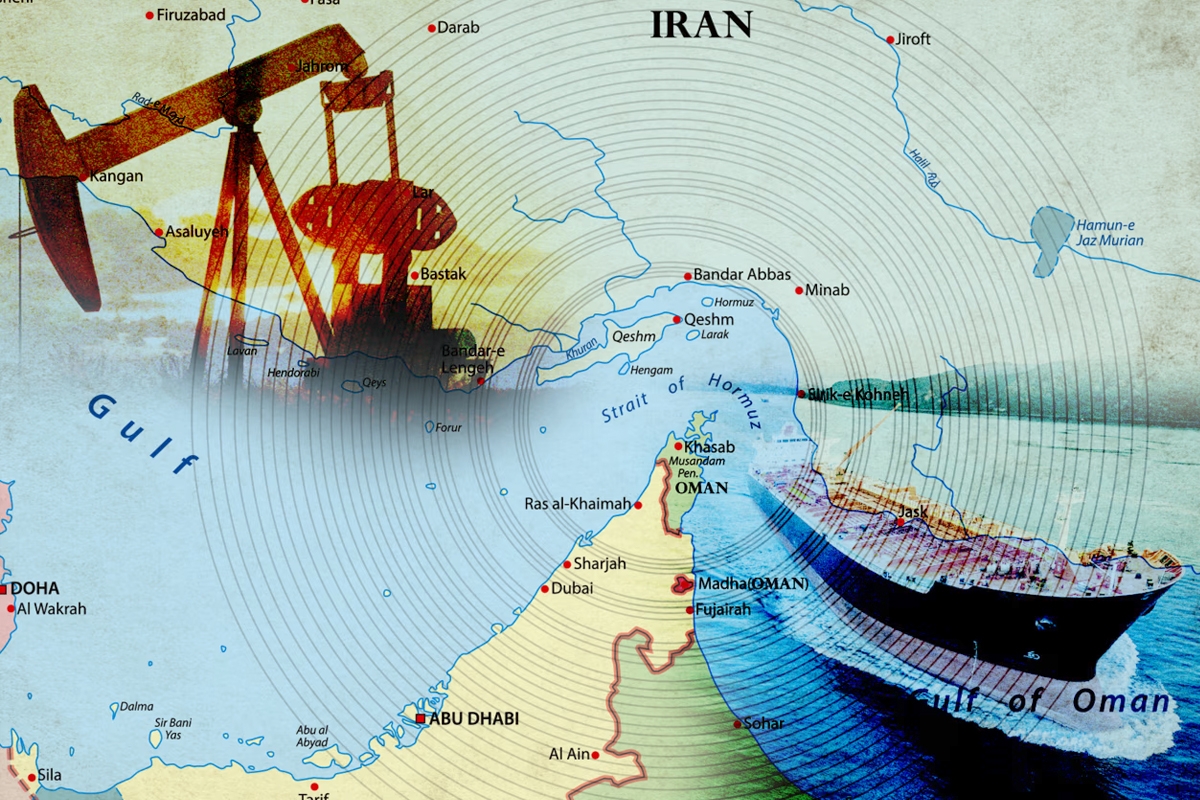
The IMF and World Bank pointed to worsening energy supply shocks due to the blockade on the Strait of Hormuz and export restrictions, with oil prices rising to $100 per barrel.
Translated by Alqyas from Al-Jarida — Original source
The International Monetary Fund (IMF), the World Bank, and the International Energy Agency (IEA) have urged countries worldwide to avoid hoarding energy supplies and imposing export restrictions, warning that such actions could exacerbate what they described as the largest shock ever experienced by the global energy market.
IEA Executive Director Fatih Birol told journalists following a meeting with leaders from the IMF and the World Bank that several countries are holding energy reserves and imposing export restrictions, and he appealed to all nations to allow energy supplies to flow into markets.
IMF Managing Director Kristalina Georgieva told journalists, “First, do no harm,” noting that she is meeting with heavily affected countries in Asia, sub-Saharan Africa, and some South Pacific islands that are concerned about supply availability.
Georgieva added, “The first principle should be not to impose export restrictions, which only worsen the imbalance,” pointing out that the war would have more severe consequences for growth and inflation if it continues for a long period.
The US military began a blockade of ships sailing from Iranian ports yesterday, Monday, while Tehran vowed to retaliate against its neighbors’ ports in the Gulf following the collapse of talks held earlier in the week in Islamabad aimed at ending the war. Oil prices jumped above $100 per barrel, amid a lack of signs indicating a quick reopening of the Strait of Hormuz, through which 20 percent of global oil and liquefied natural gas (LNG) supplies pass.
Birol, speaking at an event organized earlier by the Atlantic Council, stated that the conflict has caused the worst global disruption in the energy sector, noting that more than 80 oil and gas facilities across the Middle East have been damaged so far. He added that the situation was bad in March, when some shipments were loaded, but it may worsen during the current month. “The scale of the problem is enormous, and countries will suffer from it, some more than others, but I assure you... no country is immune to it.”
Leaders of the three institutions pledged to continue coordinating their approach to addressing the fallout from the conflict in the Middle East, which has caused oil prices to rise by 50 percent since it erupted on February 28. The shock has also driven up prices for gas and fertilizers, raising concerns about food security and job losses.
The statement noted that the situation remains highly uncertain, and even after shipping activity resumes regularly through the Strait of Hormuz, it will take time before global commodity supplies return to pre-conflict levels.
The IMF and World Bank forecast that they will lower their growth projections and raise their inflation forecasts due to the war. The conflict has overshadowed the IMF and World Bank Spring Meetings, which are taking place in Washington this week.
Birol clarified that the IEA has already released approximately 400 million barrels of oil from its reserves and is prepared to take further action if necessary. “400 million barrels represent only 20 percent of our reserves. We still have 80 percent... We are assessing the situation, and if we decide the time is right, we are ready to act immediately.”
The price of the Kuwaiti Oil Index rose by $5.64 to reach $106.67 per barrel in trading yesterday, Monday, compared to $101.03 per barrel in last Friday’s trading, according to the price announced by the Kuwait Petroleum Corporation.
Global oil prices fell at the start of Asian trading on Tuesday morning, as signs eased concerns about a potential dialogue between the United States and Iran to end their conflict, which had fueled fears of supply disruptions stemming from the US blockade of the Strait of Hormuz. Brent crude futures dropped $1.86, or 1.87 percent, to $97.50, while US West Texas Intermediate (WTI) crude fell $2.25, or 2.27 percent, to $96.83.
Both benchmarks had risen in the previous session, with Brent crude surging by more than 4 percent and WTI rising by approximately 3 percent, after the US military initiated a blockade of Iranian ports.
The US military clarified on Monday that its blockade of the Strait of Hormuz would extend eastward into the Gulf of Oman and the Arabian Sea. Ship-tracking data showed that two vessels turned back in the strait as the blockade came into effect.
In response, Iran threatened to target ports in Gulf-coastal states following the collapse of talks earlier in the week in Islamabad, which had aimed at resolving the crisis.
Tim Waterer, chief market analyst at KCM Trade, said, “Despite the collapse of peace talks in Pakistan earlier this week, Trump managed to ease pressure on oil prices again by dangling the prospect of reaching an agreement.”
Sources familiar with the negotiations stated that dialogue between Iran and the United States remains ongoing, while Pakistani Prime Minister Shehbaz Sharif confirmed ongoing efforts to de-escalate tensions. Trump stated that Iran “wants to strike a deal.”
NATO members, including Britain and France, declined to join the blockade, instead calling for the reopening of the vital waterway.
Meanwhile, the Organization of the Petroleum Exporting Countries (OPEC) lowered its global demand forecast for the second quarter by 500,000 barrels per day in its latest monthly report.
The International Energy Agency (IEA) sharply cut its forecasts for oil supply and demand growth, stating that both are now expected to fall below 2025 levels due to the impact of the Middle East war on oil flows and its repercussions on the global economy.
The agency now expects global oil demand to decline by 80,000 barrels per day in 2026, compared to a previous forecast of a 640,000-barrel-per-day increase in its last monthly report. It said, “Demand decline will worsen as supply shortages persist and prices rise,” adding that the largest drops in oil consumption have so far come from the Middle East and the Asia-Pacific region.
The Paris-based agency also forecast a global oil supply decline of 1.5 million barrels per day in 2026, down from a previous expectation of a 1.1 million-barrel-per-day increase. It noted that due to attacks on Middle Eastern energy infrastructure and Iran’s de facto closure of the Strait of Hormuz, the largest disruption in oil supply history occurred, with supplies falling by 10.1 million barrels per day in March.
The CEO of French energy group TotalEnergies emphasized the importance of reopening the Strait of Hormuz for the oil market “even if it requires paying fees,” on the first day of the blockade announced by Washington against Iranian ports.
Patrick Boyani, speaking at a conference in Washington on the sidelines of the International Monetary Fund and World Bank spring meetings, said, “It is clear that reopening the Strait of Hormuz and ensuring freedom of navigation through it, even if it requires paying fees to any party, is of paramount importance for market freedom.” He noted that the additional sanctions imposed by Trump on Iranian ports, which came into effect yesterday, Monday, further exacerbate the “decline” in market supply, which is already suffering from an oil shortage.
Boyani argued that this explains the sharp rise in crude oil prices yesterday, Monday, while affirming the illegality of the transit fees imposed by Tehran on the Strait of Hormuz, which he estimated at one dollar per barrel. However, he considered that “the real problem lies in the threat” facing navigation in the strait, rather than any transit fees.
He emphasized that Western countries, unlike Asian nations, possess “reserves sufficient for approximately three months” and are capable of mitigating the oil crisis. He added, “But if this war and blockade continue for more than three months, we will begin to face serious problems in the supply of certain products, such as kerosene, which would force us to ration the use of aircraft or diesel.”
The Iraqi News Agency (INA) quoted the spokesperson for the Ministry of Oil, Sabah Bizon, as saying that “the Ministry’s policy is to not leave any opportunity for oil exports unexploited,” noting that “the Ministry is coordinating, opening, and utilizing available routes.”
Bizon added that “the Ministry continues to activate secondary routes, including the Ceyhan pipeline and the national pipeline with a capacity of 1.6 billion,” clarifying that “oil is now being exported through the Syrian port of Baniyas, in addition to agreements to reactivate the Saudi pipeline that has been idle since 1991.”
He stressed that “there are understandings with both the American and Iranian sides to circumvent the existing blockade on the Strait of Hormuz and with all parties to ensure exports,” pointing out that “the Ministry is leaving nothing undone, as this represents the national economy, and the Iraqi state relies on oil exports for more than 90% of its economy.”
BP announced on Tuesday that it expects its large oil trading division to record “exceptional” results for the first quarter, reflecting unexpected profits resulting from the sharp rise in oil prices caused by the US-Israeli conflict against Iran.
In a quarterly statement focusing on trading, the company added that its net debt would rise to between $25 billion and $27 billion, slightly up from $22 billion in the previous quarter, due to working capital movements, an accounting measure of short-term liquidity based on current assets minus current liabilities.
This generally aligned with the first-quarter forecasts issued by its European rival Shell, which also pointed to strong results in oil trading, a sector in which major European companies are more active than their American competitors.
Brent crude surged to its highest levels in several years, nearing $120 per barrel, following the start of US-Israeli strikes on Iran in late February, and the subsequent closure by Tehran of the vital maritime Strait of Hormuz and attacks on its Gulf neighbors. According to Reuters calculations, the average price of Brent crude was $78 per barrel during the quarter from January to March, compared to around $63 in the fourth quarter and $75 per barrel during the same period last year.
BP said its total oil and gas production is expected to remain broadly flat during the quarter, while refining margins rose to $16.9 per barrel in the first quarter from $15.2 in the previous three months, adding that this would help boost its refined products business results by $100 million to $200 million.
Energy companies typically do not disclose full results for trading divisions to maintain a competitive edge. BP is scheduled to announce its first-quarter results on April 28.
Traffic congestion and road traffic in Germany declined during this year’s Easter holiday period due to higher fuel prices. The German Automobile Club (ADAC) said, “Traffic density, both on major roads and in usual picnic areas, was lower than during the Easter holidays in 2024 and 2025,” attributing the drop to “significantly higher fuel prices, which led many to leave their cars at home.”
The decline in traffic was particularly noticeable during the Easter weekend, which typically sees numerous daily trips and family visits, according to the German News Agency (dpa).
On the previous Thursday, the number of traffic jams fell by about 5% compared to the previous year and by 12% compared to 2024. On the previous Friday, the number of jams dropped by 21% compared to 2025 and by about 25% compared to 2024.
The German Automobile Club stated in a press release: “These developments indicate that high fuel prices had a clear impact on travel during this year’s Easter holiday.”
On the previous Monday, “Easter Monday,” the price of E10 premium gasoline reached its highest level since 2022, while diesel recorded its all-time high the following day.
Fuel prices have risen by about 40 cents for gasoline and 70 cents for diesel compared to levels before the outbreak of the US-Israeli war on Iran at the end of February.
Kazakh Minister of Energy Yerlan Akzhanov announced during a government meeting in Astana on Tuesday that the government plans to export 76 million tons of crude oil this year, down from 78.7 million tons exported last year.
Bloomberg News quoted the minister as saying that Kazakhstan, the largest energy producer in Central Asia, is holding talks with oil companies on measures to increase oil production in the country.
This comes as Kazakhstan’s oil exports fell to 15.3 million tons in the first quarter of this year, compared to 19.5 million tons in the same period last year, while its production dropped to 19.7 million tons in the first three months of this year, down from 24.6 million tons in the same period last year.
The Kazakh Energy Minister noted that the decline in the performance of the country’s oil and natural gas sector in the first quarter of this year is linked to the situation at CPC, which operates the main pipeline transporting crude oil from Kazakhstan to Russian export ports on the Black Sea, and at Tengizchevroil.
