The 'Fragile Truce' Between the US and Iran: European Stock Markets Fall, Oil Prices Rise
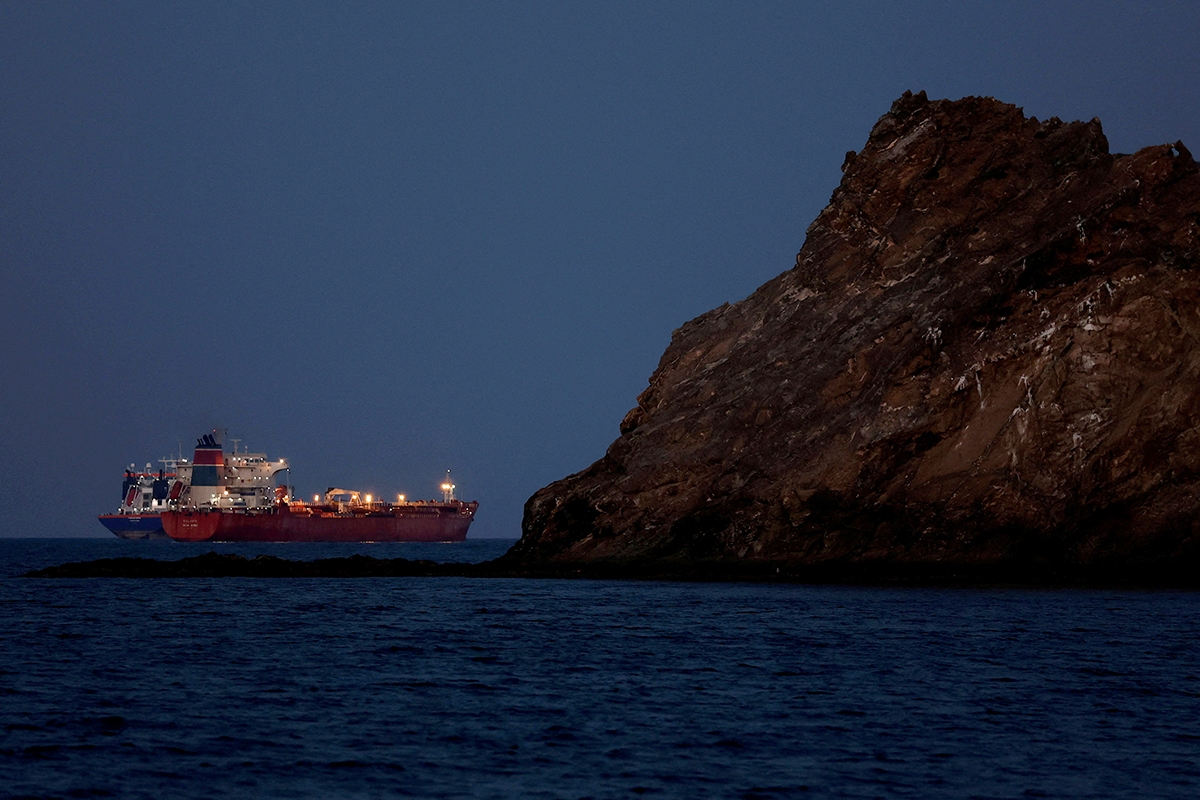
A fragile truce between Iran and the United States causes a decline in European stock markets and a rise in oil prices.
Translated by Alqyas from Al-Jarida — Original source
The repercussions of the war in the Middle East, which erupted on February 28 and for which a ceasefire between Iran and the United States was announced on the night of Tuesday-Wednesday, continue to ripple through global markets.
European stock exchanges fell on Thursday, as the wave of relief that had swept markets on Wednesday was overshadowed by concerns over the fragile ceasefire in Iran, exacerbated by widespread Israeli strikes on Lebanon.
By around 11:00 GMT, the Paris stock exchange lost 0.87 percent, Frankfurt fell by 1.20 percent, London dropped by 0.31 percent, and Milan declined by 0.19 percent.
Oil prices rebounded after yesterday’s decline, as enthusiasm generated by the announced ceasefire between Iran and the United States dissipated, while investors await the actual reopening of the Strait of Hormuz.
By around 11:00 GMT, West Texas Intermediate (WTI) crude for May delivery rose 5.05 percent to $99.18 per barrel. Meanwhile, Brent crude, the global benchmark, for June delivery increased by 3.85 percent to $98.40 per barrel.
The European Union, through its spokesperson, announced on Thursday its rejection of the idea of imposing tolls for transiting the Strait of Hormuz, calling for the preservation of freedom of navigation in this vital waterway.
Anwar Anouni stated that “international law enshrines freedom of navigation, meaning no payments or fees of any kind.”
French Foreign Minister Jean-Noël Barrot, for his part, said on Thursday in an interview with France Inter radio that imposing tolls on navigation in the Strait of Hormuz is “unacceptable,” stressing that it constitutes a violation of international law.
Giorgia Meloni, in a speech before the Italian Parliament, said, “If the crisis in the Middle East reignites, we must seriously address the issue of the European response... which should not differ from what was adopted to confront the COVID-19 pandemic.”
The dollar’s exchange rate stabilized on Thursday after yesterday’s decline, amid doubts about the durability of the ceasefire. The greenback had fallen following oil prices after the announcement of the truce.
Before the war began, Iran’s inflation rate was close to 50 percent, sparking widespread protests due to the country’s economic situation. Now, more than five weeks into the conflict, this crisis has worsened and living conditions have deteriorated.
In addition to daily fears of attacks, the direct impact of the war has been a rising wave of inflation affecting all goods, from basic necessities such as food, medicine, and baby diapers, to meals in city cafes.
Mehr News Agency reported, citing a military statement accompanied by a maritime map showing routes south and north of Larak Island, that “in order to protect against potential collisions with mines, and in coordination with the Islamic Revolutionary Guard Corps Navy (...), ships will have to take alternative navigation routes in the Strait of Hormuz until further notice.”
India increased its assistance for purchasing fertilizers by more than 11 percent compared to last year, aiming to support its vast agricultural sector, which was affected by price hikes caused by the war in the Middle East.
The agricultural sector, which employs more than 45 percent of India’s workforce, constitutes a strong electoral pillar.
