UAE: Any US-Iran deal must guarantee freedom of navigation through the Strait of Hormuz
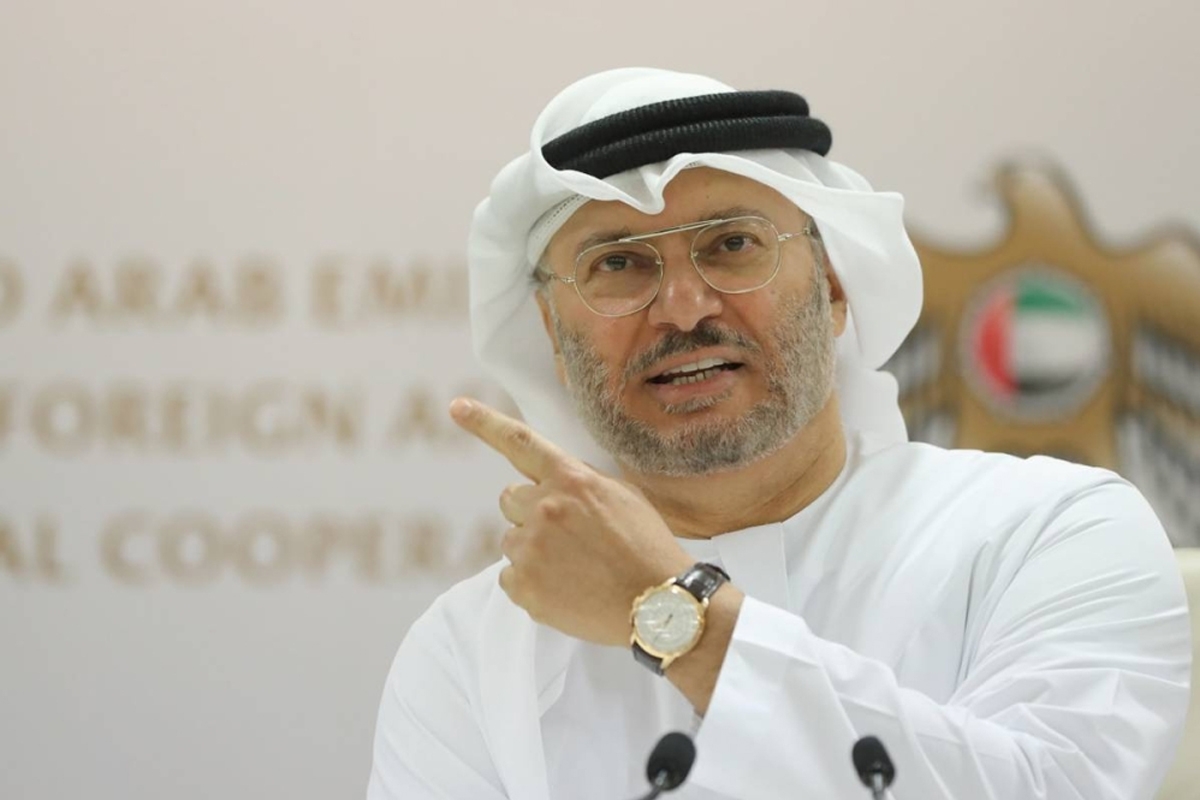
Riqash calls for a settlement ensuring freedom of navigation through the Strait of Hormuz
Translated by Alqyas from Al-Jarida — Original source
The UAE’s diplomatic advisor to the president, Anwar Gargash, said that any settlement of the war between the United States and Iran must guarantee freedom of navigation through the Strait of Hormuz, and warned that any agreement that fails to curb Iran’s nuclear program, missiles, and drones would pave the way for a “more dangerous and volatile Middle East.”
Gargash, the UAE’s diplomatic advisor to the president, said at a press conference early this week that the Strait of Hormuz, which constitutes the world’s most vital oil artery, cannot be tolerated as a weapon. He stressed that its security cannot be treated as a regional bargaining chip but is a global economic necessity.
Gargash said, “No country can hold the Strait of Hormuz hostage,” adding that freedom of navigation through the waterway “must be an integral part of any conflict settlement, with a clear agreement stipulating that.”
He said, “We do not want to see further escalation... but we also do not want a ceasefire that fails to address key issues that will create a more dangerous environment in the region... particularly Iran’s nuclear program, and the missiles and drones that continue to rain down on us and other countries.”
US President Donald Trump threatened Tehran with “hell” if it does not reach an agreement and reopen the Strait of Hormuz by the deadline he set for tomorrow, Tuesday. In a post filled with profanity on Sunday on his Truth Social platform, Trump threatened to launch further strikes on Iran’s electricity and transport infrastructure, which critics say would constitute a war crime.
The United States and Israel have been bombing Iran for more than five weeks to destroy what they described as an imminent threat stemming from Iran’s nuclear program, suspected of aiming to produce nuclear weapons, alongside its ballistic missile arsenal and its support for armed groups in the region.
About one-fifth of the world’s oil and liquefied natural gas supplies passed through the waterway daily, but Iran’s actions sharply reduced traffic, triggering a global energy crisis.
The war erupted on February 28, when the United States and Israel began bombing Iran after talks between Tehran and Washington aimed at reaching an agreement on Iran’s nuclear activities reached an impasse. Iran responded by launching waves of missiles and drones at Israel, US military bases in the region, and critical energy infrastructure in the Gulf, such as airports, ports, and commercial hubs.
Regional officials said the UAE suffered heavier Iranian strikes than any other Gulf state.
Gargash said the worst-case scenario that the UAE had ruled out for decades—a comprehensive Iranian attack—is now unfolding. He said that despite this, the country is handling the situation well, demonstrating resilience and adaptability under pressure.
He said the UAE’s economic foundations remain strong, putting the country on a path to recovery, but acknowledged that this will require effort.
He added that Iran’s strategy is likely to strengthen, rather than weaken, the security alliance between the Gulf states and Washington, thereby cementing the US military role in the region and expanding Israel’s influence.
Regional officials considered Iran’s strikes on energy facilities and shipping routes in the Gulf to be a calculated attempt to increase costs for Washington’s Arab allies in the Gulf. By targeting oil facilities, ports, and a key waterway such as the Strait of Hormuz, Iran is betting that Gulf states, which have suffered an economic shock, will pressure the United States to halt the war.
This logic was based on Gulf efforts over the years to balance relations with Washington and Tehran, contain tensions, and avoid direct confrontation. Several Gulf states have restored diplomatic ties with Iran and sought to shield their economies from regional shocks, believing that engagement would reduce risks.
Qarqash said that the Iranian leadership is fighting to preserve “the regime, not the state,” arguing that no legitimate government would accept such destruction merely on the claim that it has endured. He added that the United Arab Emirates does not seek hostility with Iran, but warned that trust is impossible under the current government in Tehran.
He said the UAE is grateful for the international support it has received, specifically highlighting France as a steadfast partner, and also praised Washington for its exceptional support, particularly in bolstering the country’s air defense capabilities.
