Environment: US-Iran War Pressures Sustainability Activities in Kuwaiti Banking Sector
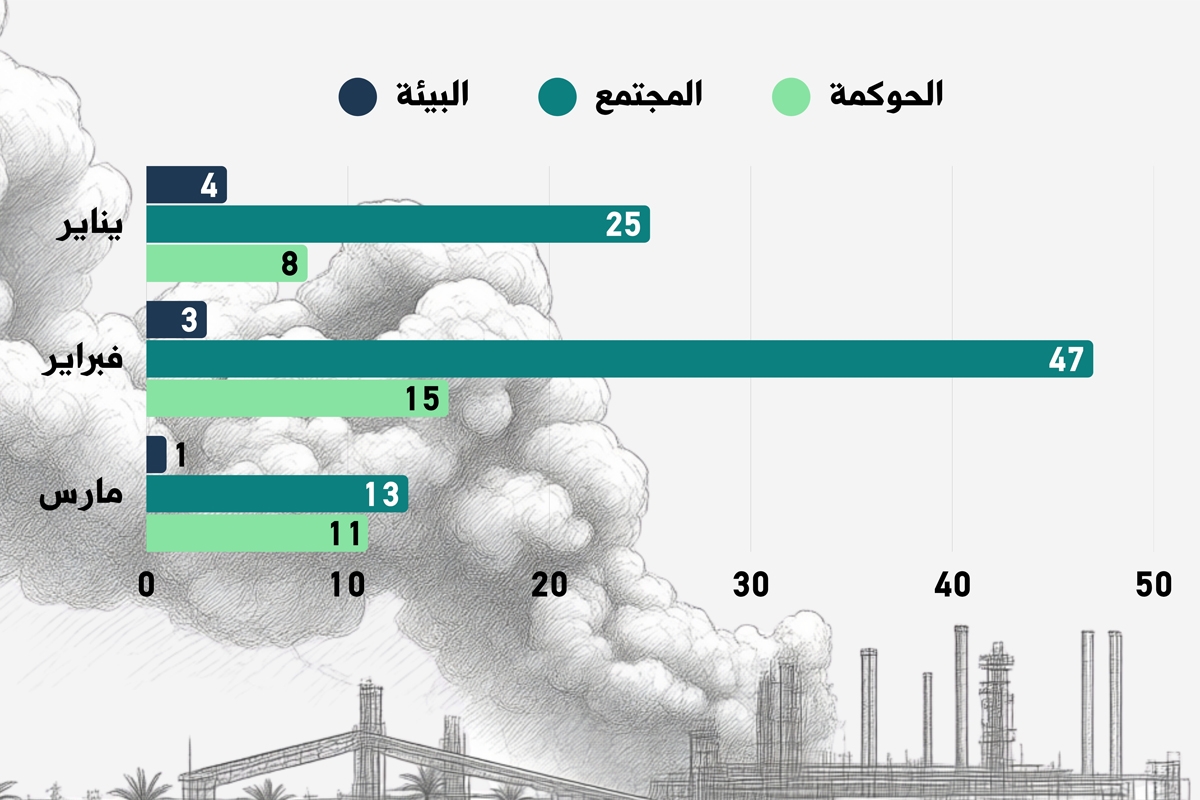
A study showed that US-Iran tensions have impacted sustainability activities in the Kuwaiti banking sector, particularly in social initiatives, while governance activities remained stable and environmental activities declined significantly.
Translated by Alqyas from Al-Jarida — Original source
A study released by Manakhef for Studies and Research revealed that the Kuwaiti banking sector experienced a sharp decline in sustainability activities during March 2026, directly affected by geopolitical developments in the region, despite achieving active performance during the first quarter of the year.
The study clarified that the escalation related to the war between the United States and Iran, and the subsequent Iranian attacks on Kuwait, led to the disruption of a significant portion of the business environment, clearly impacting the pace of activities, particularly community and field initiatives that rely on direct interaction.
According to the analysis results, nine banks listed on the Kuwait Stock Exchange carried out a total of 127 activities in the fields of environment, society, and governance during the period from January to March 2026. Activity showed strong growth at the beginning of the year, rising from 37 activities in January to 65 in February, before dropping to just 25 activities in March, a decrease of 62%.
The study showed that social activities accounted for the largest share of total initiatives, reaching approximately 67%, driven by financial awareness programs and investments in education and human capital development. Training hours exceeded 147,000, while community investments reached approximately 29 million dinars. National Bank of Kuwait led this pillar with 25 initiatives during the first quarter, reflecting a clear focus on initiatives with direct community impact.
In contrast, governance activities accounted for about 27% of the total, including regulatory compliance, board appointments, and cybersecurity enhancement. These activities maintained relative stability even during the decline in March, reflecting their mandatory nature and direct link to regulatory requirements.
Regarding the environmental aspect, the study revealed a clear performance gap, as environmental activities did not exceed 6% of total initiatives, totaling only eight activities during the quarter. Kuwait Finance House accounted for most of them, while other banks recorded very limited environmental activity, indicating a structural weakness in adopting environmental strategies within the banking sector.
Manakhef for Studies and Research noted that the impact of the decline in March was not uniform across pillars; social activities decreased by 72%, while governance activities declined by only 27%, whereas environmental activity remained fundamentally limited. This reflects the differing nature of these activities, distinguishing between voluntary and regulatory ones.
The results also showed that activity was concentrated in a limited number of banks. Three banks—National Bank of Kuwait, Kuwait Finance House, and Gulf Bank—accounted for approximately 66% of total activities, while some banks recorded relatively low activity levels, raising questions about the extent to which sustainability culture is disseminated across the entire sector.
In this context, the study indicated that the Kuwaiti banking sector is still in its early stages regarding environmental sustainability. Clear indicators of adopting green financing, measuring financed emissions, or establishing clear strategies for carbon neutrality have not yet emerged, compared to advanced global practices in this field.
Manakhef emphasized that the first-quarter results reflect a clear gap between progress in social and governance pillars on one hand, and lag in the environmental pillar on the other, requiring the development of more comprehensive strategies aligned with international standards and investor trends.
She added that the second-quarter data would be decisive in determining whether the decline in March represented a temporary phenomenon linked to geopolitical developments, or reflected a structural pattern that makes sustainability a secondary priority during crises.
The study relied on a comprehensive analysis of activities announced by banks between January 1 and March 31, 2026, based on press releases, official reports, regulatory disclosures, and media coverage. Activities were classified according to environmental, social, and governance (ESG) pillars, with the analysis noting that it was limited to publicly announced activities and did not include internal initiatives that were not disclosed.
