US Gas Prices Hit Highest Level Since 2022
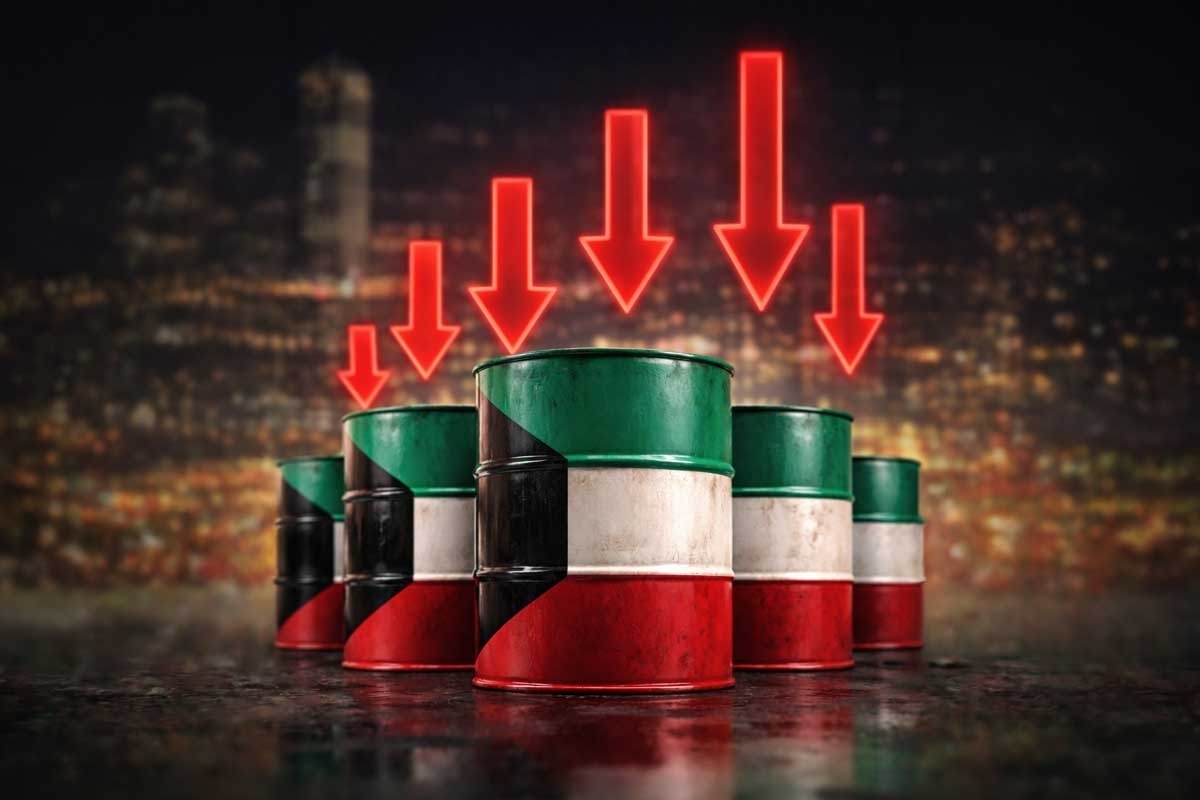
Gas prices in the US have surpassed $4 per gallon due to the Iran war and rising oil prices.
Translated by Alqyas from Al-Jarida — Original source
The average gasoline price at U.S. gas stations surpassed $4 per gallon, according to the American Automobile Association (AAA) on Tuesday, marking its highest level in nearly four years amid the Middle East war. The rise above the sub-$3 average seen in late February poses a political challenge for President Donald Trump, who ordered strikes on Iran in a conflict that threatens the global economy.
Since Tuesday morning, the average gallon price (approximately 4 liters) reached $4.018, according to the AAA website.
Gasoline prices hit $5.88 per gallon in California, where fuel is the most expensive in the country, followed by Hawaii ($5.45) and Washington ($5.34), the AAA reported.
The price hikes exacerbate political risks for Trump months before the crucial midterm elections. Rising costs will hit American consumers as the summer holiday season approaches, with further increases expected due to the Iran war.
Although the United States primarily imports oil from Canada and Mexico and has not been significantly affected by Middle Eastern shortages caused by the war, prices have risen globally due to the interconnectedness of energy markets.
The Kuwaiti Crude Oil price fell by $5.76 to $113.17 per barrel in Monday trading, down from $118.93 per barrel in last Friday’s trading, according to the Kuwait Petroleum Corporation (KPC).
In a statement to KUNA, the corporation said that one metric ton of propane gas will be sold at $750 in April, while one metric ton of butane gas will be sold at $800.
Liquefied gas prices are influenced by global oil market fluctuations, as oil serves as a primary determinant for these materials’ prices, alongside supply and demand dynamics and other factors.
In global markets, Brent crude futures are on track to record their largest monthly gains ever amid volatile trading today, as investors assess the likelihood of U.S. President Donald Trump ending the war with Iran, while also factoring in potential supply shocks from a prolonged closure of the vital Strait of Hormuz. Brent crude futures for May delivery, expiring on Tuesday, rose $2.22, or 1.97 percent, to $115 per barrel. The more actively traded June contract climbed 64 cents, or 0.6 percent, to $108.03. U.S. West Texas Intermediate (WTI) crude futures for May rose $1.35, or 1.31 percent, to $104.23 per barrel.
The nearest-to-expiry Brent crude futures are heading toward a record monthly gain of 59 percent, according to data from the London Stock Exchange Group dating back to June 1988. WTI crude surged 56 percent, marking its largest jump since May 2020.
The Wall Street Journal cited U.S. administration officials as saying that Trump informed his aides he is prepared to end the military campaign against Iran even if the Strait of Hormuz remains largely closed, leaving the issue of reopening it for later.
The U.S. president had previously warned that the United States would destroy Iranian power plants and oil wells if Tehran did not reopen the waterway.
Sujatha Sachdeva, founder of New Delhi-based research firm SS Wealth Street, stated, “While diplomatic signals remain mixed, ground realities point to continued uncertainty.”
In a reaffirmation of the threat to marine energy supplies posed by the war between Iran on one side and the United States and Israel on the other, the Kuwait News Agency reported today, citing the Kuwait Petroleum Corporation, that the corporation’s crude oil tanker, the Salmi, with a capacity of two million barrels, was subjected to what was described as an Iranian attack in the port of Dubai. Officials also warned of the possibility of oil spills in the region.
The Yemeni Houthi movement targeted Israel with missiles on Saturday, raising new fears of potential disruptions in the Bab al-Mandab Strait, which connects the Red Sea to the Gulf of Aden and serves as a major shipping route for vessels traveling between Asia and Europe via the Suez Canal.
Saudi Arabia has rerouted its crude oil exports through this route. Data from Kpler indicate that volumes shipped from the Gulf to the Red Sea port of Yanbu reached 4.658 million barrels per day last week, a sharp increase from the average of 770,000 barrels per day in January and February.
Australia, one of the world’s largest exporters of liquefied natural gas (LNG), plans to launch an investigation to review the taxes levied on oil and gas companies such as Chevron Corp, Woodside Energy Group, and Santos, as energy prices surge to record levels due to the conflict between the United States and Israel on one side and Iran on the other, generating substantial profits for these firms.
The Bloomberg News agency reported that the Australian Senate approved today the formation of a select committee to review the tax treatment of oil and gas companies, with representatives of the ruling Labor Party backing the proposal introduced by the Greens.
The committee will be chaired by Greens Senator Stevie Hodges May, who last week called for imposing a tax of at least 25 percent on gas exports, a proposal that could generate approximately 17 billion Australian dollars (11.6 billion US dollars) in annual revenue for the federal treasury.
Australia is experiencing intense debate over the possibility of increasing taxes on natural resource exports, as global prices have risen due to the war in Iran, leading to increased profits for major oil and natural gas production companies. Some politicians, trade unions, and rights advocacy groups are calling for higher levies on companies, including the imposition of a windfall tax, given that producing companies have benefited from the rocket-like rise in global energy prices.
Larissa Waters, leader of the Greens Senate bloc, said today, “This investigation will put the tax treatment of wealthy gas companies under the microscope, debunking their justifications for not paying taxes and building momentum for a fairer tax in the upcoming budget, while the public struggles to pay bills and witnesses a crazy rise in living costs. Gas companies should not profit from this without paying their fair share.”
On his part, Josh Ransiman, a gas market analyst at the Institute for Energy Economics and Financial Analysis, stated that government support for the investigation indicates that imposing a new tax on energy companies is a “real possibility.” He added, “This may not be surprising given the need for budget reform, with overwhelming public support for increasing taxes on LNG exports.”
According to parliamentary documents, the investigative committee will submit its report in early May, just days before the government announces its budget proposal for the next fiscal year.
Rising costs of oil imports have pressured India’s current account deficit as the war in Iran continues, hindering the Reserve Bank of India’s efforts to stabilize the rupee’s exchange rate, with heavy reliance on imported energy remaining an obstacle to the country’s foreign exchange stability.
Economists at Standard Chartered and Nomura expect the current account deficit to widen to 2.5% from 1% of GDP, noting that every 10% rise in oil prices widens the deficit by 0.4%, according to Bloomberg.
Somiya Kant Jha, a member of the Prime Minister’s Economic Advisory Council, also indicated that the flight of foreign investors toward safe havens could lead to a current account deficit for the first time since 1991.
Pressure from crude oil prices prompted Goldman Sachs economists to lower India’s 2026 growth forecast to 5.9% last week, less than two weeks after reducing it from 7% to 6.5%.
Indonesian President Prabowo Subianto announced on Monday that his country will begin implementing a 50% palm oil-based biodiesel blending program this year.
Subianto confirmed during a business forum in the Japanese capital that Jakarta is currently working to raise the palm oil blend in diesel fuel to 50% from 40%, a move aimed at enhancing energy self-sufficiency and reducing import dependence.
This announcement marks a significant shift in Jakarta’s energy policy, after the government previously ruled out launching the so-called B50 blend this year in January due to technical and financial challenges. However, talks were held to revive the plan amid energy supply disruptions caused by the war in the Middle East.
Petron Corp, the Philippines’ sole refiner, announced the completion of a purchase deal for 2.5 million barrels of Russian crude oil on March 24, as part of its efforts to secure raw material supplies amid fluctuations in global energy markets.
According to data released by Petron, these contracted quantities will be sufficient to support and expand the company’s crude oil inventory through June 2026, according to Reuters.
The company indicated the possibility of increasing its purchases from Moscow if the Middle East crisis persists, noting that it lost approximately 4 million barrels of crude from the region in just eight days.
Net income amounted to 157.3 billion yuan, equivalent to $22.76 billion, compared to 164.7 billion yuan in the previous year, while revenues fell by 2.5% to 2.8645 trillion yuan, according to the company’s statement to the Shanghai Stock Exchange.
In a similar vein, Sinochem announced an 11.5% drop in net profit to 122.08 billion yuan, while Sinopec recorded a larger decline of 37%, with profits reaching 31.8 billion yuan, reflecting widespread pressures on China’s energy sector.
Despite the decline in profits, PetroChina’s crude oil production rose to 948 million barrels in 2025, equivalent to 2.6 million barrels per day, a 0.7% increase from 2024. Natural gas production also increased by 4.5% to 536.32 billion cubic meters. However, the average selling price of crude oil fell by 14.2% compared to the previous year, pressuring revenues.
In the refining sector, crude oil processing volume decreased by 0.2% to 1.376 billion barrels, equivalent to 3.77 million barrels per day. The company also permanently closed its largest refinery in northeast China in mid-2025, as part of a government policy aimed at capping total refining capacity.
The data reflect the impact of the rapid expansion in electricity use within China, as domestic gasoline sales fell by 2.3%, while diesel sales rose by 0.8%. Aviation fuel, however, stood out as a notable exception, with sales surging by 18.3%, driven by a recovery in air travel.
