Gulf Draft Resolution to Open 'Hormuz' Under Chapter Seven
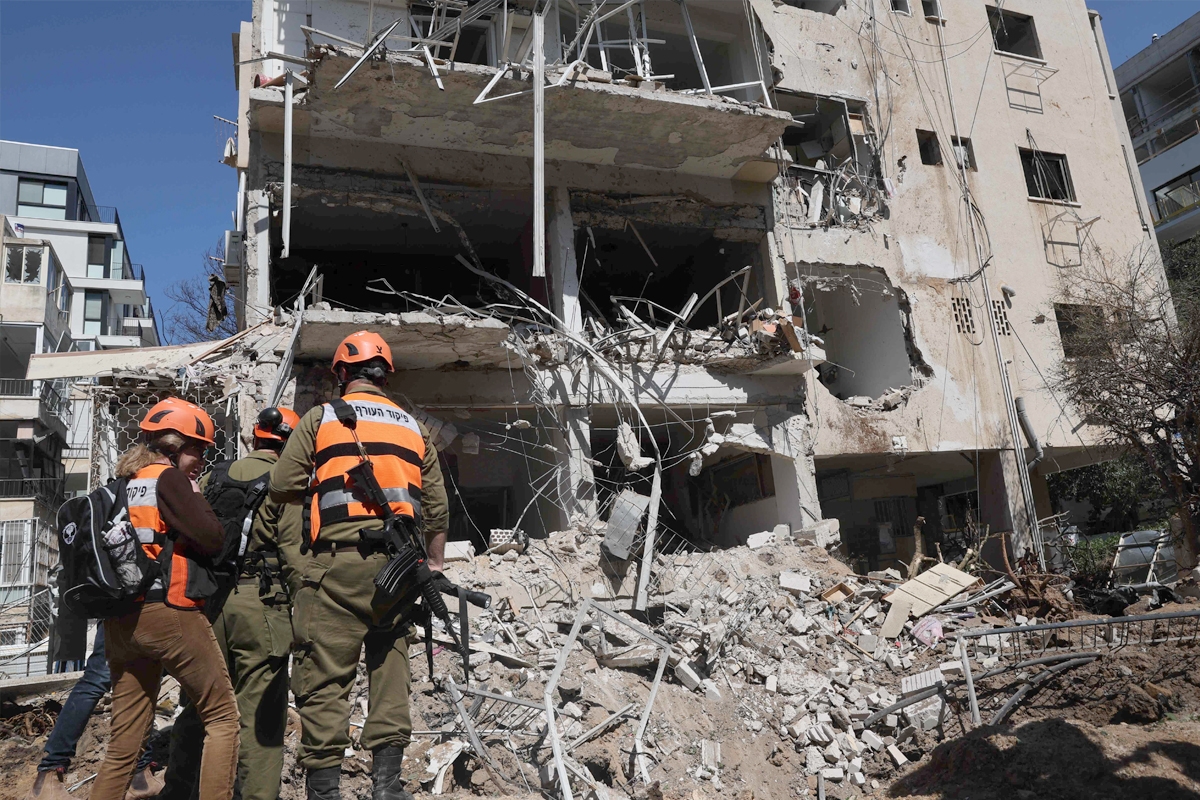
Bahrain has proposed a draft resolution allowing the use of force to protect navigation in the Strait of Hormuz, with Gulf and oil-backed support, but it faces opposition from Russia and China.
Translated by Alqyas from Al-Jarida — Original source
As Iran’s aggression against Gulf states entered its twenty-fifth day, Bahrain submitted a draft resolution to the UN Security Council authorizing states to use “all necessary means,” a diplomatic phrase understood as permission to employ force under Chapter VII, to protect commercial navigation in the Strait of Hormuz and its surrounding waters.
Diplomats said the Bahraini draft enjoys support from Gulf states and the United States, but noted that its chances of adoption appear slim, as Iran’s allies, Russia and China, are likely to use their veto power if necessary.
The Bahraini draft would fall under Chapter VII of the UN Charter, which empowers the Security Council to take measures ranging from sanctions to the use of force.
The Bahraini resolution describes Iran’s actions as a threat to international peace and security. Its text authorizes states, whether acting individually or through voluntary multinational naval coalitions, to use “all necessary means” in the Strait of Hormuz and its vicinity, including the territorial waters of littoral states, to ensure safe passage and prevent any movements that hinder or affect international navigation.
The draft also expresses readiness to take measures including imposing targeted sanctions. It demands that “Iran immediately cease all attacks on commercial vessels and any attempt to obstruct legitimate transit or freedom of navigation in the Strait of Hormuz and its surrounding waters.”
In contrast, the French draft does not mention Iran and does not fall under Chapter VII. It urges “all parties to refrain from further escalation,” calls for an end to ongoing hostilities in the Gulf, the Strait of Hormuz, and the Gulf of Oman, and calls for a return to diplomacy.
Rather than granting authorization for action, the French text encourages states with a stake in commercial sea lanes in the Strait of Hormuz to coordinate robust defensive efforts to ensure the safety and security of navigation, including escorting commercial vessels, while fully respecting international law, including the law of the sea.
Meanwhile, Qatari Foreign Ministry spokesperson Majid Al-Ansari said yesterday that Gulf Cooperation Council (GCC) states need to reassess the regional security architecture after the current war “has broken the concept of the regional security system in the Gulf.” He explained that the defensive partnerships among Gulf states, which operate in close parallel coordination to ensure their security, have proven effective in the defensive posture adopted during the crisis.
Al-Ansari clarified that Gulf states need a unified position at the level of regional coordination to confront current threats, noting that the GCC has taken defensive measures to protect Gulf states since the previous aggression against Qatar.
Speaking at a press conference, Al-Ansari said that “the complete destruction of Iran is not an option and Qatar’s position is clear on the need to end the war through diplomatic means.” He added that “any solution to the war must take into account national interests and the strategic interests of all,” stressing that bringing the parties to the negotiating table as soon as possible is the best option, and that Doha always supports solutions that end conflicts diplomatically.
Al-Ansari said Qatar is not currently undertaking any mediation efforts between the parties, and its focus is on defending its territory and sovereignty. He pointed out that some “benefit from promoting non-existent disputes among the parties in order to hinder de-escalation efforts.”
He explained that Iran is a neighbor by geography and that ways must be found to resolve problems with it, but at the same time emphasized that Qatar “has been subjected to aggression that contradicts the principles of neighborliness and brotherhood, and neighborly relations are incompatible with threats and aggression.”
Al-Ansari condemned “any aggression against energy facilities in Qatar or the region,” stating that these facilities are vital for serving civilians and must be protected from any threat.
Meanwhile, ambassadors of the Gulf Cooperation Council (GCC) countries accredited to New Delhi, during a joint meeting with Indian External Affairs Minister S. Jaishankar, affirmed that Gulf security is indivisible and that any attack on any Gulf state is an attack on all, emphasizing that everyone is in the same boat.
Kuwaiti Ambassador Meshal Al-Shammari said the meeting addressed the blatant Iranian aggression against GCC and Arab states, stressing the necessity of halting it and protecting civilians and critical infrastructure, including energy and electricity facilities, water desalination plants, and airports, alongside ensuring the security and safety of navigation and waterways in the Strait of Hormuz.
Ambassador Al-Shammari clarified that the meeting also reaffirmed the importance of continuing coordination and cooperation to confront escalating security challenges and ensure regional security and stability, protecting individuals, infrastructure, and waterways from successive Iranian attacks, which constitute a blatant violation of state sovereignty and a clear breach of international laws, humanitarian conventions, and the UN Charter.
He noted that ambassadors underscored the depth and strength of relations between GCC states and India, praising New Delhi’s support and solidarity, including communications held by senior Indian officials with GCC leadership and its supportive stances in international forums, including its backing of UN Security Council Resolution 2817 and its efforts to enhance security and stability at both regional and international levels.
As the Iranian aggression against the region entered its 25th day, Kremlin spokesperson Dmitry Peskov warned yesterday that Russia would view any extension of the Iranian conflict into the Caspian Sea as “a very negative matter.”
Last week, Israel launched attacks on the Iranian Navy in the Caspian Sea, targeting dozens of sites, including missile-launching boats, claiming it managed to destroy Iran’s naval capabilities there.
An Iranian drone struck Nakhchivan International Airport on March 5, injuring two civilians and causing structural damage, while another fell near a school in Shakerabad village.
Pirumov reiterated Azerbaijan’s expectation that the investigation into the drone attacks on the self-governing Republic of Nakhchivan, launched from Iranian territory, would be completed.
In the Gulf, Saudi Defense Ministry spokesperson Turki Al-Maliki announced yesterday the destruction of 40 drones in the Eastern Region, hours after intercepting 12 drones and two ballistic missiles headed toward the Riyadh area.
While the Kuwaiti Army repelled missiles and drones, the UAE dealt with five ballistic missiles and 17 drones coming from Iran yesterday, raising the total number since the start of the blatant attacks to 357 ballistic missiles, 15 cruise missiles, and 1,806 drones.
In Bahrain, the Bahrain Defense Force command announced the death of a UAE soldier during the repulsion of Iranian attacks, in addition to injuring several Bahraini and UAE military personnel.
It was noted that 153 missiles and 301 drones had been intercepted and destroyed since the start of the malicious Iranian attacks using ballistic missiles and drones against civilian targets and properties.
In Iraq, which is witnessing continuous escalation, six Peshmerga forces members were killed in Kurdistan in rocket attacks that regional authorities accused Tehran of launching.
Conversely, the Popular Mobilization Forces (PMF) suffered a severe blow in Mosul, resulting in the death of at least 15 members, including their operations commander in Anbar province, Saad Al-Buayji, and injuring 30 others.
The Hashed Authority confirmed the killing of al-Ba’iji and several of his companions in an American attack targeting the command headquarters where its chief, Falih al-Fayyad, stays during his visits to Mosul.
In Israel, the Islamic Revolutionary Guard Corps vowed yesterday to target its forces with missiles and drones if it continues to commit “crimes against civilians in Palestine and Lebanon.”
The Council reported that a group of countries would present a draft resolution to the Council “regarding the Iranian aggression against Bahrain, Jordan, Kuwait, Oman, Qatar, Saudi Arabia, and the United Arab Emirates, which targeted civilians and civilian infrastructure and resulted in the deaths of innocents.”
The Spanish government strongly condemned the Iranian regime’s random attacks on civilians, residences, and vital infrastructure in Gulf and regional countries, noting that they constitute a systematic violation of international law and entail unforeseen environmental and economic repercussions.
In Egypt, Foreign Minister Badr Abdelatty discussed with his counterparts from the United Arab Emirates, Abdullah bin Zayed; Saudi Arabia, Prince Faisal bin Farhan; Oman, Badr al-Busaidi; Turkey, Hakan Fidan; Pakistan, Ishaq Dar; France, Jean-Noël Barrot; Cyprus, Konstantinos Kompos; and the US envoy, Steve Witkoff, the day before yesterday, ways to de-escalate tensions in the region, support security and stability in the area, and explore potential negotiations between Tehran and Washington.
