Lebanon Postpones Elections Amid Deepening Crises as Israel Expands War
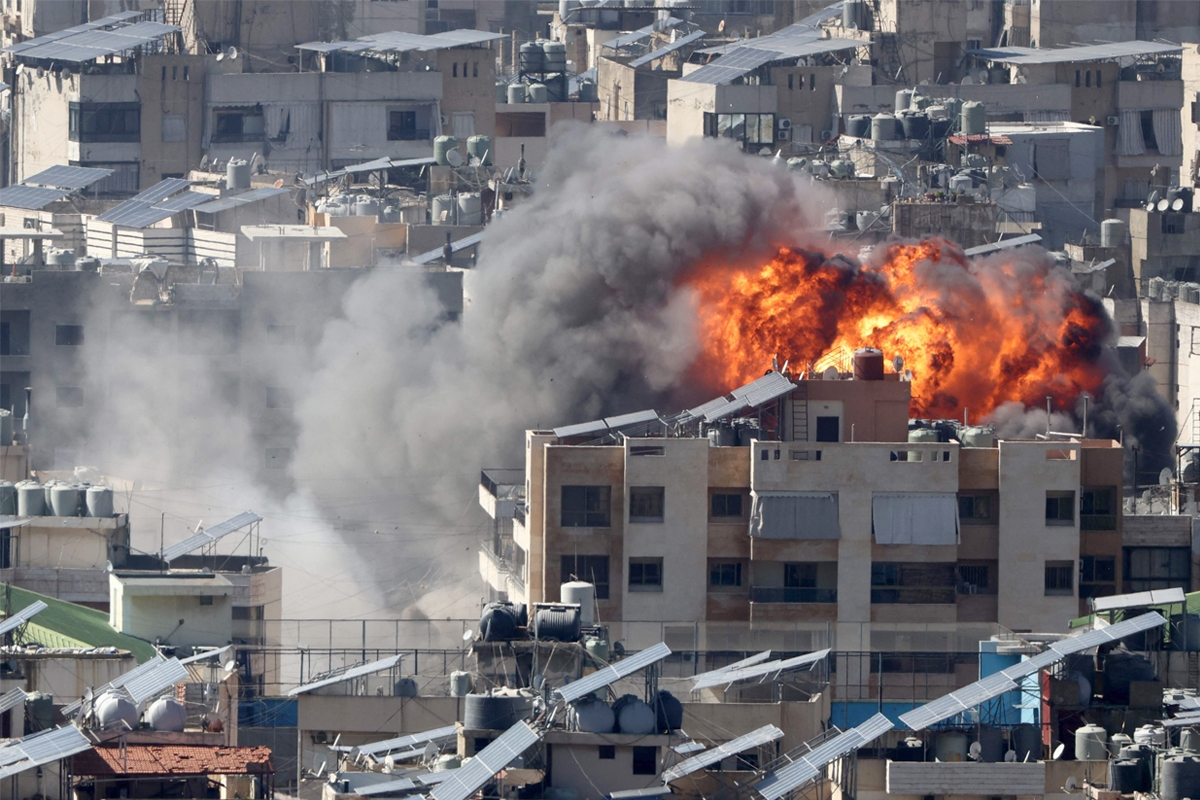
Lebanese elections postponed as Israeli raids expand in the suburbs amid divisions within the army.
Translated by Alqyas from Al-Jarida — Original source
As the Israeli war on Lebanon expands and in the absence of any diplomatic initiatives to end the escalation, the Lebanese Parliament voted yesterday to extend its own mandate for two years, postponing the contentious elections scheduled for May next. This move has raised fears that the fate of the crises plaguing the country is now frozen, as long as the balance of power within parliament remains unchanged.
Amid reports that the French initiative has reached an impasse following a clash between French President Emmanuel Macron and Israeli Prime Minister Benjamin Netanyahu—who expressed opposition to hearing any proposals that do not align perfectly with Israel’s conditions—the Israeli military launched a new wave of airstrikes yesterday, signaling continued escalation. These included expanded strikes on Beirut’s southern suburbs, the destruction of buildings, and attacks on the Al-Murabih movement, killing at least 12 people. Additionally, a second airborne drop was conducted in the Bekaa region in eastern Lebanon, accompanied by fierce clashes.
Earlier yesterday, Hezbollah announced that its fighters repelled a large-scale Israeli airborne operation involving approximately 15 helicopters over the eastern mountain range in eastern Lebanon, near the town of Nabi Sheet. The town had witnessed a similar drop days earlier that killed around 50 people, including several Hezbollah fighters.
According to diplomatic sources, Israel had given Lebanon until yesterday to make a clear and decisive decision to have the Lebanese Army enter Hezbollah’s positions, take control of them, and confiscate the group’s weapons. It warned that if Beirut failed to comply, Tel Aviv would expand its military operations. This comes amid deep divisions in Lebanon: one camp supports Army Chief General Rodolphe Oueijan implementing government orders to disarm Hezbollah and acting without delay to spare the country further suffering, while another camp defends the Chief’s decision to exercise caution, arguing that a weapons containment plan can only be implemented in a manner that safeguards stability.
This development coincides with signs that U.S. President Donald Trump’s administration is dissatisfied with the performance of the Lebanese Army Chief and lacks confidence in the government’s ability to control all state institutions, decisions, and procedures. Compounding the crisis, a military court ordered the release of three Hezbollah members arrested days earlier on charges of transporting weapons. They were released upon posting a financial bail of just $10 per member, a decision that sparked outrage among many domestic political forces and international actors.
Meanwhile, talk emerged of Lebanon proposing direct negotiations with Israel in exchange for a ceasefire. However, sources indicated that the idea was not new; it was initially put forward by President Joseph Aoun hours after Hezbollah entered the war in retaliation for the assassination of its late mentor, Ayatollah Ali Khamenei. Israeli responses were negative, asserting that the Lebanese initiative came too late and that Israel remains determined to achieve its objectives through military force.
According to sources, such an initiative would require full consensus and explicit approval from Hezbollah, which is currently unavailable. Furthermore, international conditions stipulate that the Lebanese Army must immediately move into the southern suburbs, the south, and the Bekaa. It is noted that Israelis continue reconnaissance fire operations and airborne drops, which are reportedly aimed at locating sites for manufacturing precision missiles and drones—assets that Israelis believe cannot be destroyed through aerial bombardment alone.
In summary, the war in Lebanon is protracted, and finding a comprehensive and complete solution is impossible without first reaching a resolution with Iran, encompassing the entire region.
