America Moves Toward Easing Russian Oil Sanctions... to Control Prices
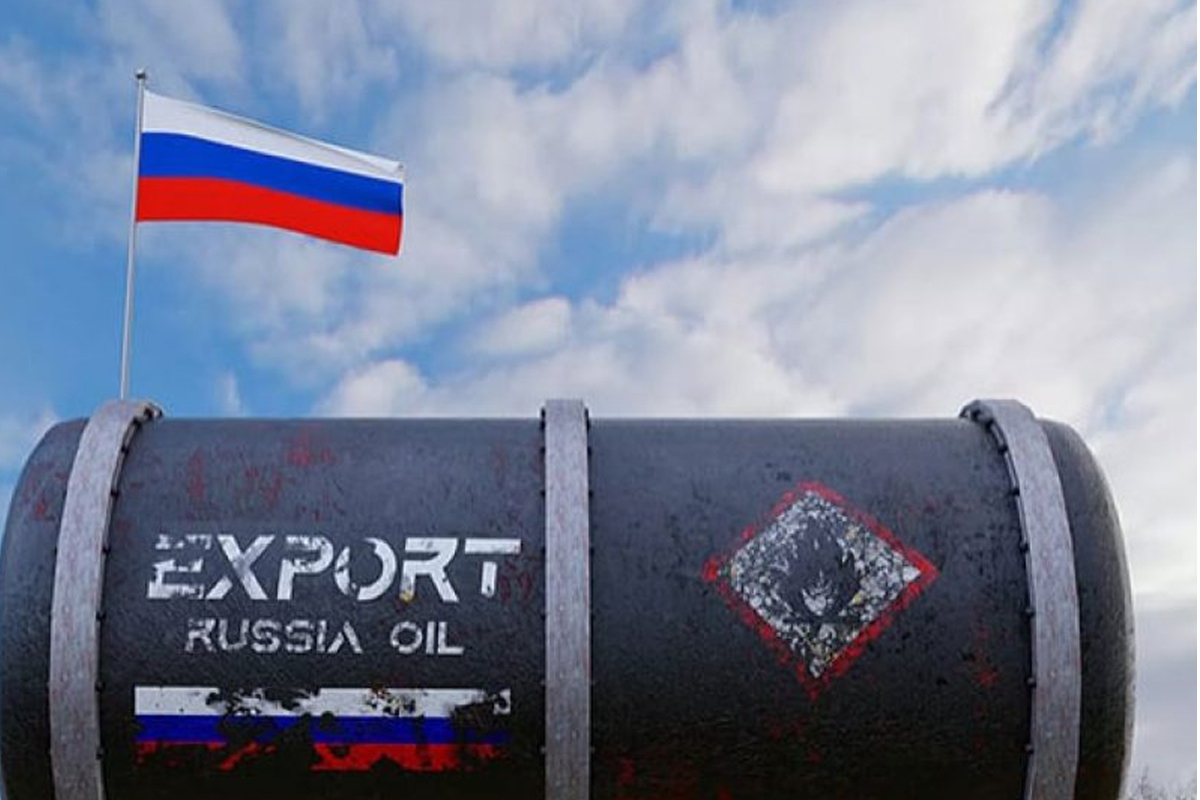
The United States announced easing sanctions on Russian oil, while oil prices rise due to the closure of the Strait of Hormuz and decreased production in the Gulf.
Translated by Alqyas from Al-Jarida — Original source
US Treasury Secretary Scott Bessent said early yesterday that the United States might allow the sale of sanctioned Russian oil to increase market supply, amid rising oil prices due to the repercussions of the US-Israeli war on Iran.
Bessent added in an interview with Fox Business that “we may lift sanctions on additional quantities of Russian oil,” a day after the US Treasury announced it had granted India a 30-day license permitting it to purchase Russian oil.
He clarified that “there are hundreds of millions of barrels of sanctioned crude oil floating at sea, and by lifting sanctions on them, the Treasury can boost supply.”
He continued, “We are considering this matter. We will continue to announce other measures to ease pressure on the market during this conflict.”
Prices
The price of Kuwaiti crude oil rose by $5.67 to reach $98.48 per barrel in trading on the day before yesterday (Friday), compared to $92.81 per barrel in last Thursday’s trading, according to the price announced by the Kuwait Petroleum Corporation.
In global markets, prices for heavy crude oil on the US Gulf Coast continued to rise the day before yesterday, as the war on Iran prompted several heavy crude producers in the Middle East to cut production, encouraging buyers to purchase large quantities of US oil.
Traders said that “March Sour” crude, the main crude produced in the US Gulf of Mexico and preferred by refineries worldwide, traded the day before yesterday at a $11 premium over US West Texas Intermediate (WTI) crude. This was the highest level since April 2020, and a $4 increase from last Thursday.
Standard crude oil prices have risen since the initial attacks on Iran last week, with Brent crude settling at $92.69 per barrel the day before yesterday, its highest level since October 2023.
The effective closure of the Strait of Hormuz has forced several countries, including Iraq, to cut production. The strait is a major route for medium and heavy sour crude from the Gulf region, and these flows have now been largely cut off. One trader said that additional production cuts announced by Kuwait the day before yesterday also helped lift prices for “Sour March.”
Matt Smith, chief North American oil analyst at Kpler, said, “Refineries relying on these types will need to find similar or nearly similar alternatives to replace the missing barrels, so March crude and other heavy and medium sour crudes from the US Gulf are natural alternatives and are seeing significant price increases.” He added that buyers, particularly in Asia, are competing to secure more medium and heavy crude.
Tim Snyder, chief economist at Madrona Economics, said, “This time of year also sees the transition from winter to driving season, when demand typically rises for all types of crude oil.” He added that supply disruptions caused by the war are ultimately driving prices up.
Snyder noted, “In the short term, we will continue to see these grades rise until the Strait of Hormuz is reopened.”
To $100
Goldman Sachs said oil prices are likely to exceed $100 per barrel next week if there are no signs of a resolution to the acute crisis disrupting oil flows through the Strait of Hormuz, warning that the upside risks to its base-case forecast are increasing rapidly.
The bank added that it intends to revise its oil price forecasts soon if there is no evidence supporting the assumption that oil flows through the Strait of Hormuz will gradually return to normal in the coming days.
Its current forecasts stand at $80 per barrel for Brent crude in March and $70 per barrel in the second quarter.
The bank continued, “We now also believe that oil prices, particularly refined products, are likely to surpass the peaks of 2008 and 2022 if oil flows through the Strait of Hormuz remain depressed throughout March.”
Crude oil is expected to record its strongest weekly gains since the severe volatility witnessed during the COVID-19 pandemic in the spring of 2020, following the conflict in the Middle East, which has halted shipping and energy exports through the vital Strait of Hormuz.
Goldman Sachs currently estimates that average daily flows through the Strait of Hormuz have dropped by 90 percent.
Goldman Sachs expects oil prices to exceed $100, while Barclays forecasts they could reach $120.
Barclays’ Forecasts
A spokesperson for the Iranian Revolutionary Guard challenged US President Donald Trump to deploy US warships to escort oil tankers through the Strait of Hormuz. Trump demanded Iran’s “unconditional surrender,” escalating his rhetoric a week after launching a war alongside Israel, a move that could make negotiating a swift end to the conflict more difficult.
Earlier, Barclays stated that Brent crude could reach $120 per barrel if the Middle East conflict continues for several more weeks.
Insuring Marine Losses
The US International Development Finance Corporation (DFC) said on Tuesday that the United States would provide reinsurance for losses of up to $20 billion in the Gulf region, aiming to bolster confidence among oil and gas shipping companies during the war with Iran.
Trump directed the DFC to provide political risk insurance and financial guarantees for maritime trade in the Gulf, following the halt in oil tanker and liquefied natural gas (LNG) shipments through the Strait of Hormuz between Iran and the Sultanate of Oman, a chokepoint through which approximately 20 percent of global oil typically passes daily.
Trump indicated the possibility of US Navy escorts for ships in the Gulf. However, some US Navy vessels have conducted airstrikes on Iran and launched missiles. Escorting ships could also pose risks to the costly warships tasked with protection.
US Treasury Secretary Scott Bessent told Fox Business that the insurance plan, along with potential naval escorts, would quickly resolve shipping issues in the region, adding, “I don’t know if it will take a week or two, but we are on the right track to resolving the matter.”
A shipping expert clarified that the plan might not be sufficient to reassure the energy shipping sector if tensions escalate.
Naomi Ridan, a fellow at the Washington Institute for Near East Policy, stated, “If the war continues to escalate, maritime and energy domains will remain arenas for Iranian retaliation.”
Kuwaiti Crude Rises $5.67 to $98.48
Insurance Premiums
Ridan added that any calming effect from the coverage could be undermined if Iran-backed Houthis resume their attacks on ships in the Red Sea.
She said, “If that happens, two vital chokepoints for global trade will be under military threat. How will navigation be protected in such a scenario?”
Oil shipments through the Strait of Hormuz have largely stopped, and many tankers have been damaged in attacks, while others are stranded.
War risk insurance premiums have surged, while several insurers have reduced or completely withdrawn their coverage.
The International Development Finance Corporation (DFC) clarified that insurance would be provided periodically, initially focusing on hull, machinery, and cargo coverage. The corporation indicated it would collaborate with preferred U.S. insurance partners, without providing further details. The U.S. Department of the Treasury and the DFC, which mobilizes private-sector investors to support projects in developing countries, are coordinating with U.S. Central Command on the next steps in its plan.
Pakistan Prices
Pakistan raised diesel and gasoline prices for consumers by approximately 20 percent on the day before yesterday, attributing the hike to rising oil prices amid the conflict involving Iran.
Oil Minister Ali Brooz Malik announced in a video message a historic increase of 55 rupees ($0.20 per liter), bringing diesel prices to 335.86 rupees and gasoline to 321.17 rupees.
He explained, “We were forced to make this decision due to the sharp rise in global oil prices.”
This decision is likely to drive up inflation rates, adversely affecting the poor in Pakistan.
Prior to the announcement, long queues formed at fuel stations in major cities such as Lahore and Karachi as people waited to refuel.
Imran Hussain, waiting in line at a gas station in Lahore, said he wanted to prepare for any potential shortages, adding, “I have been waiting in line for 70 minutes.”
Prime Minister Shehbaz Sharif warned against hoarding fuel the day before yesterday, emphasizing that hoarders would face punishment.
He stated, “We have sufficient gasoline reserves. However, we plan to rationalize consumption because we do not know when the crises in the Middle East will end.”
Pakistan primarily imports oil from Saudi Arabia and the United Arab Emirates via the Strait of Hormuz.
The Oil Minister said the government would review prices weekly.
