Wall Street Journal: US Makes 'Tough' Demands in Nuclear Negotiations with Iran
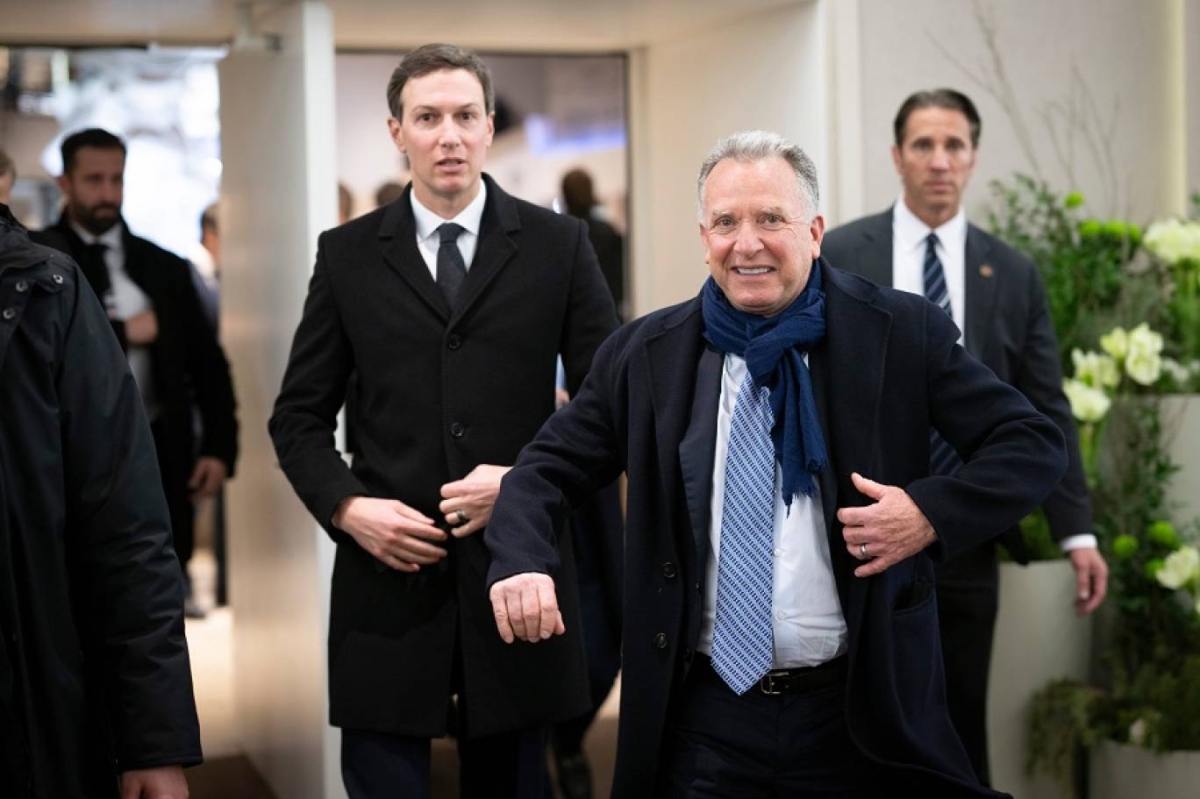
The US demands Iran dismantle its nuclear sites and hand over uranium, in ongoing negotiations in Geneva.
Translated by Alqyas from Al-Jarida — Original source
The Wall Street Journal quoted US officials as saying that envoys Steve Witkoff and Jared Kushner are bringing stringent demands to the ongoing negotiations in Geneva on Thursday. The most prominent of these demands is instructing Iran to dismantle its three main nuclear sites in Fordow, Natanz, and Isfahan, and to hand over its remaining stockpile of enriched uranium to the United States.
These demands come amid pressure from “hawks” within the US administration and Republicans in Congress to prevent an agreement that could be criticized as “lenient,” according to the newspaper, which described the current round of nuclear negotiations as “critical.”
The newspaper noted that US negotiators will insist that any nuclear agreement not be subject to a sunset clause, unlike the restrictions that gradually expired under the deal negotiated during the presidency of former President Barack Obama, which Republicans have long considered weak. US President Donald Trump withdrew from that agreement, known as the Joint Comprehensive Plan of Action (JCPOA), during his first term and reimposed stringent sanctions on Iran.
According to the newspaper, these demands may be “difficult” for Tehran, as both sides seek a diplomatic alternative to a potential military strike. President Trump warned on Tuesday, during his State of the Union address, that Iran continues to seek nuclear weapons and ballistic missiles capable of targeting the United States, allegations that Tehran denies.
Trump threatened military action if no agreement is reached, and has deployed forces near Iran, including two aircraft carriers, several advanced warships, destroyers, and missile defense systems. In response, Iran has warned that it would treat any attack, even a limited one, as a spark for a comprehensive retaliation.
Iran insists on its right to enrich uranium but has put forward proposals to reassure Washington, including reducing the enrichment level to 1.5% from the current 60%, suspending enrichment for several years, or processing it through an Iranian-Arab consortium based inside Iran. US Secretary of State Marco Rubio said on Wednesday that Iran is not currently enriching any uranium, noting that its two main enrichment facilities were severely damaged by Israeli and US strikes during the 12-day war last June.
Meanwhile, the United States insists, according to the newspaper, on the principle of “zero enrichment,” although its negotiating team may be open to allowing Iran to restart a research reactor in Tehran that uses very low levels of enrichment for medical purposes. However, even this level of concession faces strong pressure from administration hawks and Republican lawmakers, who fear that any agreement allowing limited enrichment would be seen as a diluted version of the 2015 deal.
In this context, the Wall Street Journal quoted Senator Lindsey Graham, a prominent ally of Trump, as saying on Wednesday: “If there is any thinking about allowing Iran to enrich a tiny amount of uranium to save face, let that go to hell.”
The newspaper noted that Washington is offering limited easing of sanctions, which constitutes another point of friction, as Iran hopes for broad relief to support its struggling economy, which had sparked widespread protests earlier this year.
According to officials, Washington first wants to ensure Iran’s long-term compliance with the terms of the agreement before considering expanding the scope of sanctions relief.
Although Washington seeks to curb Iran’s missile program and supports its regional allies, the Geneva talks are currently focused on the nuclear track, the newspaper stated.
Some U.S. officials believe that negotiations on missiles and proxies could be conducted through regional partners with U.S. participation, while others argue that efforts should be made to reach a comprehensive agreement covering all issues, acknowledging that a purely nuclear deal could mark an important beginning.
The newspaper concluded by citing Rubio’s statement to journalists: “I won’t speculate on how close they (the Iranians) are, but they are certainly seeking to possess intercontinental ballistic missiles,” adding that Iran’s insistence on not discussing this file represents “a very big problem.”
