"Guarantees" Threaten to Undermine Tehran-Washington Negotiations
Negotiations show progress but face obstacles regarding guarantees and conditions.
Translated by Alqyas from Al-Jarida — Original source
Indicators regarding the decisive US-Iranian negotiations are mixed. Despite statements from Washington and Tehran about making “tangible progress,” the specter of a comprehensive American war on Iran still looms over the negotiating table, a point highlighted by Axios, which noted that President Donald Trump’s administration is closer than ever to a major war in the Middle East that could begin very soon. US Energy Secretary Chris Wright, speaking in Paris, stressed that his country would prevent Iran from acquiring a nuclear weapon “one way or another.”
Amid strict secrecy surrounding the proceedings of the meeting held two days ago in Geneva between Iranian Foreign Minister Abbas Araghchi and US Presidential Envoy Steve Witkoff, a high-ranking Iranian source in the Tehran delegation told Al-Jarida that the core obstacle to progress lies in the US demand for Iran to accept irreversible conditions, while Washington offers no reciprocal guarantees equivalent to those demands.
The source stated that Iran’s demands are clear, including the lifting of sanctions and a commitment not to reimpose them under any pretext, as well as providing concrete guarantees of Washington’s adherence to its commitments and assurance that it will not withdraw from any agreement again as it did with the 2015 deal during Trump’s first term. Additionally, Iran seeks guarantees that the US or Israel will not attack Iran or carry out security or intelligence operations against it, including the assassination of political, military, or scientific figures, targeting facilities, conducting cyber sabotage, or other hostile acts.
In contrast, Washington insists that Tehran must completely eliminate its stockpile of highly enriched uranium and halt enrichment for an unspecified period, allowing international inspectors to verify the peaceful nature of its nuclear program. Even if an agreement is reached to form a regional and international consortium for uranium enrichment, Iran would not be permitted to conduct any enrichment before the new entity begins operations. Washington maintains that it will only provide guarantees regarding sanctions after Iran meets these conditions, while expressing openness to a commitment not to attack Iran.
The source clarified that Tehran’s strongest card in the negotiations is its 60 percent enriched uranium, noting that Iran fully understands that if it loses this leverage, there will be no incentive for the US to honor its commitments. Therefore, Iran has offered to lift sanctions in exchange for addressing this issue, a proposal Washington has rejected.
He added that Araghchi offered the Americans permission for the International Atomic Energy Agency (IAEA) to inspect Iranian facilities to ensure that enrichment levels are not increased inside them. However, he pointed out that Iran cannot guarantee the safety of inspectors at facilities targeted during the US strike in June, but it would not object to any inspections if the Agency assumes responsibility for the security and safety of the inspectors.
He also mentioned another point raised by the US delegation during the meeting: their insistence that Iran hand over several GBU-57 bombs that failed to detonate during the US strike on Iranian facilities in June. Araghchi’s response was that security considerations prevent the fulfillment of this request.
The source noted that Araghchi promised to present a new proposal representing a compromise between the two sides, with the expectation that the US side would present an offer acceptable to the Iranians.
According to the source, the meeting did not address any issues related to the missile program or Iran’s regional influence, as progress had already been made on those fronts, as Al-Jarida reported a few days ago. However, the two sides agreed on broad outlines for economic cooperation. The source added that Iran expressed openness to U.S. participation in all sectors, but rejected any exclusive privileges similar to the U.S.-Ukrainian agreement on critical minerals.
Three Iranian officials familiar with the talks between the United States and Iran in Geneva told The New York Times that Tehran expressed willingness to suspend uranium enrichment for a period of three to five years, covering President Donald Trump’s term in the White House, and then join a regional consortium for civilian enrichment purposes.
The officials told The New York Times that Iran also offered to reduce its uranium stockpile on its territory in the presence of international inspectors, in exchange for the lifting of financial and banking sanctions and the ban on its oil exports.
The officials, who requested anonymity due to the sensitivity of the negotiations, said Iran also offered financial incentives and investment and trade opportunities with the United States, including in the oil and energy sectors.
The United States and Iran held a second round of talks yesterday at the Omani consulate in Geneva, which both the American and Iranian sides described as having gone “well.”
Iranian Foreign Minister Abbas Araghchi said after the talks that the two sides had reached an understanding on “key principles,” describing the talks as “serious and constructive,” but cautioned that this did not mean an agreement would be reached soon, though “the path has begun.” He added, “We have made positive progress compared to the last round, and both sides will work on two versions of a potential agreement document and exchange them.”
A U.S. official said Iran clarified that it would submit detailed proposals over the next two weeks to address gaps in the negotiations.
The official, who requested anonymity, speaking about the details of the discussions held in Geneva, said, “We have made progress, but many details still need to be discussed. The Iranian side confirmed that it will return within the next two weeks with detailed proposals to address some of the gaps in our positions.”
For his part, U.S. Vice President J.D. Vance reiterated Washington’s goal of preventing Iran from acquiring a nuclear weapon following the Geneva talks.
In an interview with Fox News, Vance said President Donald Trump “has many options and tools,” and warned that “other authoritarian governments” might follow Iran’s example if it acquired such weapons.
Vance said Trump “has drawn some red lines” that Iranian negotiators were “not yet ready to actually acknowledge or deal with.” He added, “We would very much like, as the President said, to resolve this through diplomatic negotiation, but the President has all options on the table,” emphasizing the administration’s readiness to escalate if necessary.
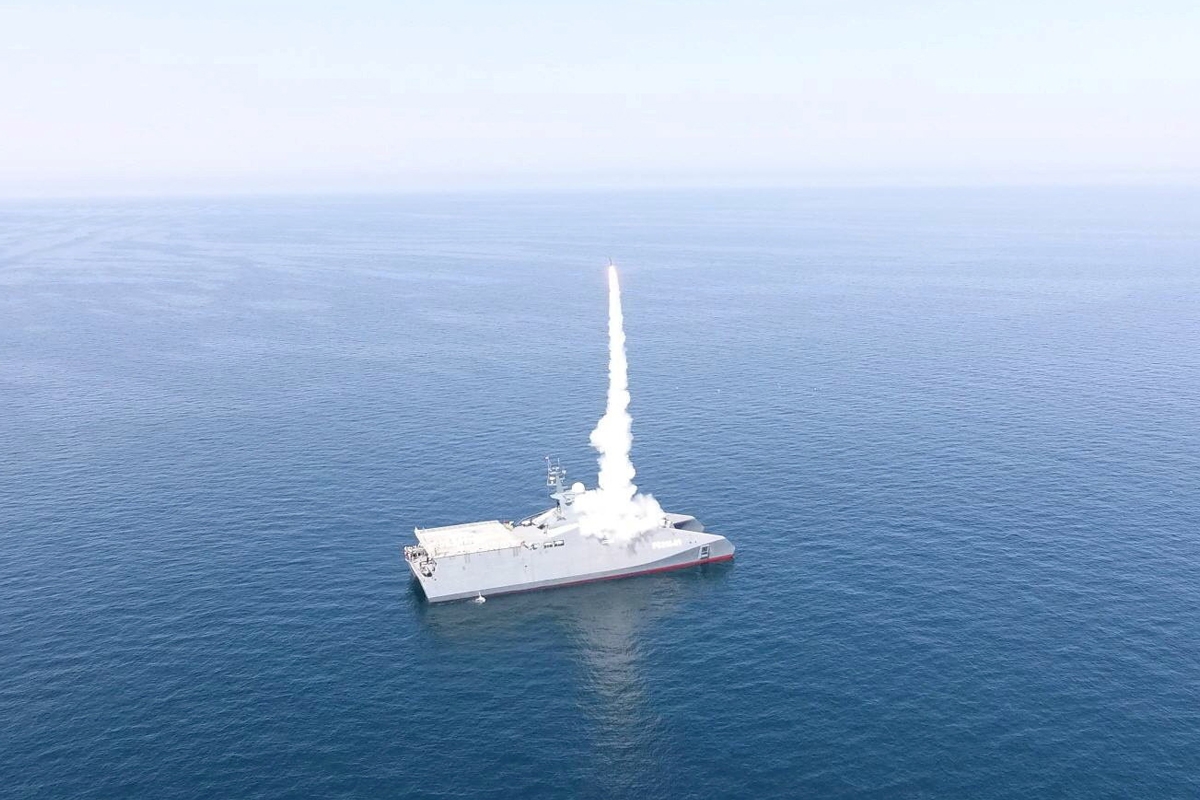
Meanwhile, Iran and Russia are conducting naval exercises in the Gulf of Oman and the northern Indian Ocean today, with China originally expected to participate as well. Hassan Maghsoudlou, the Iranian military spokesperson for the exercises, stated that “Iran’s First Naval Force in Bandar Abbas will host these drills,” clarifying that their objective is “to enhance security and sustainable maritime interactions in the Gulf of Oman and the northern Indian Ocean, develop joint maritime cooperation, and strengthen relations between the navies of the two countries in planning and executing joint operations and coordinating joint measures to counter activities threatening maritime security and safety, particularly in protecting commercial ships and oil tankers, as well as combating maritime terrorism, among the main axes of these joint exercises.”
The Iranian military official considered that “conducting these exercises, alongside other drills by Iranian forces, reflects the two countries’ interest in current developments in the Gulf of Oman and the northern Indian Ocean, and demonstrates both parties’ commitment to enhancing maritime cooperation, confronting unilateralism, and supporting the security of maritime trade in this region.”
On the other hand, Alexey Sergiyev, commander of the Russian naval group participating in the exercises, affirmed “the strength of the close friendly relations between the two sides.” He added, “The level of interaction and cooperation in place shows our ability to manage and resolve many maritime and coastal issues and challenges together.” Sergiyev continued, “We are fully prepared to conduct joint exercises in any area, including specialized drills and counter-terrorism operations carried out by ships and boats from both sides.”
It remains unclear whether China has withdrawn from the exercises. In an interview with the weekly magazine Argumenty i Fakty, Russian Presidential Assistant Nikolai Patrushev stated that Russia is working to build a “multipolar global system in the oceans” in response to what he described as Western dominance. He added, “We will exploit the potential of BRICS countries, which it has become necessary to grant a full strategic maritime dimension.”
In response, Axios reported that the United States transferred more than 50 fighter jets within 24 hours to the Middle East, including F-16, F-22, and F-35 aircraft, as part of efforts to bolster its air and naval capabilities near Iran.
Commenting on Iranian Supreme Leader Ali Khamenei’s suggestion of sinking US aircraft carriers, experts noted that while Iran may technically be capable of targeting US aircraft carriers deployed in the region, it understands that responding to such a move would trigger a comprehensive and devastating retaliation.
Former US Assistant Secretary of Defense Mark Kimmet stated that Iran has succeeded in developing capabilities that the Americans take seriously, but added that “the United States does not send an aircraft carrier to any region in the world without ensuring its ability to defend and attack.”
He considered that “talk by Iranian officials about possessing advanced weapons is not mere threat; rather, these officials know that any targeting of a US aircraft carrier means they will face a broad and devastating response. Beyond the immense capabilities of these warships and their accessories, all US military capabilities around the world would be directed toward Iran, which would face an attack greater than it can imagine, twenty times greater than what occurred last June.”
