What Does the US Defense Strategy for the Gulf and Middle East Entail?
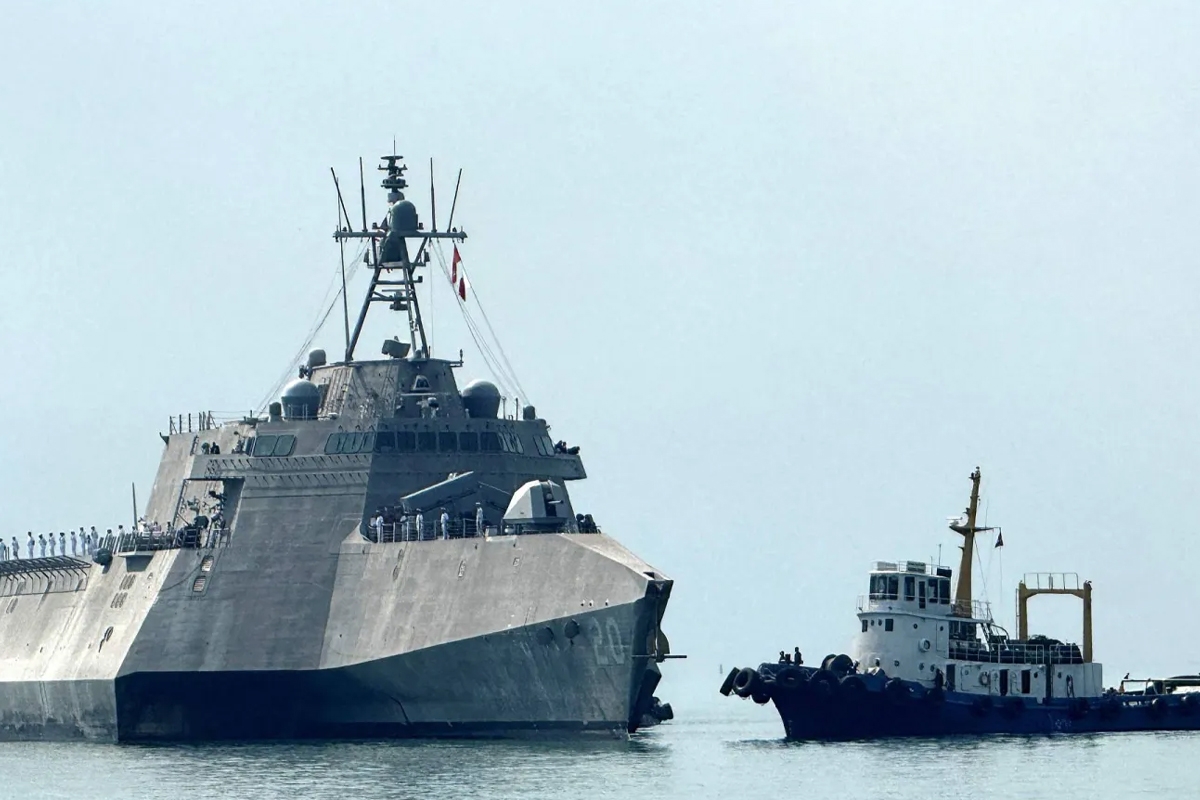
The US Department of Defense has issued a strategic document aimed at enhancing cooperation with the Gulf and supporting allies in confronting Iran.
Translated by Alqyas from Al-Jarida — Original source
The US Department of Defense (Pentagon) issued its 2026 National Defense Strategy yesterday, approximately a month after the release of the National Security Strategy, which emphasized the priority of protecting the United States and securing its dominance in the Western Hemisphere, while calling for a reduction in the US military presence worldwide, a lower level of focus on Europe, and a toned-down rhetoric toward China and Russia, no longer treating them as strategic threats.
The Defense Strategy focused on the same axes, presenting its reading of the international security landscape and its strategic approach to addressing it. Regarding the Middle East and the Arab Gulf states, the document, which contains the strategy, stated that the Trump administration “seeks a more peaceful and prosperous Middle East,” adding that, as President Trump noted, “this transformation can only be achieved by those who have the greatest stake in the region’s future, namely our allies and partners within the region itself. Our mission is to support them in this endeavor.”
It further added that “for this purpose, the Department of Defense will work to empower regional allies and partners to assume primary responsibility for deterring Iran and its proxies and defending against them, including through strong support for Israel’s efforts to defend itself, deepening cooperation with our partners in the Arab Gulf, and enabling integration between Israel and our Gulf partners, based on President Trump’s historic initiative, the Abraham Accords.”
The document noted that “at the same time, the Department will maintain its ability to take focused and decisive actions to defend US interests. Through this approach, we can establish and reinforce the conditions for lasting peace in the region, based on the principle of peace through strength.”
The Arab Gulf states were also mentioned in the section dedicated to Iran, which stated: “Despite the significant setbacks Iran has suffered in recent months, it appears determined to rebuild its conventional military forces. Iranian leaders have also left the door open to the possibility of again seeking to acquire a nuclear weapon, including by refusing to engage in serious and meaningful negotiations.”
The document continued: “Although Iran’s proxies have been severely weakened, they may seek to rebuild the infrastructure and capabilities that were destroyed. It cannot be ignored that the hands of the Iranian regime are stained with American blood, and that it remains intent on destroying our close ally, Israel. Iran and its proxies repeatedly ignite regional crises that not only threaten the lives of US personnel in the region but also prevent the region itself from pursuing a peaceful and prosperous future, which its leadership and peoples clearly aspire to.”
Conversely, the document spoke of “significant opportunities, as Israel has long proven itself willing and capable of defending itself with decisive but limited US support. Israel is a model ally, and we now have an opportunity to enhance its self-defense capabilities and support our shared interests, based on the historic efforts undertaken by President Trump to achieve peace in the Middle East.”
It added: “Similarly, US partners in the Gulf are demonstrating growing willingness and capacity to do more to defend themselves against Iran and its proxies, including by acquiring and deploying a variety of US military systems. This creates additional opportunities to empower each partner individually to strengthen its self-defense, while also enabling us to enhance integration among regional partners, allowing them to do more together.”
She noted that “the Department of Defense will prioritize enhancing incentives for allies and partners to assume primary responsibility for their own defense in Europe, the Middle East, and the Korean Peninsula, while providing decisive but limited U.S. military support.”
She added that “at the same time, we will seek to make it as easy as possible for allies and partners to shoulder a greater share of the burden of collective defense, including through close coordination in force planning and operations, and by working in concert to enhance their forces’ readiness for key missions.”
She emphasized that “incentives will be a core component of U.S. alliance policy. Therefore, we will prioritize cooperation and engagement with exemplary allies—those who spend as they should and clearly do more to confront threats in their regions—while providing decisive but limited U.S. support, including through arms sales, defense industrial cooperation, intelligence sharing, and other activities that better advance our national interests.”
The U.S. National Security Strategy, released in December, reflects a clear shift in Washington’s view of the Middle East, including the Arabian Gulf, as the administration sees the region no longer holding the same traditional security priority as in the past, with U.S. commitments now managed more flexibly and at lower cost, moving away from the protracted wars that drained resources.
