Gaza Committee Sets Recovery Priorities as Trump Ignores Netanyahu's Reservations
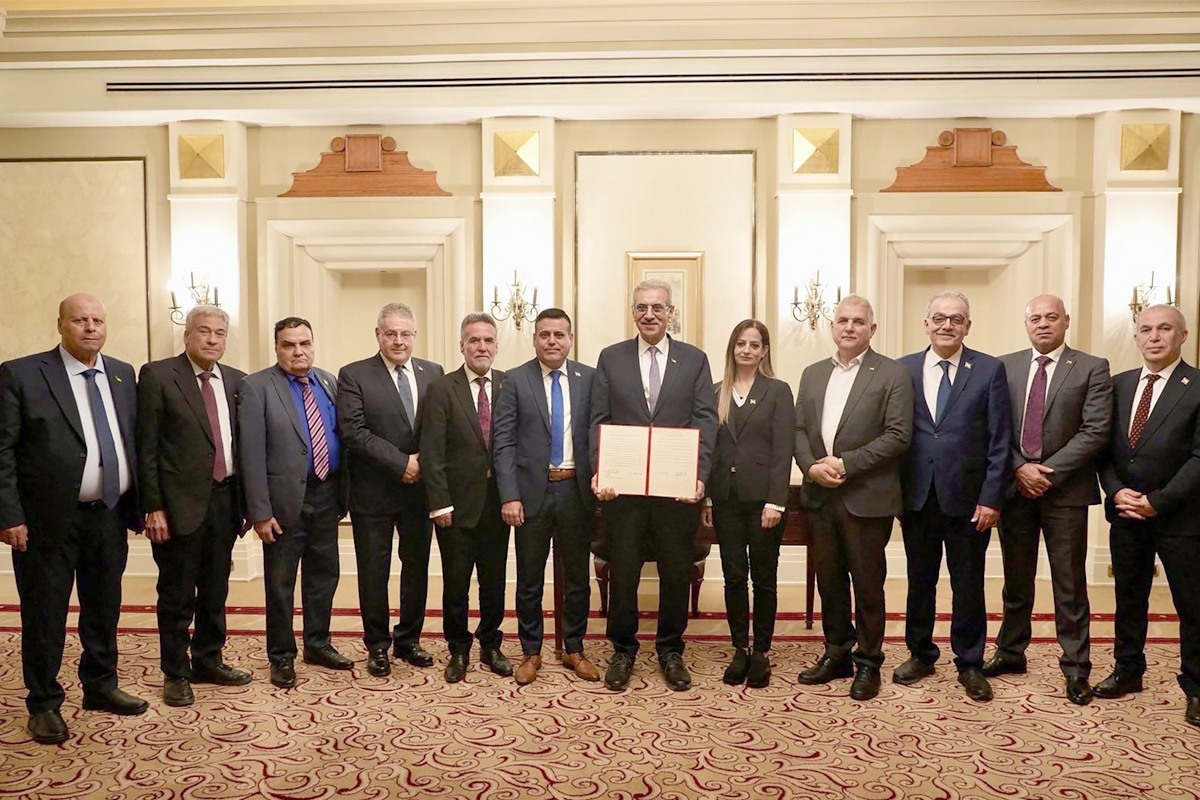
The Gaza Management Committee announced its recovery priorities under UN Security Council Resolution 2803, while tensions emerge between Trump and Netanyahu over the composition of a peace council including Turkey and Qatar.
Translated by Alqyas from Al-Jarida — Original source
Ali Shaa’at, head of the interim Gaza Management Committee, launched the committee’s work, which was formed by Palestinian factions to manage the transitional phase in the Gaza Strip, with an official statement outlining its priorities, operational framework, and responsibilities, in accordance with the mandate granted to it under UN Security Council Resolution 2803, which endorsed the 20-point plan proposed by US President Donald Trump. The plan aims to end the war between Hamas and Israel and rehabilitate the Gaza Strip.
Commenting on the committee’s first official step as it prepares to move from Cairo to the Gaza Strip, Shaa’at stressed yesterday that his committee is “committed to transforming the transitional phase into a solid foundation for sustainable Palestinian prosperity.” He noted that its mission involves “rebuilding the Strip, not only at the infrastructure level, but also by revitalizing its social fabric and restoring hope for a future based on justice and stability, through standards of integrity and transparency, and by building a sustainable productive economy to end unemployment.”
Shaa’at’s announcement received endorsement from US Secretary of State Marco Rubio, a member of the “Founding Executive Peace Council,” and Jared Kushner, son-in-law of the US President, who expressed their anticipation of working with the committee to secure a better future for the people of Gaza and the entire region.
This development came as Israeli Prime Minister Benjamin Netanyahu held a meeting with members of his ruling coalition to discuss his reservations regarding the composition of the executive body announced by Trump for the “Peace Council,” which will oversee the administration of Gaza following Israeli reports that he failed to prevent the inclusion of Turkish Foreign Minister Hakan Fidan and Qatari diplomat Ali Al-Duwaikhi in the body.
Yesterday, well-informed US sources revealed escalating disagreements between the Trump administration and Netanyahu over proceeding with the second phase of the peace plan, amid clear disregard for Tel Aviv’s objections to the implementation mechanisms and the composition of the supervisory bodies overseeing the plan.
The Axios website quoted a senior US official as saying that Trump’s advisors show little patience for Netanyahu’s reservations, affirming that Washington is proceeding with its plan. The official added, “This is our offer, not his. We have achieved things in Gaza over the past months that no one thought were possible, and we will continue to move forward.”
He stressed that Netanyahu was not consulted because he has no say in the matter, adding, “If he wants us to deal with Gaza, it will be our way. Let him focus on Iran, and let us handle Gaza.” He affirmed that unless Netanyahu wishes to re-engage Israeli forces in combat following a US withdrawal from the file, he will have to comply with the US program.
Meanwhile, the United States continued sending invitations to leaders of several countries to join the Peace Council led by President Donald Trump, aiming to end the conflict in the Palestinian territory and rehabilitate it after the devastation caused by the destructive Israeli war. Ali Shaa’at, head of the National Committee for Gaza Management, outlined the committee’s mission, which was recently formed by the factions, along with its working principles and framework of responsibilities.
Shaa’at emphasized, in a post on the X network today, commenting on his first official action, that his committee is committed to transforming “the transitional phase into a solid foundation for sustainable Palestinian prosperity,” pursuant to the powers granted to it under UN Security Council Resolution 2803 and Trump’s 20-point peace plan to end the war between Hamas and Israel. He stressed that the committee’s mission involves “rebuilding the Strip, not only at the infrastructure level, but also by revitalizing its social fabric and restoring hope for the future.”
He continued: “The committee is committed to entrenching security and restoring essential services, which constitute the cornerstone of human dignity, foremost among them electricity, water, healthcare, and education, alongside supporting a community based on the values of peace, democracy, and the rule of law.”
He clarified that, through its commitment to integrity and transparency standards, the committee would work to “build a sustainable productive economy and replace unemployment with real job opportunities,” noting that “peace is the only path to ensuring legitimate Palestinian rights and paving the way toward self-determination and building a future based on justice and stability.”
Meanwhile, Marco Rubio, the U.S. Secretary of State and member of the Founding Executive Council of Peace, expressed his aspirations to work with Shalal to “build a better future for the people of Gaza and the entire region.”
Council Executive Member Jared Kushner also reposted Shalal’s statements regarding the committee’s commitment to entrenching security and restoring services, and to viewing peace as the sole path to ensuring Palestinian rights. The son-in-law of former President Trump commented on this, stating, “Now the hard work begins.”
In Israel, Prime Minister Benjamin Netanyahu held a meeting with his ruling coalition partners the day after he objected to the composition of the executive body announced by the White House for the “Peace Council,” which will oversee the administration of Gaza alongside an advisory executive council comprising Turkish Foreign Minister Hakan Fidan, Qatari diplomat Ali Al-Duwaikhi, and other regional and international officials.
Contrary to Netanyahu’s office statement, which claimed there was no coordination with Tel Aviv regarding the formation of the sector’s administrative council, Israel was aware of the composition of the committee emerging from the “Peace Council” and attempted to influence the identity of its members, without success.
Today, opposition leader Yair Lapid criticized Netanyahu for allowing the risk of Turkey and Qatar entering the interim governing body for Gaza, proposing an alternative solution involving Egypt assuming administration of the sector over the next 15 years.
On another note, “Yedioth Ahronoth” noted that the U.S. President may assign the Peace Council a role much broader than just managing Gaza, with some already dubbing it the “United Nations of Trump.”
The newspaper revealed that “on Saturday night, it became clear that Trump invited Netanyahu to be a member of the Council, or to send a representative. Invitations were extended to leaders of more than 50 countries,” with the latest to be revealed being Pakistani Prime Minister Shehbaz Sharif.
The Israeli newspaper pointed out that “so far, through official statements and media reports, it has become evident that Argentina, Canada, France, Germany, Australia, Albania, Bahrain, Egypt, and Turkey have received invitations to participate in the Peace Council.” None of these countries have officially confirmed their joining of the new entity, which Trump seeks to use to resolve international disputes in place of the “United Nations” during his term.
It noted that “according to a Bloomberg report, Trump demands that every country wishing to become a permanent member of the Council contribute an amount of no less than one billion dollars in the first year following the signing of the accession treaty.” It specified that the draft establishing the Council, obtained by “Bloomberg,” stipulates the following: “The membership term of each member state in the Council shall not exceed three years from the date of signing, subject to the President’s approval.”
