Kuwaiti Artists Highlight Visual Art Beauty at 'Salam 2026' Exhibition in Lebanon
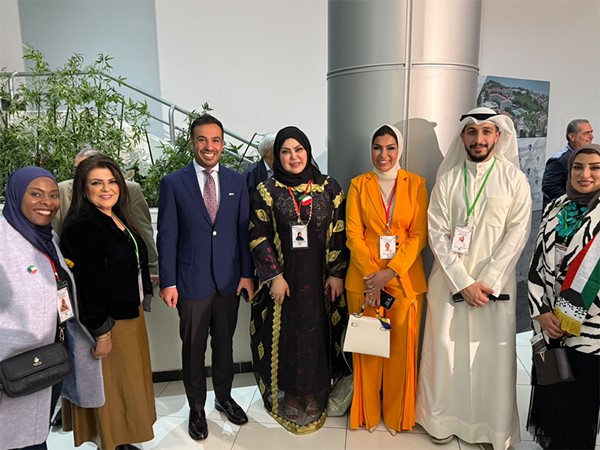
Participation of Kuwaiti artists in the second international visual art exhibition in Lebanon, organized by the Art Sustainability Association.
Translated by Alqyas from Al-Anba — Original source
A group of Kuwaiti artists highlighted the beauty of Kuwaiti visual art at the second International Visual Arts Exhibition in Lebanon, “Salam 2026,” held in the town of Zouk Mosbeh north of Beirut.
The Kuwaiti artists participated alongside a select group of Arab artists in the exhibition, which is being held for the second time in Lebanon under the organization of the Art Sustainability Association.
The Kuwaiti Embassy in Beirut attended the opening ceremony, represented by Counselor Abdullah Al-Dayan, who emphasized in a statement to KUNA the embassy’s commitment to supporting Kuwaiti artists and keeping pace with activities organized in Lebanon. He praised the role of the Kuwaiti artist in conveying the civilized image of Kuwait and its humanitarian and heritage message to the world.
For her part, Dr. Abeer Al-Kandari, a professor at the College of Basic Education in Kuwait and a specialist in art education, said in a similar statement that she chose a painting depicting Lebanese terrain, expressing through it human emotions and her interaction with this natural landscape.
Meanwhile, artist Dr. Mona Qasem introduced herself as a Kuwaiti visual artist and architectural designer who wished to participate in the exhibition with a work showcasing the beauty of Kuwaiti heritage, “from Sadu weaving to theater, the Hameela headpiece, the Maznat, gold thread, incense, and its continued importance in Kuwaiti majlis gatherings, which remain relevant to this day.”
Kuwaiti visual artist Latifa Al-Mansour noted that she began her artistic journey at the age of 15, later mastering painting with colors. She explained that she is participating in the exhibition with a realistic painting depicting the desert environment, highlighting its distinctive features and its impact on Kuwaiti life.
Kuwaiti artist Asil Al-Filakaoui stated that her work in the exhibition highlights the traditional Kuwaiti craft of Sadu weaving, emphasizing the importance of interacting with artists from other countries, including painters and sculptors, through participation in art exhibitions “to enrich the artist’s experience and elevate their artistic practice.”
For his part, Kuwaiti ceramicist Nasser Al-Qarini said he is participating with a piece titled “The Swallow,” which incorporates ceramic sculpture and utilizes vessels designed for domestic use. Al-Qarini, who has participated in numerous exhibitions outside Kuwait, pointed out the importance of such participations for artists, as they provide a space for exchanging cultures and artistic experiences, fostering mutual acquaintance among artists.
Kuwaiti visual artist Dr. Agarrid Al-Saad discussed her participation through a painting that portrays Kuwait between past and present, highlighting the country’s history and its subsequent development while showcasing Kuwaiti heritage that remains preserved, from currency to Sadu weaving.
In conclusion, Raja Nicholas, head of the Art Sustainability Association organizing the exhibition, clarified that the three-day event, running from November 27 to 29, is the second International Visual Arts Exhibition in Lebanon, bringing together a select group of prominent visual artists from Lebanon and various Arab countries. She added that the exhibition’s goal is to create “an artistic and cultural encounter that embodies the message of art in enhancing communication, dialogue, and peace among peoples.” She regarded art as one of the highest languages of communication between nations, facilitating the exchange of knowledge, highlighting cultural diversity and richness, and reinforcing human values.
