'Public Prosecution': Fake Auctions and Phone Control Apps Among 8 Methods of Electronic Fraud
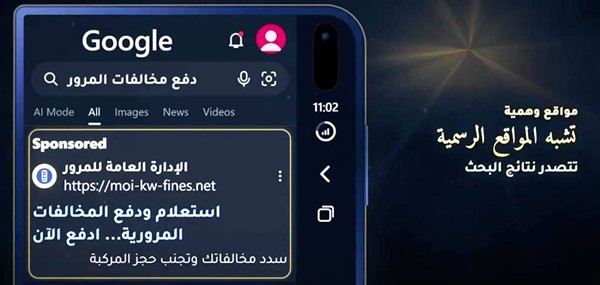
The Public Prosecution publishes an awareness video on methods of electronic fraud.
Translated by Alqyas from Al-Anba — Original source
The Public Prosecution has warned about the growing sophistication of online fraud and scamming techniques, outlining the primary methods employed by scammers to steal victims’ funds, through an awareness video published on its official social media accounts.
The Prosecution clarified that among these methods are the creation of fake websites that mimic official portals, which appear at the top of search engine results through paid advertisements, exploiting users’ need to complete transactions such as renewing civil ID cards, paying traffic fines, or settling utility bills.
It also highlighted fraudulent advertisements posted on social media platforms at prices comparable to market rates to avoid raising suspicion. Examples include ads for selling women’s abayas, household furniture, and sports shoes, or offering decoration installation services, alongside live-streamed fake auctions for luxury watches and prayer beads. In such cases, the winning bidder transfers the payment for the goods but never receives them.
Other forms of fraud involve offering to sell goods—such as fruits and poultry—in exchange for a partial upfront payment, with the balance due upon delivery. Additionally, there are advertisements for booking seaside chalets that require a deposit weeks before the scheduled booking date, after which the advertiser disappears once the payment is received.
The Prosecution warned against fake trading platforms that lure users with promises of unrealistic profits, only to suddenly disable withdrawal features and demand additional deposits to “enable” the withdrawal of alleged profits, ultimately resulting in total loss of funds without any return.
It also cautioned against impersonation of official entities via phone calls, where scammers ask victims to provide their one-time password (OTP) under the pretext of recovering their money. For instance, scammers may impersonate the Public Prosecution, convincing an individual that their account has been compromised, and then request the verification code sent to their phone, thereby falling victim to a new scam.
Furthermore, the Prosecution warned against complying with requests to download remote access software such as AnyDesk and Zoho Assist, and sharing the numbers displayed on the phone screen, after scammers claim to work in a specialized department for fund recovery. This step allows them to take control of the phone, spy on the user, and access bank accounts.
The Public Prosecution emphasized that while fraudulent methods vary, the objective remains the same: victims may pay for goods that never arrive, initiate a transaction for a small amount only to find thousands of dinars deducted from their account, or believe they have made profits from trading only to discover they are illusory. In some cases, downloading remote access software can lead to the complete drain of funds from bank accounts.
