'Red Crescent': Preparedness and capacity building enhance disaster response efficiency
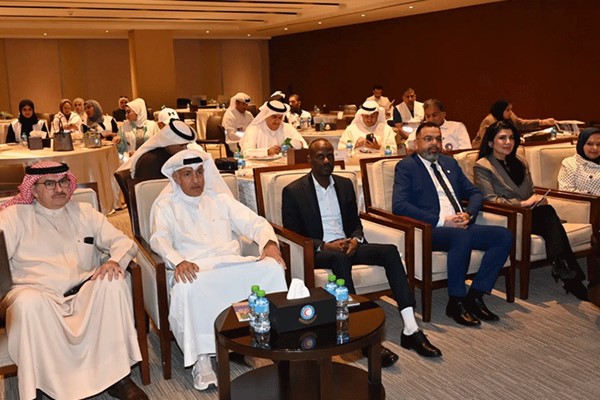
The Red Crescent Society and the International Committee of the Red Cross organized a workshop to enhance crisis response efficiency
Translated by Alqyas from Al-Anba — Original source
The Kuwait Red Crescent Society confirmed on Monday that advance preparedness, effective planning, and capacity building of human resources are fundamental pillars for mitigating disaster risks, enhancing the efficiency of crisis and emergency response, and protecting lives and property.
Yousef Al-Zubain, a member of the society’s board of directors, told the Kuwait News Agency (KUNA) during the opening of a workshop titled “Preparedness and Disaster Management for Effective Response,” organized by the society in cooperation with the International Committee of the Red Cross (ICRC), that humanitarian response does not begin when a disaster strikes, but is preceded by stages of planning, training, and readiness-raising to ensure swift handling of its repercussions.
Al-Zubain added that since its establishment, the society has played a national and humanitarian role in responding to crises and disasters within Kuwait and abroad by implementing relief operations, providing basic necessities to those affected, and supporting shelter and humanitarian care efforts in collaboration with national societies and relief organizations.
He clarified that the society places great emphasis on qualifying its staff and volunteers and developing their field capabilities, considering human resources the cornerstone of the humanitarian response system. He stressed that training and the exchange of expertise enhance teams’ ability to handle exceptional circumstances and make appropriate decisions.
He noted that the three-day workshop covers specialized topics, including the basic principles of preparedness and disaster management, safe access, and the protection of workers and volunteers during humanitarian missions, alongside international humanitarian law, risks associated with extreme weather phenomena, and mechanisms for managing shelters and accommodation centers.
Al-Zubain appreciated the cooperation with the ICRC and the participation of experts and specialists, particularly from the General Authority of Civil Aviation, emphasizing that the exchange of experiences and international practices strengthens integration among humanitarian institutions and technical agencies, raising the level of coordination and readiness to face emergencies.
He stressed the importance of leveraging the workshop’s outcomes to consolidate a culture of preventive action and advance planning, and to develop field teams’ capacities, thereby supporting the construction of a more efficient and effective humanitarian response system in the face of disasters and crises.
For his part, Hassan Idris, Director of the Cooperation Department at the ICRC, told KUNA that the committee’s participation in organizing the workshop is part of its cooperation with the Kuwait Red Crescent Society to exchange technical expertise and enhance the readiness of humanitarian personnel to deal with disasters and emergency situations.
Idris added that the committee contributes to delivering several training modules covering the understanding of disaster management, initial assessment of emergency needs, and aid distribution mechanisms, thereby enhancing response teams’ ability to handle various humanitarian situations.
He explained that field assessment represents a fundamental step in identifying urgent needs, monitoring the conditions of those affected, and directing aid to the most vulnerable categories according to humanitarian priorities, ensuring optimal use of available resources.
He further stated that training in these aspects would contribute to developing the skills of workers and volunteers, enabling them to make appropriate decisions during crises and handle field changes efficiently and swiftly.
Idris praised the Kuwait Red Crescent Society’s efforts in responding to crises and disasters within Kuwait and abroad, appreciating its commitment to qualifying its staff and volunteers and enhancing cooperation with relevant authorities.
He emphasized the importance of continuing partnerships and exchanging experiences among humanitarian organizations, which would contribute to raising readiness, improving response mechanisms, and delivering humanitarian aid to those affected more effectively.
