Aoun Calls for Raising the Lebanese Flag on Independence Day, Discusses Post-UNIFIL Phase with UN
President Aoun calls for raising the flag and discusses the future of UNIFIL, while Bilal Erdogan visits Tripoli to strengthen Lebanese-Turkish relations.
Translated by Alqyas from Al-Anba — Original source
Beirut – Mansour Shaaban: President of the Republic, General Joseph Aoun, called on Lebanese citizens to “hoist the Lebanese flag in their homes, institutions, companies, and schools, particularly during the period from November 20 to 22, inclusive, which includes Independence Day.” He made these remarks while receiving the “Project to Preserve the Lebanese Flag” initiative from Father Charbel Bouabboud, director of the Technical Institute, and Rita Safir, the institute’s administrative assistant. Aoun emphasized that “the flag is not merely a banner fluttering above institutions and squares; it is a symbol of the nation’s unity, sovereignty, dignity, and national identity. It is the unifying force that transcends affiliations and differences, encapsulating Lebanon’s history, the sacrifices of its sons, and their hopes. Furthermore, respecting the flag is respecting the country, and preserving it is a national duty that reflects the depth of our belonging and loyalty to it.”
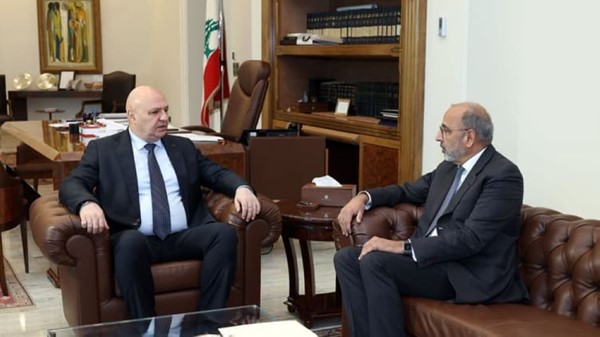
President Aoun also discussed with Imran Riza, the UN Deputy Special Coordinator in Lebanon and Humanitarian Coordinator, the situation in Lebanon generally and in the south specifically, amid ongoing Israeli attacks and the Lebanese state’s communications aimed at halting them. The talks also covered consultations underway to prevent any potential vacuum following the expiration of the mandate of the United Nations Interim Force in Lebanon (UNIFIL).
At the Saeb Salam Presidential Palace, Prime Minister Dr. Nawaf Salam addressed a delegation of students from the Institute of Political Science at Saint Joseph University. He stated that “the Lebanon you aspire to—a state founded on the rule of law, institutions, justice, equality, and equal opportunity—will only be built through your participation. Do not let frustration drive you to withdraw from public affairs, and do not allow past divisions to dictate the boundaries of your future. Hold fast to your independence, your right to differ, and your capacity to work together for the public interest. Democracy does not stop at the university gates, and political participation is not the exclusive domain of anyone.”
Meanwhile, MP Faisal Karami, head of the Karama Current, affirmed in a press statement on the sidelines of the visit of Turkish President Recep Tayyip Erdoğan’s son, Bilal Erdoğan, to Tripoli, the widespread welcome extended to the guest and all visitors to the city. He stressed the necessity for the people of Tripoli to recognize the true value of their city and country.
MP Karami noted that in recent years, Tripoli had been excluded from tours of guests and official delegations, treated as if it were merely an “appendage” or a formality. He clarified that it is a major city deserving of appreciation and investment across various sectors. He emphasized that welcoming Bilal Erdoğan and other guests falls exclusively within the framework of the Lebanese state and its institutions, viewing the return of visitors through official channels as evidence of the state’s renewed presence in Tripoli after periods of neglect.
Sheikh Dr. Bakr al-Rifai, Mufti of the Baalbek-Hermel District, stated in his Friday sermon that “Bilal Erdoğan’s visit to Lebanon holds significance in strengthening Lebanese-Turkish relations and opening avenues for cooperation in investment, reconstruction, education, culture, and trade.”
Such visits should be transformed into practical opportunities that serve both countries and support stability and development, within relationships based on mutual respect and shared interests, while preserving national decision-making independence and Lebanese unity.
A scholarly meeting was held at the Dar al-Fatwa in Rashaya, presided over by Grand Mufti Wafiq Hijazi and attended by scholars, who welcomed the visit of the Turkish president’s son to Lebanon, commending “Turkey’s positions on issues concerning Lebanon and the Arab and Islamic nations,” and considering that “Turkey, with its bright history on the Arab and Islamic world stage, is a testament to civilization and a forward-looking vision aimed at stability and ending conflicts in the Arab homeland, while insisting on the necessity of preventing interference in the internal affairs of the Arab homeland.”
The Council of Catholic Bishops and Archbishops in Lebanon concluded its 59th ordinary session with a statement emphasizing “the necessity of respecting Lebanon’s sovereignty, independence, and territorial integrity,” calling for the extension of state authority over its entire territory, reserving decisions on war and peace to its constitutional authorities, and restricting weapons to the Lebanese Army and legitimate security forces. The council affirmed the Church’s support for the diplomatic efforts and negotiations conducted by the Lebanese government to end the war and consolidate a ceasefire.
Imam of Al-Safa Mosque, Grand Mufti Sheikh Hassan Sharifa, in his sermon dedicated to social security and the awareness-raising role of the media, called for “declaring a permanent state of emergency to monitor the suffering and challenges faced by residents of the south,” stressing that “the situation in the south cannot tolerate seasonal remedies or transient stances; it requires continuous follow-up and a unifying national responsibility.” He said, “One whose hand is in the fire is not like one whose hand is in water; those who live through the repercussions of pain and suffering are not like those who merely observe them from afar.”
