KAC: National Screening Revealed 418 Asymptomatic Hidden Cancer Cases; Awareness Saves Lives
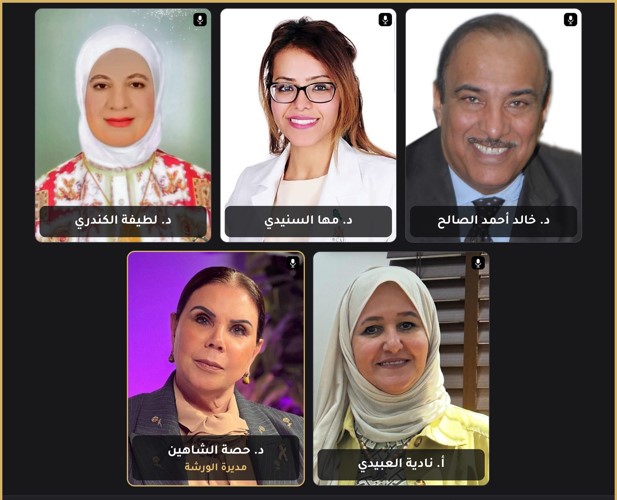
President of the Kuwait Cancer Control Association emphasizes the role of awareness in reducing cases, with data showing 418 early detections in Kuwait.
Translated by Alqyas from Al-Anba — Original source
AbdulKarim Al-Abdullah: Dr. Khalid Al-Saleh, Chairman of the Board of Directors of the Kuwait Cancer Control Society, affirmed that one-third of cancer cases could be prevented if people avoided risk factors, emphasizing that awareness campaigns have scientifically proven their ability, in some cases, to achieve what treatment alone cannot.
This statement was made during a workshop titled “The Impact of Awareness in Reducing the Suffering of Breast Cancer Patients and Enhancing Early Detection and Quality of Life,” organized by the National Cancer Awareness Campaign (KANC) via Zoom. The event marked the fifteenth consecutive year of the breast cancer awareness initiative and was moderated by Dr. Hessa Al-Shahin, a board member of KANC and head of the breast cancer awareness initiative, with the participation of a select group of physicians and consultants.
Dr. Al-Saleh added that risk factors fall into two categories: those that cannot be avoided, such as age and genetics, and those that can be avoided, such as habits, diet, and viruses. He noted that avoiding the four main risk factors reduces incidence by 37%, and that World Health Organization studies have identified approximately 30 avoidable causes. He pointed out that smoking is responsible for 80% of lung cancer cases, and highlighted that the human papillomavirus (HPV) vaccine led to the disappearance of approximately 90% of cervical cancer cases in studies conducted in Asian countries and Sweden.
He clarified that awareness efforts focus on three patterns: preventing risk factors, correcting misconceptions propagated by media over decades that instilled fear and terror regarding the disease, and promoting early detection. He stressed that women bear responsibility for recognizing tangible symptoms, noting that the cure rate in the early stage can reach 100%, particularly for non-invasive cancers, compared to approximately 33% to 37% in late stages.
He emphasized that in a study involving more than 400 patients, 16% of those who delayed seeking consultation for more than three months experienced delayed treatment. He attributed this delay to fear ingrained by the media and urged all women over the age of 40, especially those with a close relative who has had cancer, not to hesitate in undergoing mammography. He clarified that Kuwait recommends having a mammogram every two years, dispelling the misconception that it should be done only once in a lifetime.
He added that Kuwait’s healthcare system offers screening programs for the breast, colon, and rectum, in addition to cervical smears and prostate examinations. He noted that research has reached the level of cancer cell DNA in the blood, which may enable early disease detection in the future. He recommended linking awareness campaigns with preventive services, appointment booking, referrals, and measuring behavioral change, affirming that prevention is the core of disease management.
The Gulf Experience
For her part, Dr. Maha Al-Sindi, an oncology consultant at the Bahrain Cancer Center, confirmed that approximately half of female patients in the Gulf are diagnosed at an advanced stage, despite the fact that the cure rate in the early stage exceeds 95%. She stressed that cancer appears in the Gulf at least ten years earlier than in Western countries, with an average age of diagnosis of around 45 years. She noted that Kuwait had the highest cancer diagnosis rates in the Gulf in 2024 across all types, and ranked second in breast cancer cases after the United Arab Emirates.
Dr. Al-Sindi indicated that the Gulf relies on four awareness models: pink caravans, lighting landmarks in October, government screening campaigns, and patient associations that break the stigma. She explained that successful initiatives link awareness with quick access to screening appointments, involve survivors in sharing their stories, and engage leaders and the media.
She pointed out that Bahrain reduced late-stage diagnoses by linking campaigns to screening centers and measuring attendance annually. She called for year-round awareness rather than limiting it to October, and urged measuring attendance and exchanging diagnostic stage data among regional countries.
For her part, Dr. Latifa Al-Kandari, Head of the Diagnostic Radiology Department at Al-Adan Hospital, revealed that the National Early Detection Program for Cancer
The Breast Cancer Screening Program detected 418 cancer cases, all asymptomatic, among 46,225 tests conducted so far. It added that the number of screenings rose from 2,952 in 2014–2015 to 3,945 the following year, and then to 6,091 last year, noting that the number of detected cases reached 26, 57, and 39, respectively.
The program targets Kuwaiti women aged 40 to 69 who are asymptomatic, provided they have not undergone a screening in the previous 12 months. It excludes pregnant and breastfeeding women, as well as those with a history of cancer within the past five years. Appointments can be made through the “Sahl” or “Salem” applications. The program emphasized that breast cancer may begin in its early stages without any symptoms, and that early detection involves searching for it before a lump becomes palpable. It noted that mammography is followed by breast ultrasound for dense breasts, and that magnetic resonance imaging and biopsy may be required.
It stressed the importance of not ignoring symptoms such as a new lump, changes in breast size or shape, nipple discharge, nipple retraction, and swelling under the armpit. It added that physical activity, avoiding smoking and alcohol, and maintaining a healthy weight reduce risk, and that awareness campaigns aim to correct misconceptions, such as the belief that pressing on the breast or taking a biopsy spreads cancer.
Psychological Support
Psychological counselor Nadia Al-Obaidi emphasized that when a woman hears the word “cancer,” she fears not only the disease itself but also questions such as: Will I recover? Will my appearance change? How will my life be after treatment? How will the disease affect my work, relationships, and self-confidence?
She stressed that proper awareness reduces anxiety and empowers women to distinguish between reliable information and rumors, and to express their fears without shame. She added that stories from survivors break down fear and stigma and provide hope that life continues after cancer.
For her part, workshop director Dr. Hessa Al-Shahin pointed out that the rise in detected cases in the National Program is positive because it indicates early detection. She affirmed that cancer has become like any other chronic disease, and that comprehensive annual screening is required for women over 40, while self-examination is recommended before that age.
She added that family support and psychological care accelerate recovery, and that survivors have become ambassadors through their stories. The Makin Center, opened by the association, prepares them for this role. She expressed hope for a partnership between the Cancer Control Association and the National Program.
