Soil Enzyme Attacks Plastic and Antibiotics Simultaneously
&cropxunits=450&cropyunits=285&w=600)
Researchers at Germany's University of Konstanz discovered a bacterial enzyme that attacks bioplastic and neutralizes the effectiveness of antibiotics such as penicillin.
Translated by Qiyas from الأنباء — Original source
The experiment began with strips of bioplastic buried at a depth of about 10 centimeters in forest soil and ended with the discovery of a bacterial enzyme that performs two distinct and notable functions: breaking down the plastic and disabling antibiotics from the penicillin family.
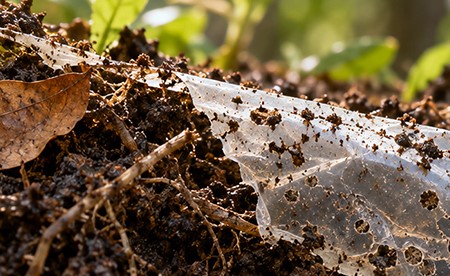
Researchers from Germany’s University of Konstanz left strips made of a plant-based biopolymer known as LCAP in the humus-rich soil layer for more than a year. When examined under a microscope, tiny pits resembling bacterial shapes appeared on their surfaces, indicating that microorganisms had begun consuming the material.
After analyzing the DNA of the microbes found on the plastic, the team identified an enzyme they named LCPH1. Tests showed that it could break down the polymer into its components, but it also managed to cleave the core chemical ring in penicillin and ampicillin, rendering them unable to kill bacteria.
This dual performance stems from a large active site within the enzyme, which researchers likened to the mouth of the video game character Pac-Man, allowing it to handle both plastic chains and antibiotic molecules.
However, the discovery does not mean a ready-made solution has been found for all plastic waste. The enzyme was tested on a specific type of degradable bioplastic, not on all conventional plastics. Moreover, its ability to disable certain antibiotics raises questions about the potential link between plastic-polluted environments and the spread of antibiotic resistance.
Researchers believe that designing plastic materials containing bonds that are susceptible to biodegradation could enable the exploitation of microbes’ capabilities for waste treatment in the future.
