Al-Badawi: Iranian Attacks on GCC States Exceeded 7,000 Ballistic Missiles and Drones
&cropxunits=450&cropyunits=305&w=600)
Jasem Al-Badawi emphasizes the importance of cooperation with Russia to counter Iranian attacks on GCC states.
Translated by Qiyas from الأنباء — Original source
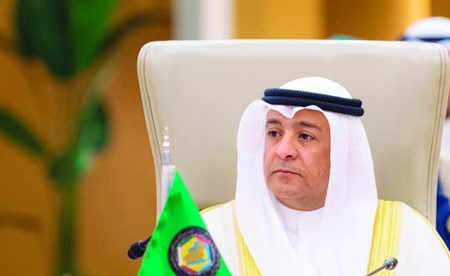
The Secretary-General of the Gulf Cooperation Council (GCC), Jassem Mohamed Al-Bedawi, affirmed that GCC member states attach special importance to consolidating their relations with the Russian Federation, driven by shared interests and a mutual desire to elevate cooperation and coordination levels between the two sides, thereby opening broader horizons for Gulf-Russian partnership.
This statement came during the ninth joint ministerial meeting of the Strategic Dialogue between the GCC and the Russian Federation, held in the Bahraini capital of Manama. The meeting was chaired by Abdul Latif bin Rashid Al Zayani, Minister of Foreign Affairs of the Kingdom of Bahrain and President of the current session of the GCC Ministerial Council, and attended by Their Highnesses and Excellencies the foreign ministers of the GCC member states, as well as Russian Foreign Minister Sergey Lavrov.
Speaking during his address, the Secretary-General stated that the joint ministerial meeting takes place at a highly critical juncture for the region, during which GCC states are facing unprecedented attacks compromising their security and sovereignty, while maritime navigation and energy supplies face direct threats. This situation underscores the importance of the strategic dialogue between the GCC and the Russian Federation, and the need to intensify consultation and coordination between the two sides on regional and international issues of common interest, contributing to consolidating the foundations of security and stability, and resolving conflicts through peaceful means, in accordance with the principles of the UN Charter and international law.
Al-Bedawi highlighted that among the serious challenges facing the region are Iranian attacks on GCC states since February 28, 2026, involving more than 7,000 ballistic missiles and drones targeting airports, ports, power stations, desalination plants, and oil and gas facilities. These attacks resulted in the deaths of innocent civilians in a war in which GCC states were not parties, but which they strove to shield the region from its severe repercussions, despite suffering blatant attacks and violations of their sovereignty and territorial integrity. These attacks were not limited to direct Iranian aggression but extended to include assaults by the terrorist Houthi militia, which escalated its attacks on the Kingdom of Saudi Arabia, targeting airports, civilian targets, and energy facilities. This included the brutal attack on King Khalid International Airport in Riyadh on October 10, which killed 12 people of various nationalities, including citizens and residents, and injured more than 300 others, in a blatant violation of international law and international humanitarian law.
In the same context, the Secretary-General affirmed the GCC’s unified stance in support of the Kingdom of Saudi Arabia, expressing its full solidarity with the Kingdom and its backing of all measures taken to protect its security, sovereignty, and the safety of its citizens and residents. He also called on the international community to adopt a firm and deterrent position against attacks targeting the security and stability of the Kingdom, condemning such acts as threats to regional peace and security and violations of relevant UN Security Council resolutions, particularly Resolution 2722.
Al-Badawi stated that Iran’s actions to disrupt navigation in the Strait of Hormuz, through which approximately one-fifth of global oil consumption passes, along with its efforts to impose restrictions and fees on transit rights, coupled with threats by its proxies to navigation in the Bab al-Mandab Strait and the Red Sea, constitute a violation of the international rules governing navigation in straits used for international shipping. These actions pose a threat to energy security, food security, and global supply chains. The Gulf Cooperation Council (GCC) reaffirmed the necessity of restoring navigation in the Strait of Hormuz to its pre-February 28, 2026, status, and emphasized the importance of full implementation of United Nations Security Council Resolution 2817 (2026), which strongly condemned Iranian attacks on GCC member states and the Hashemite Kingdom of Jordan, and called for an immediate halt to all Iranian aggression.
In the same context, he said that the GCC looks forward to Russia, as a permanent member of the Security Council, playing an active role in pressuring Iran to comply with Resolution 2817 (2026), cease its attacks, respect freedom of navigation, and engage in serious dialogue with GCC states based on the principles of good neighborliness, respect for sovereignty, and non-interference in internal affairs.
