Hamad Al-Marzouq: Gulf and Asian countries moving toward stronger economic horizons supported by banking partnerships, investments, and digital connectivity
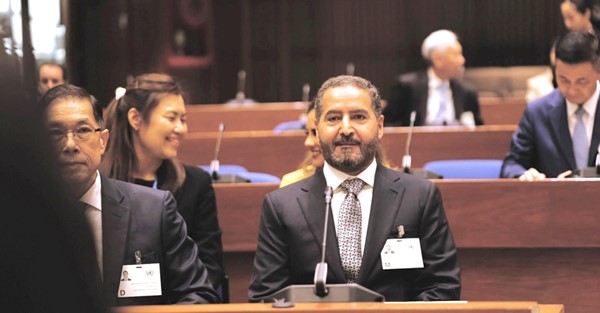
Hamad Al-Marzouq emphasized the importance of economic relations between the Gulf and Asia, pointing to the volume of trade, investments, and digital infrastructure.
Translated by Qiyas from الأنباء — Original source
Hamad Abdulmohsin Al-Merzouq, Chairman of the Board of Directors of the Kuwait Banks Union and Chairman of the Board of Directors of Kuwait Finance House, underscored the growing strategic importance of relations between the Gulf Cooperation Council (GCC) countries and Asia, and the pivotal role played by the banking sector in enhancing economic integration between the two regions. This was stated in his opening address at the Gulf-Asia Economic Forum: Banking, Investment, and Digital Infrastructure, held in Bangkok on the sidelines of the 2026 Annual Meetings of the International Monetary Fund and the World Bank Group.
The forum was attended by a distinguished group of senior officials, including Jassem Mohamed Al-Bedaiwi, Secretary-General of the Gulf Cooperation Council, and Dr. [Name], Kuwait’s Minister of Finance.
Yaqoub Yousef Al-Rafai, Deputy Prime Minister and Minister of Commerce of the Kingdom of Thailand, Supachai Sathirathai, and Governor of the Central Bank of Kuwait, Bassel Ahmad Al-Haroun, alongside central bank governors and ambassadors of the Gulf Cooperation Council (GCC) countries, as well as numerous leaders from the business sectors, banking, asset management, and technology industries from across the Gulf and Asia.
In his speech, Al-Marzouq emphasized that the strong relations between the GCC countries and Asia are advancing steadily toward deeper partnerships that enhance investment, trade, and economic growth. He noted that both regions play an increasingly important role in consolidating stability and bolstering resilience in the face of current economic challenges.
Al-Marzouq highlighted the robust economic ties between the two regions, pointing out that total goods trade for the GCC countries reached approximately $1.59 trillion in 2024, according to data from the Gulf Cooperation Council Statistical Center. China, India, Japan, and South Korea accounted for about $659 billion of this total trade volume.
He clarified that China led the list of the Gulf’s trading partners, with a trade volume of approximately $299 billion, followed by India at around $158 billion, Japan at about $114 billion, and South Korea at roughly $88 billion. Collectively, these four Asian economies represented approximately 41.5% of the total external goods trade of the GCC countries in 2024.
Al-Marzouq affirmed that Gulf-Asian relations remain a strategic priority, supported by growing trade volumes, increasing investment flows, and the active role of financial institutions in financing infrastructure, energy projects, and broad market integration, all of which support economic growth in the coming stages.
He also touched upon the strength of the banking sector in the GCC countries, noting that total assets of commercial banks in the GCC reached approximately $3.9 trillion in 2025, while net foreign assets amounted to about $837 billion, according to data from the Gulf Cooperation Council Statistical Center. He indicated that these indicators reflect the significant potential available to support trade and investment and enhance financial connectivity with Asian markets.
Furthermore, he added that Gulf financial institutions benefit from strong balance sheets, robust regulatory and supervisory frameworks, and high liquidity levels, qualifying them to play a pivotal role in developing Gulf-Asian partnerships by supporting cross-border investments, trade financing, and innovation in financial services.
Speaking about the advantages enjoyed by both regions, Al-Marzouq explained that Asia offers extensive opportunities in technology and infrastructure, while the GCC countries possess long-term capital, strong risk management capabilities, and international expertise in Islamic finance. He added that the integration of these strengths creates significant opportunities to support cross-border growth, attract new investments, and achieve shared prosperity.
Meanwhile, Al-Marzouq stressed that the objective in the coming phase extends beyond facilitating financial and commercial transactions to building long-term partnerships. He emphasized the importance of enhancing cooperation across various areas of the financial sector, including project financing, expanding sukuk markets, supporting new investment opportunities, and developing digital systems that strengthen economic connectivity between the two regions. He added that the integration between the strong capital base of the GCC countries and technological innovation in
Asia can contribute to building an integrated economic corridor that facilitates investment, stimulates innovation, and supports sustainable growth in both regions. In conclusion of his speech, Al-Marzouq noted that the gathering of leaders and decision-makers at the forum represents an important opportunity to deepen cooperation, increase investments, and achieve sustainable economic benefits for the Gulf Cooperation Council countries and Asian nations.
