Abdulaziz bin Salman: Saudi Arabia Will Overcome Challenges.. and Move Towards the Future
&cropxunits=434&cropyunits=450&w=770)
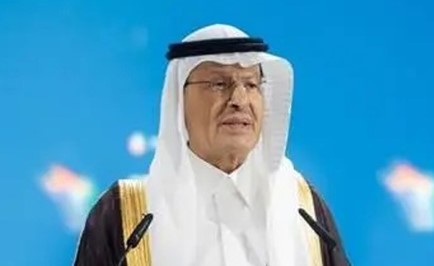
His Royal Highness Prince Abdulaziz bin Salman, Saudi Minister of Energy and Minister of Industry and Mineral Resources, opened in Riyadh yesterday the events of the 25th edition of the World Petroleum Congress, under the theme “Pathways to an Energy Future for All,” with the attendance and participation of senior officials, executive leaders, investors, experts, and specialists in the energy sector from the Kingdom, the region, and the world.
The conference, hosted by the Kingdom of Saudi Arabia for the first time in its history spanning more than 90 years and running until October 15, discusses a number of key issues and topics in the energy sector, including supply security, markets, investment, technologies, innovation, sustainability, and human capacity development.
In his opening address at the conference, His Royal Highness the Minister of Energy and Minister of Industry and Mineral Resources affirmed that the Kingdom will overcome the challenges it faces and continue to move forward toward the future, fulfilling its commitments within the framework of realizing its vision, driven by its responsibility toward future generations. He pointed out, in this regard, the scale of transformation the Kingdom has undergone within a short period, and its determination to continue shaping its future.
He clarified that recent developments in the region and the Kingdom have reaffirmed that energy security cannot be taken for granted, given the pressures facing supply routes and the targeting of infrastructure. He noted that the Kingdom believes resilience and the ability to confront such challenges are built before crises occur, explaining that the Kingdom has invested, over decades, in infrastructure, reserve capacities, storage, alternative export routes, technologies, local supply chains, and human capabilities.
His Royal Highness indicated that localization for the Kingdom goes beyond being an economic goal to become a strategic capability that supports business continuity and recovery when international supply chains are disrupted. He explained that the resilience of energy systems is not measured solely by reserve production capacity, pipelines, or generation capabilities, but also includes the ability to maintain and repair, reroute, find alternatives, recover, and continue supplying under pressure. He clarified that resilience is a preparedness built and maintained over time, proven effective through actions, and that the Kingdom’s demonstrated resilience and recovery capacity support supply reliability at the international level and reinforce the Kingdom’s continued status as a trusted partner in the global economy.
He stressed that there can be no energy future for all without energy security for all, emphasizing the necessity for energy security and the energy sector transition to proceed hand in hand. He clarified that the Kingdom will continue to invest in reliable oil and gas supplies, expand the exploitation of renewable energy, enhance electricity grids and storage capacities, develop gas infrastructure, advance low-emission technologies and solutions, build local manufacturing capabilities, strengthen supply chain resilience, and invest in human capabilities. He affirmed the continued implementation of Saudi Vision 2030 plans and programs, and investment in the energy system and industrial capabilities, developing and enhancing them. He reaffirmed the Kingdom’s firm commitment to the security and well-being of its people, as well as its international partnerships.
For his part, Pedro Miras, President of the World Petroleum Council (WPC), emphasized in his speech the Kingdom’s pivotal and leading role in developing global energy systems through increased investments and vital innovations. Miras noted that the world is moving toward developing advanced technologies and innovating new solutions in the energy sector to preserve
On global energy security, economic stability, and contributing to improving the lives of billions of people worldwide, he noted that these efforts come amid a rapidly evolving global economy that requires improvements in energy infrastructure and the innovation of new, sustainable solutions. He emphasized that energy security is fundamental to achieving economic growth and social stability, and that success in transforming the energy sector requires steady and sustainable investments, highlighting the role of artificial intelligence, digitalization, new fuel sources, and carbon capture technologies in shaping the future of the sector. He also stressed the importance of international cooperation to achieve shared goals in the energy sector, noting that collective action is the optimal solution to ensure a secure and sustainable future for all. The International Energy Forum The 17th Ministerial Meeting of the International Energy Forum (IEF17) kicked off last Sunday in Riyadh, with the participation of Kuwait’s Oil Minister Tariq Al-Roumi and Sheikh Nawaf Al-Saud Al-Sabah, CEO of the Kuwait Petroleum Corporation.
