A clock that loses only one second every 30 million years: Scientific achievement opens a new era for timekeeping
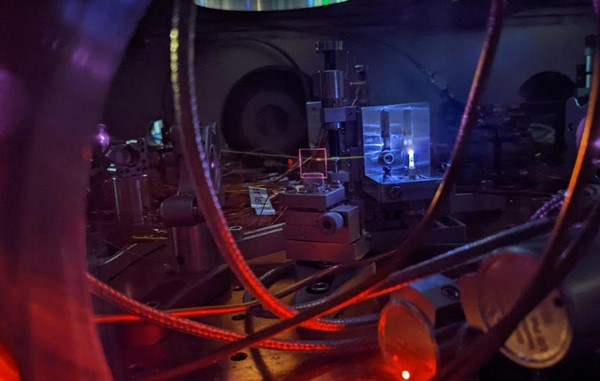
Two teams of scientists in Austria and China have developed the world’s first two operational nuclear clocks, a breakthrough that could transform the future of timekeeping and open new frontiers for precision physics research.
The clocks achieve a precision equivalent to a drift of just one second over approximately 30 million years, although they do not yet surpass the best atomic clocks currently in use.
The achievement resulted from independent work by a team at the Vienna University of Technology, led by physicist Torsten Schumm, and another team at China’s Tsinghua University. Both studies were published in the scientific journal Nature.
The technology relies on the thorium-229 isotope, whose nucleus is embedded within calcium fluoride crystals. Ultra-precise laser beams are then used to monitor energy transitions within the nucleus, rather than observing electrons as is done in traditional atomic clocks.
The innovation’s significance lies in the fact that the nucleus is much smaller than the atom and less susceptible to external influences, giving the technology promising potential to enhance precision and stability.
In the future, these clocks could contribute to the development of navigation systems, mineral exploration through gravity-difference measurements, earthquake studies, and the search for dark matter.
