Busakhher: Kuwait supports the international scientific team on AI and the global dialogue on its governance
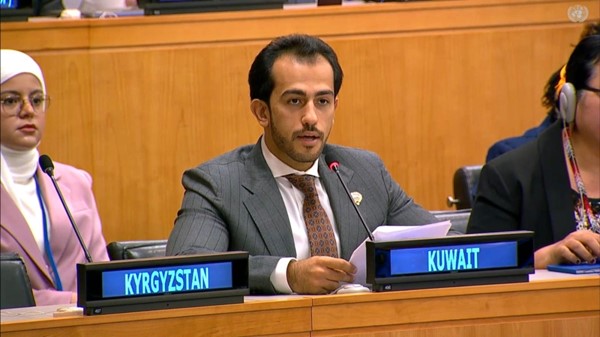
The State of Kuwait has emphasized the importance of strengthening international cooperation in the digital field to bridge technological gaps, expand investment in digital infrastructure, and ensure that developing countries benefit from technological advancements, thereby contributing to the achievement of the Sustainable Development Goals for 2030.
This was stated in Kuwait’s address, delivered on Friday by Diplomatic Attaché Abdullah Busaakher to the Second Committee (Economic and Financial) of the United Nations General Assembly, during the discussion of agenda items (14) on “Harnessing information and communications technologies for sustainable development” and (19) on “Globalization and interdependence.”
Busaakher stressed the importance of implementing the Global Digital Compact and the outcomes of the World Summit on the Information Society, calling for enhanced participation of developing countries in the global digital economy, as well as knowledge transfer and capacity building aligned with national priorities.
He highlighted Kuwait’s support for the Independent International Scientific Panel on Artificial Intelligence and the Global Dialogue on AI Governance, emphasizing the need to ensure the active participation of developing countries in their work.
On the national level, Busaakher affirmed that Kuwait attaches special importance to harnessing information and communications technologies to serve development, through the development of digital government services, the qualification of national talents, and the enhancement of international partnerships in the fields of technology and innovation, within the framework of the “New Kuwait 2035” vision.
In this context, he referred to the adoption last February of the “Kuwait Declaration on Responsible Artificial Intelligence for Global Digital Prosperity,” which includes directions for developing skills, facilitating digital trade, and supporting entrepreneurship.
Busaakher added that Kuwait’s signing of the United Nations Convention against Cybercrime on September 25 last year embodies its commitment to strengthening international cooperation and addressing the use of information and communications technologies for criminal purposes.
Regarding globalization, he pointed out the necessity of responding to the development needs of middle-income countries, which contribute approximately 40 percent of global GDP but face increasing pressures due to debt burdens, digital transformation requirements, and limited access to affordable financing.
In conclusion, Busaakher called for expanding these countries’ access to financing and technology, and for strengthening international cooperation to achieve a more equitable and inclusive globalization based on solidarity, respect for national priorities, expanded opportunities, and improved lives for all peoples, leaving no one behind.
