Salam inaugurates 'Beirut Arab International Book Fair': Restoring state sovereignty requires ending occupation
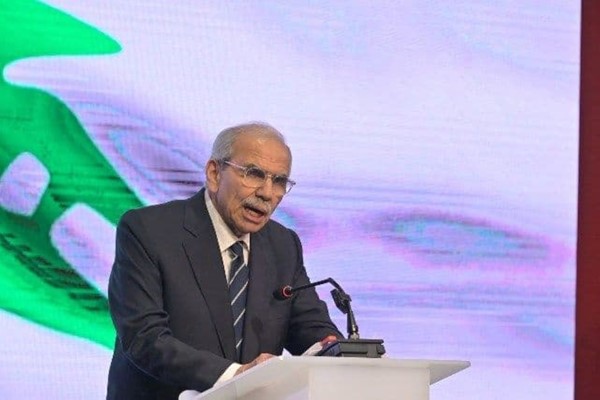
Prime Minister Dr. Nawaf Salam said during the opening of the Beirut Arab International Book Fair: “Lebanese people have paid heavy prices for successive wars and crises, losing lives, livelihoods, homes, and savings. Many of our young people have lost confidence in their ability to build their future in their homeland. Today, as we work to restore the state’s authority and control over its entire territory, and to launch the necessary reforms for economic recovery and reconstruction, we recognize that these paths are interconnected, and success in one does not substitute for progress in the others. There can be no economic recovery without reform, trust, and accountability; no sustainable reconstruction without security and stability; no lasting stability without a state that alone holds the authority to decide on war and peace; and no capable state without effective institutions. Thus, the future of Lebanese people must no longer be held hostage to decisions they do not make through their constitutional institutions, to conflicts they do not want, or to wars they do not choose, yet for which they pay the price time and again.”
He added: “Restoring the state’s sovereignty requires ending the Israeli occupation of our lands, halting aggressions, ensuring the safe and dignified return of displaced persons to their homes, and reconstructing their villages and cities. The state we desire cannot fully realize its sovereignty over its territory if it remains weak in the face of factional and private interests, nor can it regain the people’s trust if it is not founded on justice, equality, and the rule of law. This is the mission we are working toward, aware that the path is not easy, that the challenges are great, and that what has accumulated over decades cannot be resolved overnight. However, the difficulty of the task does not justify postponing it, and the scale of the challenges does not absolve us from bearing responsibility.”
Salam continued: “We cannot call for a just state while accepting patronage when it serves us, or demand strong institutions only to bypass them when their decisions do not suit us, or advocate national unity while continuing to fuel divisions. Nor can we build a different future if we remain prisoners of the same ideas that contributed to producing our crises. It is precisely here that the importance of an intellectual and cultural renaissance becomes evident. We need a political culture that does not reduce politics to a struggle for power, but sees it as a responsibility toward the public good, and a culture of citizenship that does not deny the diversity of Lebanese people, but makes the state an encompassing framework for this diversity.”
After concluding his speech, President Salam toured the exhibition, reviewing the publications.
