Kuwait TV representative shares experience using AI to enhance visuals and build virtual characters and environments for historical, heritage, and children's programs
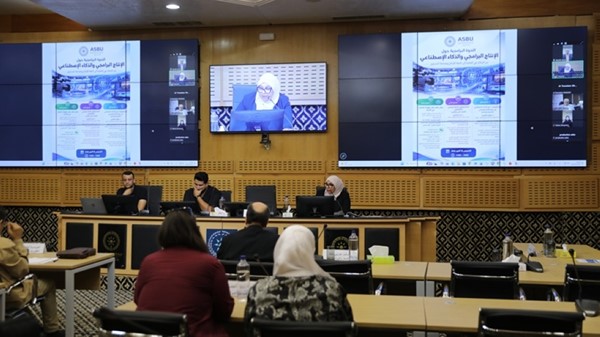
The Standing Committee for Television Programs of the Arab League Broadcasting Union held its annual professional workshop, titled “Program Production and Artificial Intelligence,” with the participation of representatives from member organizations, including Kuwait Television, to explore the application of artificial intelligence across various stages of program production, from planning and innovation to technical execution and post-production.
Participants, comprising media professionals and AI experts, presented tools that can be utilized in research, transcription, writing, fact-checking, and the production of images, video, audio, editing, and publishing. They emphasized that while tools may change, the journalist’s responsibility in selecting angles, verifying information, and preserving meaning remains unchanged.
Interventions highlighted that the use of AI does not necessarily reduce production costs. Expenses related to regenerating scenes, adjusting details, and subscription fees may incur additional costs, making the issue more akin to a redistribution of production costs rather than a reduction.
Professor Talal Al-Haifi of Kuwait Television shared the corporation’s experience in using AI to enhance visuals and set design, as well as to build virtual characters and environments, particularly for historical, heritage, children’s programs, songs, and special events. He also discussed the use of technology for archive restoration and improving the quality of old images, audio, and scenes, noting that the core value lies not in showcasing technology but in employing it to serve ideas, content, and identity, while preserving the creative vision of directors, writers, and designers.
On his part, AI expert Ayman Al-Shakhari presented an overview of applying intelligent technologies across various production stages, from research and scriptwriting to storyboard preparation, shooting, studio work, virtual sets, editing, sound, dubbing, re-framing, archiving, and semantic search. Al-Shakhari linked the transition to institutional use with the availability of appropriate infrastructure, data, and models, stressing that AI remains a supportive tool and that the final decision on content selection, approval, and publication rests with humans. He also emphasized the necessity of labeling AI-generated content and respecting image and audio rights.
Hamed Al-Maliki from Saudi Television presented examples of hybrid production that combines human work with AI technologies, including the “National Day Promo” for 2025, the program “Last Breath,” and “Sciences of the Ancients.” These experiments involved generating scenes and reconstructing historical and heritage environments based on real reference images to preserve the identity of characters and locations.
Interventions and case studies sparked a general discussion on the limits of relying on AI, particularly concerning hallucinations, information accuracy, and the ability of models to handle Arabic language and local dialects. Participants stressed the importance of referring to sources, verifying information, and not treating AI as a definitive source of facts. The need for suitable Arabic data to develop and adapt models to local contexts emerged, alongside discussions on the extent of reliance on ready-made services versus developing open models tailored to the needs of media institutions.
The discussion also addressed economic and human aspects. The workshop did not reach a unified estimate of the cost savings AI could bring to production, given the varying nature of projects and the differing numbers of generation and review processes required.
The workshop concluded with a joint affirmation by participants that technology cannot replace journalists or directors, and that transitioning to its use within institutions requires continuous training and reliable data.
Human review and safeguards to protect the rights to image, sound, and data must be in place, ensuring that technology remains a tool to enhance productivity and creativity rather than a substitute for professional responsibility.
