NATO official: Enhancing cooperation with Kuwait and GCC countries in four vital security areas
&cropxunits=450&cropyunits=364&w=770)
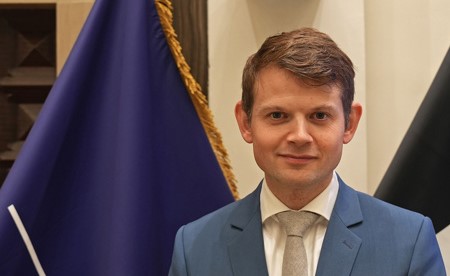
The head of the North Atlantic Treaty Organization (NATO) team at the NATO Regional Cooperation and Istanbul Initiative Center in Kuwait, Frans Bosma, affirmed the Alliance’s commitment to expanding cooperation with Kuwait and the Gulf Cooperation Council (GCC) countries in four vital security areas. Speaking to KUNA after the conclusion of the “Crisis Management and Disaster Response” course hosted by the center, Bosma said these security domains include countering unmanned aerial vehicles, counter-terrorism, maritime security, and defense against chemical, biological, radiological, and nuclear threats.
He added that the Alliance has begun implementing four major projects aimed at deepening security cooperation with regional countries and enhancing the exchange of expertise in addressing shared challenges, noting that these initiatives align with the Alliance’s renewed focus on strengthening its partnerships with GCC states amid the evolving security developments and challenges in the region.
Bosma emphasized the importance of broadening cooperation to encompass all GCC countries, thereby serving the mutual interests of both sides, and praised Kuwait’s role in hosting the NATO Regional Cooperation and Istanbul Initiative Center, which he described as a unique platform for enhancing dialogue, coordination, and the exchange of expertise between the Alliance and regional countries.
He stressed that crisis management and disaster response are priorities for all countries worldwide, particularly for GCC states given the current regional circumstances, underscoring the importance of building capabilities and enhancing readiness to handle various emergency situations.
For his part, Emad Al-Kandari, Advisor and Director of the NATO Regional Cooperation and Istanbul Initiative Center, told KUNA in a similar statement that joint training programs are crucial for developing regional capacities and promoting the exchange of expertise and knowledge in crisis management and disaster response.
