Kuwait: Necessity of adopting a comprehensive approach to tackle the global drug problem
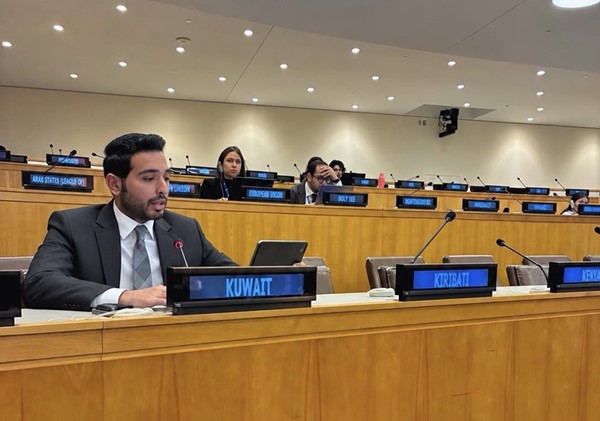
Kuwait has emphasized the necessity of adopting a comprehensive approach to address the global drug problem, one that balances efforts to combat illicit trafficking with prevention, treatment, rehabilitation, and social reintegration, while giving special priority to the protection of youth and other vulnerable groups.
This was stated in Kuwait’s address, delivered by Diplomatic Attaché Yousef Al-Mansour before the Third Committee of the United Nations General Assembly, which deals with social, humanitarian, and cultural issues, during its discussion of the agenda item “Crime prevention, criminal justice, and the global drug problem.”
Al-Mansour stressed the importance of enhancing public awareness and integrating the roles of families, educational institutions, and health facilities, as well as facilitating access to treatment and rehabilitation services. He clarified that recovery is not achieved through medical treatment alone, but by empowering individuals to reclaim their role in society.
On the national level, Al-Mansour affirmed Kuwait’s continued efforts to develop its legislative framework for combating drugs and psychotropic substances, citing the issuance of Law-Decree No. (159) of 2025 concerning the prevention of drugs and psychotropic substances, and regulating their use and trafficking, alongside related regulatory decisions governing health facilities.
He explained that these measures strengthen control over drugs and psychotropic substances and regulate their use for medical purposes.
Regarding crime prevention, Al-Mansour clarified that enhancing criminal justice requires a balanced approach that combines law enforcement, prevention, rehabilitation, and international cooperation, while respecting human rights and the rule of law.
He added that effective justice protects society, upholds human dignity, and provides those in need of rehabilitation with an opportunity to return and contribute to societal development. He highlighted Kuwait’s participation in the work of the Working Group on Trafficking in Persons and the Working Group on Smuggling of Migrants, emphasizing the importance of international cooperation in tackling these crimes and protecting individuals from exploitation.
Kuwait also continues its technical cooperation with the United Nations Office on Drugs and Crime (UNODC) in areas such as training, capacity building, and the development of national frameworks, which contribute to enhancing the efficiency of relevant institutions and translating international commitments into effective national responses.
In conclusion, Al-Mansour reaffirmed Kuwait’s support for joint international efforts in crime prevention, the promotion of criminal justice, and addressing the global drug problem, stressing the importance of legislative coherence and international cooperation to protect human dignity and build a secure and stable society.
