Projects Fund Proposes Gulf Industrial Passport for Products
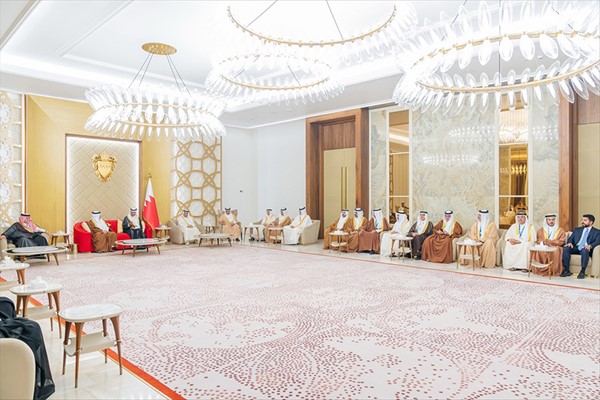
The National Fund for the Care of Projects has proposed a digital Gulf industrial passport to facilitate the movement of products among Gulf countries.
Translated by Qiyas from الأنباء — Original source
The National Fund for the Care and Development of Small and Medium Enterprises (NFC) submitted a proposal to develop the Gulf Industrial Passport for Products, during the sixth consultative meeting of Gulf Cooperation Council (GCC) Ministers of Trade and Industry with entrepreneurs, held in the Bahraini capital, Manama.
In a statement, the Fund said that the Small and Medium Enterprises and Entrepreneurship Committee of the GCC Secretariat General prepared the proposals, recommendations, and challenges, and presented them at the consultative meeting held on Tuesday, attended by Abdulaziz Al-Marzouq, Minister of State for Economic Affairs and Investment and Acting Minister of Commerce and Industry, who led the Kuwaiti delegation.
The statement clarified that the sixth consultative meeting of the Ministers of Trade and Industry with entrepreneurs was held in implementation of the directives of the Trade Cooperation Committee to enhance dialogue with entrepreneurs and involve them in developing the Gulf entrepreneurial ecosystem. It noted that the report was prepared according to the updated and approved methodology, within the framework of the governance of the Small and Medium Enterprises and Entrepreneurship Committee.
The report highlighted the main challenges and proposals put forward by participating entrepreneurs, based on the outputs of the Gulf survey, brainstorming sessions, and the views of entrepreneurs and member states, contributing to enriching the committee’s action plan. Guided by ministers’ directives, the plan seeks to explore practical initiatives that enhance the competitiveness, integration, and sustainability of the sector.
Regarding the Kuwaiti proposal, the “Gulf Industrial Passport for Products,” presented by entrepreneur Omar Al-Mutairi, who is funded by the National Fund and one of the participating initiators, the statement explained that the concept refers to a single digital file for each product, not a new paper passport or license. The file would be linked to existing regulations and consolidate key product data—such as manufacturer details, country of origin, customs classification, compliance, and required accreditations—under a single reference number.
It added that when a product moves from one GCC country to another, the competent authority could directly access its approved data, rather than requiring the manufacturer to resubmit the same information each time. This would be complemented by a faster track for compliant, low-risk manufacturers.
The Fund noted that the Kuwaiti proposal comes after the GCC states have made significant progress in customs and industrial integration. However, the current challenge is to ensure that information flows as easily as products do. Manufacturers entering multiple Gulf markets may have to deal with different systems and authorities, resubmitting data and documents that have already been registered or approved, which consumes time and increases operational costs.
The statement said that the Small Enterprises Committee at the GCC Secretariat General recommended coordinating with the relevant technical committees on industrial matters and related bodies within the Secretariat General to review existing efforts regarding the Kuwaiti proposal, assess its integration with them, and evaluate its added value.
The Fund added that all GCC countries submitted recommendations to develop small and medium enterprises. Entrepreneurs in the United Arab Emirates proposed the establishment of Gulf product corridors, while Bahraini entrepreneurs suggested a unified Gulf mechanism to reduce technical challenges and enable entrepreneurs to access government services digitally.
Saudi entrepreneurs proposed activating a Gulf linking mechanism and establishing a Gulf platform to support innovators and creators. Meanwhile, Omani entrepreneurs focused on organizing regular meetings, and Qatari initiators called for developing a flexible Gulf framework for the shared use of resources and operational capacities.
