Al-Roumi: Supporting energy supply security and sustainability
&cropxunits=450&cropyunits=259&w=770)
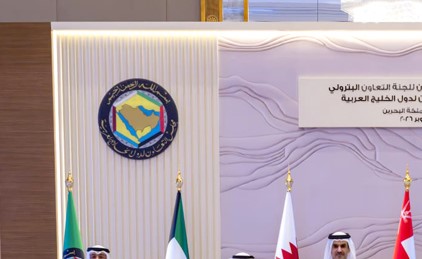
Kuwaiti Oil Minister Tariq Al-Rumai confirmed that the Gulf Cooperation Council (GCC) countries are proceeding to enhance their cooperation and integrate their capabilities in the energy sector, thereby supporting supply security, boosting readiness to handle regional and international developments, and cementing their pivotal and reliable role in global energy markets.
In a press statement, the Ministry of Oil noted that these remarks were made by Minister Al-Rumai while chairing the Kuwaiti delegation at the 37th meeting of the Petroleum Cooperation Committee of the GCC, which was attended by the oil and energy ministers of the member states.
Al-Rumai stressed that the geopolitical developments and tensions witnessed in the region are increasingly underscoring the importance of enhancing energy security and supply sustainability, and affirming the necessity of continuing to raise the readiness and capacity of the Gulf energy system to cope with exceptional circumstances. He pointed out that the reliability of energy flows is not solely linked to production capacity, but also to the ability of the entire supply chain—from production, refining, and storage to transportation, infrastructure, and supply chains—to withstand, continue, and adapt.
He emphasized that fortifying supply chains, enhancing their readiness, and ensuring the sustainability of their flows represent a shared Gulf priority that calls for strengthened coordination and optimal utilization of available capacities among GCC countries, ensuring the smooth flow of supplies and enhancing the ability of GCC states to meet their commitments to markets under all circumstances.
He also noted that GCC countries have established a pivotal position in global energy markets due to their resources, production and refining capacities, infrastructure, investments, and accumulated expertise. He added that safeguarding this position and building upon it requires deepening integration among Gulf energy sectors, coordinating positions on regional and international issues, and translating shared visions into more effective and impactful action plans.
Al-Rumai stressed the importance of moving from coordinating efforts to integrating capabilities, and from aligning visions to actionable, implementable, and follow-up initiatives that safeguard the interests of GCC states, enhance their energy security, and cement their status as a reliable and influential partner in global energy system security.
For his part, Deputy Minister of Oil Sheikh Dr. Nasser Fahad Al-Muammar Al-Sabah confirmed that the decisions and recommendations adopted by the ministers at the 37th meeting of the Petroleum Cooperation Committee of the GCC reflect a Gulf trend toward enhancing readiness and improving coordination efficiency in dealing with the rapid changes witnessed in the energy sector, and advancing common files toward clearer paths in terms of implementation and follow-up.
The Kuwaiti delegation participating in the meeting included the delegation head, Minister Al-Rumai; Deputy Minister of Oil Sheikh Dr. Nasser Al-Muammar Al-Sabah; Director of Public Relations and Petroleum Media Department, Sheikha Tamadur Al-Khalid; Director of Planning and International Relations Department at the Ministry of Oil, Omar Al-Wasmi; and Head of the Chairman of the Board of Directors’ Affairs Team at Kuwait Petroleum Corporation, Nasser Al-Namshan.
Nawaf Al-Saud: Kuwait’s oil production reaches 75% of its pre-Iran war level
Agencies: The chief executive officer of the Kuwait Petroleum Corporation, Sheikh Nawaf Al-Saud, stated that Kuwait is currently pumping approximately two million barrels of oil per day, representing 75% of the roughly 2.6 million barrels per day produced before the outbreak of war with Iran in late February, when Tehran moved to close navigation through the Strait of Hormuz. Al-Saud noted that the Kuwait Petroleum Corporation is fulfilling its commitments to customers and that all Kuwaiti refineries are operational, with oil projects and pipeline plans continuing to be implemented despite Iran’s threats to navigation in the Strait of Hormuz, although the number of oil tankers transiting the strait is increasing. He added that Iran continues to threaten navigation in the strait, yet an increasing number of oil tankers are risking passage despite these threats.
