Anti-Money Laundering and Terrorist Financing Committee Hosts 'Applications and Capacity Building' Workshop Under the Patronage of the Finance Minister
&cropxunits=450&cropyunits=404&w=600)
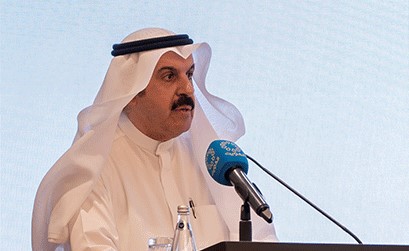
Kuwait hosted today, Monday, the 2026 Applications and Capacity Building Workshop for the Middle East and North Africa Financial Action Task Force (MENAFATF), under the patronage and presence of the Minister of Finance.
Translated by Qiyas from الأنباء — Original source
Kuwait hosted today, Monday, the 2026 Applications and Capacity Building Workshop of the Middle East and North Africa Financial Action Task Force (MENAFATF), represented by the National Committee for Combating Money Laundering and Financing of Terrorism, under the patronage and presence of Minister of Finance Dr. Yaqoub Al-Rafai.
Minister Al-Rafai stated in his speech during the workshop that Kuwait’s hosting of the event embodies the importance of joint cooperation and the exchange of expertise and knowledge in the field of combating money laundering and the financing of terrorism, stemming from its firm commitment to continuously enhancing its national system in collaboration with its regional and international partners.
He added that the workshop aims to develop the technical and institutional capacities of professionals in this field and to review the latest international developments and practices, thereby enhancing the preparedness and compliance levels of relevant authorities.
He emphasized that combating these crimes is a shared responsibility that requires concerted efforts and coordination among national, regional, and international authorities to protect financial and economic systems from exploitation in illegal activities, and to enhance transparency, integrity, and trust in financial institutions.
He noted that this workshop represents an important tool in building knowledge expertise, refining technical skills, and strengthening the institutional competencies required by professionals in this vital field, enabling them to keep pace with rapid developments and deal efficiently with emerging challenges and risks. It also contributes to countering practices that seek to undermine or exploit financial and economic systems, and enhances the ability of institutions to perform their supervisory and preventive roles efficiently and effectively.
Dr. Al-Rafai expressed his sincere gratitude and appreciation to all entities involved in organizing the workshop, as well as to all participants, experts, and speakers for their valuable contributions. He wished the workshop’s proceedings success and success in achieving its desired objectives, and contributing to supporting and enhancing joint efforts in combating money laundering and the financing of terrorism.
For his part, Hamed Al-Zubaidi, Chairman of the Middle East and North Africa Financial Action Task Force (MENAFATF), said in a similar speech that capacity building is a key priority in MENAFATF’s work due to its direct role in enhancing the ability of member states to protect their financial systems and effectively combat money laundering, the financing of terrorism, and the financing of weapons proliferation.
Al-Zubaidi added that the success of national systems depends on competent professionals capable of understanding risks, analyzing information, and taking appropriate actions in a timely manner, noting that investing in national competencies is an investment in the security and financial and economic stability of countries.
He clarified that the importance of this workshop lies in bringing together expertise and experiences regarding issues directly related to the work of competent authorities, from detecting financial crimes to investigating them and recovering the proceeds.
He noted that the workshop’s significance also lies in providing a platform to discuss the challenges faced by countries, benefit from proven successful solutions, and enhance communication among specialists, considering this collaboration essential for the region in confronting crimes that transcend national borders and constantly change their methods.
He stated that the evolution of criminal patterns necessitates continuous development in countermeasures, as the speed of transfers, the multiplicity of digital platforms, and the misuse of virtual assets provide additional means for transferring funds and concealing their sources and beneficiaries.
Al-Zubaidi pointed out that these changes require updating risk understanding, developing supervisory and financial analysis tools, and enhancing the ability of competent authorities to exchange and handle information quickly.
He noted that the development of financial services must be accompanied by advancements in the capacity to protect them from exploitation, thereby bolstering trust in these services and safeguarding the integrity of the financial system.
He emphasized that the workshop covers the importance of partnerships between the private sector, regulatory authorities, financial intelligence units, law enforcement agencies, and judicial bodies, explaining that each entity possesses information and authorities that contribute to the successful confrontation of financial crimes and enhance coordination among them to enable timely action.
For his part, Dr. Hamad Al-Mukarrad, Chairman of the National Committee for Combating Money Laundering and the Financing of Terrorism and Head of the Kuwait Financial Intelligence Unit, stated in a similar address that the workshop takes place at a time when criminals’ methods are evolving at an accelerating pace. He pointed out that fraud operations have become cross-border, digital platforms are increasingly involved, and virtual assets, digital wallets, and artificial intelligence technologies are susceptible to exploitation for concealing criminal proceeds and financing terrorism.
Dr. Al-Mukarrad added that the workshop discusses three main pillars: financial fraud, illicit financial flows, asset recovery, and the relationship between technology and the financing of terrorism, aligning with the priorities of the Financial Action Task Force (FATF) Presidency for the period (2026–2028).
He clarified that the workshop aims to enhance the capacities of specialists in combating money laundering, the financing of terrorism, and the financing of weapons proliferation within government entities in member countries by discussing the latest trends, methods, and patterns used in money laundering and terrorism financing at national, regional, and international levels.
He noted that the workshop also aims to strengthen the capacities of specialists by reviewing practical cases, applied studies, and the experiences of member countries to benefit from best practices, while contributing to improving the efficiency of personnel in regulatory and financial bodies, financial intelligence units, and law enforcement agencies.
He indicated that this workshop is among the most prominent regional specialized events in the field of combating money laundering, the financing of terrorism, and the financing of weapons proliferation. It takes place within the framework of cooperation with the Middle East and North Africa Financial Action Task Force (MENAFATF), as the regional body responsible for supporting member countries’ efforts to implement relevant international standards, enhance cooperation, exchange expertise, and build capacities among member states.
Al-Mukarrad pointed out that this workshop holds particular significance at the regional level, as it serves as a specialized platform bringing together a select group of experts, technicians, and practitioners in the field of combating money laundering and the financing of terrorism from various countries and relevant entities, including regulatory and financial bodies, financial intelligence units, and law enforcement agencies.
He explained that Kuwait’s hosting of this workshop reaffirms its firm commitment to supporting regional and international efforts aimed at enhancing the effectiveness of money laundering and terrorism financing countermeasures, thereby contributing to consolidating joint cooperation and developing national and regional capacities in this vital field.
