Kuwait Participates in the 126th Meeting of the GCC Financial and Economic Cooperation Committee
&cropxunits=450&cropyunits=290&w=770)
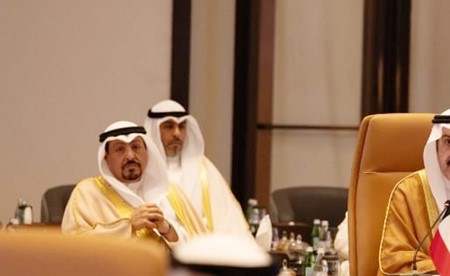
Kuwait participated in the 126th session of the Financial and Economic Cooperation Committee of the Gulf Cooperation Council (GCC), held in the Bahraini capital, Manama. The Kuwaiti delegation was chaired by Minister of Finance Dr. Yaqoub Al-Rifai, alongside the finance and economy ministers of the GCC member states.
The meeting was held to enhance financial and economic cooperation and coordination among GCC countries and to support the trajectory of joint Gulf action. The Committee reviewed recommendations submitted by the Committee of Central Bank Governors, the GCC Customs Union Authority, and the Common Market Committee, as well as the latest developments in negotiations for free trade agreements between the GCC and other international countries and groups, aiming to advance Gulf economic integration.
The Committee emphasized the importance of accelerating financial and economic integration among member states, enhancing the alignment of customs and tax policies, facilitating trade and investment flows, strengthening the efficiency and resilience of supply chains, boosting the competitiveness of the Gulf economy, and creating a more integrated economic environment capable of adapting to international economic changes and challenges.
On the sidelines of the Financial and Economic Cooperation Committee meeting, a joint session was held with the finance and economy ministers and central bank governors of the GCC, the GCC Secretary-General, and International Monetary Fund (IMF) Managing Director Kristalina Georgieva. Georgieva presented a report titled “Economic Outlooks and Policy Challenges in the GCC and Enhancing Economic Resilience in the Face of Geopolitical Shocks.”
The report highlighted key policy-related economic challenges and ways to strengthen economic resilience and boost the GCC’s capacity to confront geopolitical shocks and their repercussions, thereby supporting stability and sustainable economic growth in the region. The meeting also discussed several papers and topics, including the economic outlook and policy challenges, economic resilience and security in the GCC, and digital assets in GCC countries—examining the current reality, opportunities, and financial risks.
The joint meeting aligns with efforts to enhance the regional and international presence of the GCC, reflecting the member states’ commitment to supporting international dialogue and coordination on priority financial and economic issues.
During its participation in the Financial and Economic Cooperation Committee meeting, Kuwait reaffirmed its commitment to continuing support for joint Gulf economic action, strengthening cooperation and integration frameworks among member states, contributing to sustainable development goals, and consolidating the position of the Gulf system as an integrated economic bloc capable of keeping pace with global economic transformations and capitalizing on future opportunities.
Separately, Minister of Finance Dr. Yaqoub Al-Rifai met with IMF Managing Director Kristalina Georgieva. The meeting discussed the latest developments regarding the Memorandum of Understanding (MoU) for financing the IMF Center in Kuwait, and reviewed the necessary steps and arrangements to complete the signing procedures. This reflects Kuwait’s keenness to enhance cooperation and coordination frameworks with the IMF and support its role in areas of mutual interest in finance and economics.
Managing Director Georgieva praised Kuwait’s pivotal and dynamic role in driving economic and financial stability in the region. She noted that Kuwait’s success in containing the repercussions of the recent crisis stems from prudent policies, effective crisis management, the utilization of strong financial buffers, and balanced monetary policies to protect vital economic sectors and achieve sustainable recovery.
In conclusion, both sides emphasized Kuwait’s ongoing commitment to strengthening coordination and strategic partnership frameworks with the IMF, and working to complete all necessary procedures and arrangements for signing the MoU on financing the IMF Center in Kuwait. This will contribute to supporting and delivering training courses and developing cooperation in areas of mutual interest in finance and economics.
