Deputy Minister of Oil: Kuwait Supports Enhancing Joint Efforts to Address Market Changes
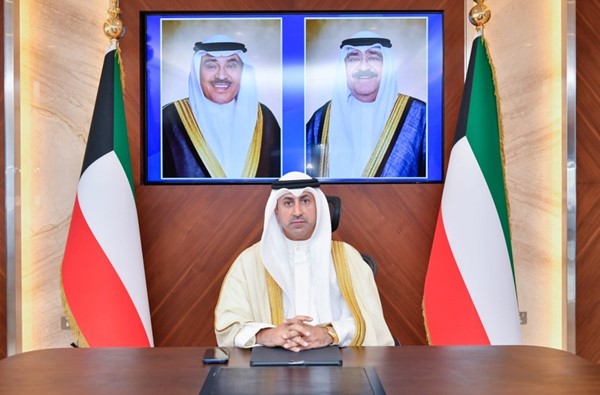
The Committee of Petroleum Cooperation Secretaries-General of the Gulf Cooperation Council (GCC) countries held its twentieth meeting yesterday via video conferencing, with the participation of Kuwait’s Undersecretary of the Ministry of Oil, Sheikh Dr. Nimer Fahad Al-Malik Al-Sabah. The meeting discussed a number of topics and files related to enhancing the trajectory of joint GCC efforts in the energy sector.
The Ministry of Oil stated that the meeting addressed a range of strategic issues reflecting the broadening scope of GCC cooperation in the energy sector, foremost among them the updated energy strategy, energy security and just and balanced transition, the regional emergency plan for petroleum products, alongside relevant international legislative and commercial developments pertaining to the energy sector.
In this context, the Undersecretary of the Ministry of Oil, Sheikh Dr. Nimer Fahad Al-Malik Al-Sabah, noted that the meeting explored ways to develop GCC coordination mechanisms to keep pace with the rapid changes occurring in the energy sector regionally and internationally. He emphasized the importance of continuing joint efforts to support energy security, the reliability and sustainability of supplies, while taking into account the national priorities and circumstances of GCC member states.
He pointed out that the meeting discussed the updated energy strategy, which represents a broader framework for GCC cooperation in the sector and encompasses various energy sources. He also highlighted the importance of aligning the work of relevant committees and technical teams with this strategy, thereby translating its objectives into actionable programs and implementable, monitorable pathways.
Furthermore, he added that the regional emergency plan for petroleum products was among the files discussed, as part of efforts to enhance GCC readiness and raise the level of coordination among competent authorities to handle emergencies and disruptions that could affect supplies and supply chains. The meeting also discussed developments related to cross-border European legislation and measures and their potential repercussions on the energy sector and companies of the GCC states.
