Iraqi-Kuwaiti proactive coordination to combat drugs and secure borders; Iraq will not be a source of threat to its neighbors
&cropxunits=300&cropyunits=450&w=150)
Osama Diab
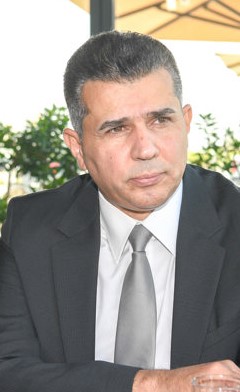
Iraq’s Security Media Cell chief, Major General Saad Maan, stated that the Iraqi delegation’s visit to Kuwait aims to strengthen fraternal relations and maintain continuous coordination between the two countries, particularly in the security and media sectors. He emphasized the importance of unifying security messages and enhancing direct communication channels to counter rumors and prevent any misunderstandings arising from the circulation of inaccurate information.
Speaking to journalists on the sidelines of the visit, accompanied by Iraqi Armed Forces Commander-in-Chief spokesperson and Security Media Cell chief, and official spokesperson for Iraq’s military and security institutions on security and military issues, Sabah Al-Nuaiman, and their accompanying delegation, Maan explained that Iraq’s security media is linked to the Office of the Commander-in-Chief of the Armed Forces. It is responsible for coordinating and organizing security media across various security institutions, including the Ministries of Interior, Defense, and National Security, the Popular Mobilization Forces (PMF), and the Peshmerga, as well as engaging with foreign media.
He clarified that the visit to Kuwait aims to organize and develop the existing relationship between the two countries and achieve “shared security messages.” He noted that one of the priorities is combating rumors that periodically emerge by establishing direct communication channels between Iraq’s security media and their counterparts in Kuwait’s Ministry of Interior and Ministry of Defense.
Maan added, “Any story or issue unclear to the public will have a direct point of contact and immediate clarification, thereby eliminating ambiguity or gaps, with instant resolution.” He noted that both sides agreed on several matters, including reciprocal visits, coordination in academic security fields, enhancing media capabilities and efficiency, and exchanging expertise.
He affirmed that the meetings held by the Iraqi delegation with officials in Kuwait’s Ministry of Interior, followed by a technical meeting involving media directors from the Ministries of Interior and Defense and relevant media departments, marked a “genuine starting point for Iraqi-Kuwaiti security cooperation.”
Maan stated that Iraq is navigating a “tense” regional environment but remains committed to avoiding any war and preserving its gains. He underscored the importance of maintaining good relations with all neighboring countries, foremost among them Kuwait. He added that preserving these relations extends beyond diplomacy to include “soft power, communication environments, and shared interests,” noting that minor issues can be overcome through direct communication.
Regarding whether Iraqi territory had been used to target neighboring countries, Maan stated that some strikes attributed to Iraq did not originate from Iraq. He pointed out that the country’s vast size and the presence of over one million non-Iraqis necessitate careful verification of information.
Maan warned against what he termed “news laundering,” where information from unknown sources is transferred to other outlets and treated as if it originated from official Iraqi authorities. He stated that media can play a role in “poisoning ideas and memory,” emphasizing that Iraq is working to enhance its media and technical capabilities to counter disinformation and the distortion of the country’s image.
He added that security media is no longer limited to announcing military operations but has become “influential media” given the impact of social media on youth and public opinion. This requires improving media performance and addressing unreliable news that may affect Iraq’s image.
In the area of combating drugs and organized crime, Maan described cooperation between Iraq and Kuwait as one of the most successful areas in recent times, citing a joint operation to combat drugs and psychotropic substances coordinated between the two sides. He explained that cooperation has become “proactive,” involving the exchange of information before operations occur, not just after. He noted that the two-way flow of information has significantly reduced drug smuggling and trafficking between the two countries, alongside the possibility of conducting joint field operations within legal frameworks.
For his part, Sabah Al-Nuaiman, spokesperson for the Commander-in-Chief of the Iraqi Armed Forces, head of the Security Media Cell, and official spokesperson for Iraq’s military and security institutions on security and military issues, affirmed that Iraqi security forces have taken control of the country’s security file and that Iraq will not allow its territory to be a source of threat to any neighboring country.
He stated that Iraqi security forces are deployed across various regions and are now capable of managing Iraq’s national security file, coinciding with the completion of arrangements for the end of the International Coalition’s mission. He emphasized that Iraq’s official position is clear: “We will not allow Iraq to be a source of threat to any neighboring country, nor will we allow Iraq to be threatened or attacked by any neighboring state.”
He noted that the process of regulating weapons and developing security and military capabilities is progressing rapidly, enhancing Iraq’s forces’ ability to protect the country and maintain security. He clarified that the end of the International Coalition’s mission came at Iraq’s request and following an assessment of the readiness of Iraqi security forces and their human and armament capabilities to assume the security file.
He indicated that the coming phase will see the transition of security relations with countries that supported Iraq during the war against ISIS to a framework of bilateral cooperation, including the United States, the United Kingdom, France, Germany, and others. He stated that this cooperation will include “intelligence sharing, training, armament, and capability development” based on an equal and equitable relationship. He affirmed that the end of the Coalition’s mission does not mean the end of cooperation with countries that supported Iraq, but rather its transition to a new phase based on Iraqi sovereignty and equitable relations.
Regarding ISIS, Al-Nuaiman explained that the organization has significantly diminished, with the number of remaining elements reduced to dozens, concentrated in mountainous and remote areas, particularly in parts of Kirkuk, and absent from cities.
He noted that confronting the remaining elements of the organization relies primarily on intelligence efforts and target identification, alongside coordination with the Air Targeting Cell and the Iraqi Air Force’s capability to conduct strikes.
He praised the role played by the International Coalition, particularly the United States, in the previous phase of fighting ISIS. He clarified that the Coalition, established in 2014, was created for a specific mission to combat the organization, and the expiration of the mission’s rationale opens the way for a new phase of bilateral security cooperation.
Al-Nuaiman affirmed that Iraq will continue to develop its capabilities in armament, training, and information sharing while maintaining security relations with its international partners. He noted that the coming phase will be based on bilateral cooperation within the framework of Iraqi sovereignty.
