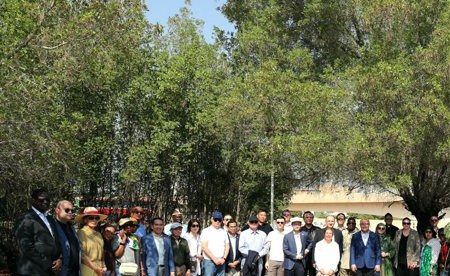
More than 60 embassies and international organizations participate in the "Kuwait Plants" campaign
&cropxunits=450&cropyunits=300&w=770)
Dr. Amira Al-Hasan, Head of the United Nations Human Settlements Programme (UN-Habitat) mission to the State of Kuwait and the Arab Gulf states, emphasized the importance of enhancing community participation in greening efforts and addressing the impacts of climate change. She noted that the “Kuwait Plants” campaign, in its new season, continues to work on translating environmental awareness into practical and sustainable initiatives.
In a statement to KUNA marking the launch of the campaign’s new 2026–2027 season, through a greening event organized by UN-Habitat in cooperation with the diplomatic corps accredited to the State of Kuwait, Al-Hasan said that the participation of more than 60 embassies and international organizations accredited in the country reflects interest in environmental and sustainability issues, as well as the importance of international and community partnerships in supporting greening efforts.
She added that the campaign aims to highlight Kuwait’s efforts to address the impacts of climate change and its endeavors to reduce emissions and achieve carbon neutrality, raise awareness of the importance of increasing green spaces, support youth and popular and volunteer initiatives, and involve the community and the diplomatic corps in greening efforts.
Al-Hasan explained that the participation of ambassadors, diplomatic mission representatives, and international organizations in tree planting conveys a message of friendship, cooperation, and shared responsibility toward the environment, and contributes to supporting efforts aimed at building a more sustainable urban environment in Kuwait.
Regarding the Kuwaiti-Turkish Friendship Park (formerly Al-Nile Park), Al-Hasan affirmed that the field work to develop the park was carried out with 100 percent Kuwaiti funding, Kuwaiti hands, and Kuwaiti volunteer efforts, with the participation of local residents, volunteers, and the “Enviro Group” volunteer team. She noted that UN-Habitat’s role focused on awareness-raising, guidance, knowledge transfer, and capacity building for volunteers.
She said, “We handed them the shovels, and they did the work with their own hands. Today, the local volunteer team is taking the lead, completing the work, developing the park, and maintaining it.” She added that the conclusion of UN-Habitat’s executive role and the transfer of the initiative’s responsibility to the local community is one of the key indicators of its success, stating, “Our role today is to return to the park as visitors, enjoy the results of the greening achieved by Kuwaiti hands, and see community members continuing to develop what we started together with them.”
