Al-Shumaim: The group's geographic diversity supports sustainable growth and operational resilience
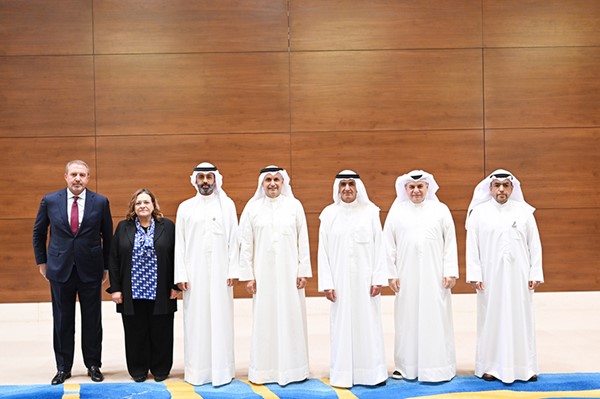
Khalid Al-Shamlan, Chief Executive Officer of Kuwait Finance House (KFH), emphasized that enhancing readiness to face challenges, accelerating responsible innovation, developing capital markets, and supporting sustainability are fundamental priorities to ensure long-term economic growth and financial stability in Kuwait.
Al-Shamlan made these remarks during his participation in the Roundtable on Banking and Economic Affairs, hosted by the Central Bank of Kuwait in partnership with Global Finance magazine. The event brought together a select group of senior banking leaders to discuss developments in Kuwait’s banking sector, economic outlooks, and growth opportunities.
The roundtable was held with the gracious participation of Bassel Al-Haroun, Governor of the Central Bank of Kuwait, forming a platform for constructive dialogue on the resilience of Kuwait’s banking sector, efforts toward economic diversification, sustainable growth, and the future of financial services amid rapid regional and global changes.
**Enhancing Readiness to Face Challenges**
Commenting on the impact of recent geopolitical developments on the banking sector, Al-Shamlan stressed that readiness must be strengthened before disruptions occur, not during them. He noted that maintaining strong capital and liquidity levels, diversifying funding sources, and implementing robust stress-testing frameworks and contingency plans are essential pillars for safeguarding long-term financial stability.
He added: “Thanks to the prudent oversight of the Central Bank, Kuwait’s banking sector boasts strong balance sheets, disciplined liquidity, effective governance, and entrenched trust.”
Latest financial safety indicators show that Kuwait’s banking sector maintains a capital adequacy ratio of 18.5% and a non-performing financing ratio of 1.6%, reflecting the strength of local banks.
Al-Shamlan further clarified that the concept of resilience today extends beyond traditional financial metrics to include diversified funding sources, cyber readiness, awareness of supply chain importance, scenario planning, and the ability to serve customers under various conditions.
He affirmed that KFH integrates resilience into its business continuity plans and digital infrastructure to ensure the availability of critical banking and digital services even in adverse conditions. He noted that the Group’s geographic diversity also supports sustainable growth and operational resilience.
**Priorities of the Kuwaiti Banking Sector**
Al-Shamlan pointed out that Kuwait’s banking sector has made significant progress in digital transformation and artificial intelligence, noting that the next phase depends on banks’ ability to enhance their efforts in leveraging capital, technology, and human resources to support the economy.
He highlighted the importance of the Real Estate Financing Law and the Real Estate Developer Law, describing them as initiatives capable of addressing housing demand and stimulating economic activity.
Al-Shamlan noted that, according to the latest data from the Public Authority for Housing Welfare, more than 108,000 Kuwaiti families currently have pending housing applications. He explained that the Real Estate Financing Law will contribute to providing effective financing solutions that will accelerate the pace of housing project development and reduce waiting periods.
He also indicated that the law is expected to raise credit growth in the banking sector from its current level of 6–7% to approximately 8–9%, creating new growth opportunities and enhancing asset and liability management capabilities across the entire sector.
**Developing Capital Markets**
Commenting on the development of capital markets, Al-Shamlan explained that Kuwait’s Financing and Liquidity Law has established a comprehensive framework enabling the government to obtain financing locally and internationally within a debt ceiling of 30 billion Kuwaiti Dinars, with repayment periods extending up to 50 years.
He noted that the importance of the law lies not only in enabling the government to secure financing, but also in its pivotal role in laying the foundation for building a deeper and more efficient financial market, and empowering the state to utilize and manage its assets more effectively.
He clarified that sovereign bonds and sukuk play a central role in enhancing liquidity management and consolidating financial stability. They also contribute to building a local sovereign yield curve, which provides banks and companies with a benchmark for pricing and issuing debt instruments in the domestic market, rather than relying on international markets.
Al-Shamlan also highlighted the strong demand witnessed by Kuwait Central Bank’s issuances in June 2026, where treasury bills and general debt securities valued at 550 million dinars were offered and fully subscribed across all tranches. This reflects investor confidence and underscores the significant potential for further development in the market. He added that the Government Sukuk Law will help expand Islamic capital markets in Kuwait and attract a broader base of investors.
Technological Innovation
Regarding technological innovation, Al-Shamlan emphasized that artificial intelligence is playing an increasingly important role in the present and future of banking. He explained that the pace of technological innovation is accelerating significantly, but the challenge lies in how to deploy these technologies safely and responsibly.
He added that maintaining and enhancing trust is a fundamental element for banks, noting that the success of artificial intelligence is measured by the value it adds to customers and its ability to improve efficiency and the quality of decision-making.
ESG Standards Integral to Bank’s Strategy and Aligned with Islamic Finance Principles
In the field of sustainability, Al-Shamlan clarified that Environmental, Social, and Governance (ESG) standards have evolved from mere disclosure requirements into a core strategic element within the governance framework, risk management, financing policies, and disclosures across the banking sector. He pointed out that sustainability is increasingly driven by the objectives of Kuwait Vision 2035, alongside the evolving expectations of regulators, investors, and credit rating agencies.
Al-Shamlan stated: “At Kuwait Finance House, Islamic finance standards align with sustainability principles by creating long-term value for society. ESG standards are an integral part of our strategy, and we provide financing based on environmental and social risks, supported by board oversight and a specialized sustainability management team. We also publish an annual carbon footprint report alongside our sustainability report. The Central Bank’s instructions on sustainable financing, since 2022, have helped drive the sector toward enhancing disclosures and implementing ESG policies approved by the Board of Directors.”
Concluding his remarks, Al-Shamlan said: “Building a sustainable banking sector requires a balanced approach that combines financial strength, responsible innovation, sound governance, and sustainable growth. These pillars will continue to support Kuwait’s economic development and prosperity in the long term.”
