Saudi Ambassador: The Kingdom’s relations with Kuwait are “exceptional,” and it is difficult to encapsulate them in volumes or books due to their historical depth
&cropxunits=307&cropyunits=450&w=150)
Osama Diab
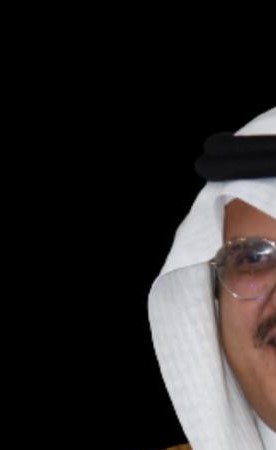
The Dean of the Diplomatic Corps, His Excellency Ambassador of the Custodian of the Two Holy Mosques to the State of Kuwait, His Highness Prince Sultan bin Saad bin Khalid Al Saud, affirmed that Saudi National Day represents an occasion to recall the journey of unifying the Kingdom and building the modern state under the leadership of the Founding King, Abdulaziz bin Abdulrahman Al Saud, may God have mercy on him. He noted that the renaissance and development witnessed by the Kingdom today are the fruits of a prolonged journey of construction, work, and development.
Prince Sultan bin Saad, in a phone intervention on Al-Akhbariya Channel, stated that National Day is not merely an occasion for celebration, but rather an opportunity to recall the Kingdom’s history and the achievements realized since the founding stage. He pointed out that the ambitions of the Founding King have, through decades of continuous effort, transformed into a tangible reality that the Kingdom experiences today.
Regarding the particularity of celebrating Saudi National Day in Kuwait, Prince Sultan bin Saad said, “From here, in Kuwait, the journey of unifying the Kingdom of Saudi Arabia began; therefore, the celebration in Kuwait has a different flavor.” He expressed his hope for the continuation of shared joys and occasions between the Kingdom, Kuwait, and the Gulf Cooperation Council (GCC) countries, given the deep-rooted historical, social, and cultural ties that unite the peoples of the region.
The Saudi Ambassador recalled King Abdulaziz’s journey in unifying the Kingdom, clarifying that the Founder’s vision did not stop at unifying the country, but extended to building a stable state capable of continuing development and consolidating its institutions.
He added that the Kingdom continued its journey of construction and development through the eras of the Founding King’s sons, leading to the era of the Custodian of the Two Holy Mosques, King Salman bin Abdulaziz. He noted that the Kingdom’s experience underscores the importance of having several pillars in state-building and achieving accomplishments, foremost among them being “a clear vision, will, investment in human capital, and continuity of work.”
He affirmed that these principles formed fundamental pillars in the Kingdom’s journey, contributing to its transition from the founding stage to advanced stages of development and progress.
Prince Sultan bin Saad pointed out that the Saudi citizen represents one of the most important fruits of the construction and development journey, given the presence and distinction achieved in various fields. He emphasized that investment in human capital has remained a central axis of the Saudi renaissance.
He clarified that the Kingdom continues to build upon what King Abdulaziz established and what his sons continued after him, with the aim of elevating the citizen and enhancing their capabilities, alongside consolidating the Kingdom’s presence and status regionally and internationally.
Speaking about Kuwaiti-Saudi relations, Prince Sultan bin Saad described the ties between the two countries as “exceptional,” emphasizing that they are difficult to encapsulate in volumes or books due to their historical depth and the intricate web of ties uniting the two countries and their peoples.
He stated that the relationship between Kuwait and the Kingdom is not a product of official diplomatic relations alone, but extends back more than 150 years of historical, geographical, and social ties, which has given it a particularity that transcends the nature of traditional state-to-state relations.
He affirmed that this relationship has withstood various conditions and changes, stressing that what unites Kuwait and the Kingdom of Saudi Arabia is greater than what can be confined to a single political, economic, or social framework.
Regarding the common denominators between the Kuwaiti and Saudi peoples, Prince Sultan bin Saad clarified that the ties between them are multifaceted, foremost among them being religion, customs, traditions, and social values.
He noted that generosity, chivalry, and nobility represent an important aspect of the shared value system, emphasizing that these values embody the depth of closeness between the two societies, alongside deep-rooted historical, cultural, and social ties.
Regarding the developments the Kingdom is witnessing across various sectors, the Saudi Ambassador stressed that these current transformations are the result of a cumulative process of planning, work, and investment in human capital, the economy, and infrastructure, rather than the outcome of a single phase.
He clarified that these pillars have contributed to building a foundation from which the Kingdom has embarked on new stages of development, emphasizing the Saudi leadership’s commitment to continuing to build upon the achievements of previous generations.
He noted that Saudi Vision 2030 represents a continuation of this approach, by enhancing the capabilities of Saudi citizens, supporting the national economy, and advancing the development process, in line with the Kingdom’s aspirations for the future and to strengthen its presence and standing.
