Ministry of Education Officially Announces the National Program for Preparing and Qualifying New Teachers, 'Trainee Teacher'
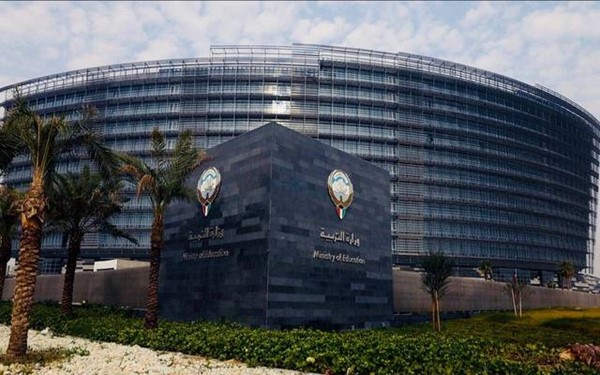
Launch of a national program to qualify teachers according to international standards.
Translated by Qiyas from الأنباء — Original source
In the context of the Ministry of Education’s efforts to develop the teacher preparation system and enhance the readiness of educational personnel for entry into the teaching profession, and based on Law-Decree No. (86) of 2026 and the subsequent Ministerial Decision establishing the job title “Trainee Teacher” and defining the conditions and regulations for holding the position, the Ministry of Education announced the “National Program for Preparing and Qualifying New Teachers.” This initiative aligns with its strategy to build an integrated system for the professional, pedagogical, and practical preparation of teachers before they fully engage in the teaching profession.
The Ministry of Education stated that the project resulted from specialized educational studies and a series of meetings and conferences held by Minister of Education Eng. Syed Jalal Al-Tabatabai with a number of educators and specialists, alongside the work of specialized teams tasked with studying the requirements for preparing new teachers and the needs of the educational field. This led to the formulation of a comprehensive program vision based on recognized global foundations, standards, and practices, thereby supporting the quality of the educational process and enhancing learning outcomes, in line with the state’s direction toward investing in human capital and achieving the targets of the “New Kuwait 2035” vision.
In this regard, the Ministry of Education clarified that the “Preparing and Qualifying New Teachers” project represents an integrated national pathway for preparing and qualifying teachers before their permanent appointment in the teaching profession. This contributes to strengthening the integration between theoretical academic preparation and actual practice within the educational field, enhancing the cognitive, pedagogical, professional, and psychological readiness of new teachers, and supporting their stability during their first years of service.
The Ministry indicated that the program was developed by a group of elite educators with diverse expertise. It is based on a mandatory qualification program spanning a full academic year, combining theoretical training with practical field training in schools, in accordance with globally recognized standards for preparing new teachers, notably the InTASC standards.
The Ministry of Education noted that the program is guided by the InTASC standards, which are among the most prominent global frameworks for preparing new teachers. These standards focus on four main domains: the learner, content, teaching practice, and professional responsibility, within three primary dimensions: teaching performances, foundational knowledge, and professional values. The framework includes ten core standards and sub-standards that integrate knowledge of the learner, content, teaching practice, and professional responsibility.
The Ministry emphasized that the program’s design took into account its compatibility with the national values of the State of Kuwait, while adhering to global standards. This allows for its phased development and continuous improvement, and prepares it for future international accreditation once governance and accreditation requirements are fully met. This will transform it into an internationally accredited program for preparing and qualifying new teachers for the teaching profession, thereby promoting learning through practice, enhancing the reliability of program outcomes, and increasing the competitiveness of national competencies.
The Ministry pointed out that the program aims to ensure that new teachers possess the necessary professional competencies before appointment to the teaching profession, improve the quality of teaching performance in classrooms, enhance professional stability, and reduce challenges associated with the first years of service. Additionally, it seeks to reinforce the ethics of the teaching profession, protect learners, and establish a national model that is eligible for accreditation and development in accordance with best global practices.
The Ministry of Education stated that the program is based on a vision to prepare a new generation of highly competent teachers capable of entering the teaching profession and applying best educational practices in accordance with approved national and international standards, thereby positively impacting learning quality. Its mission is to prepare and empower new teachers through a comprehensive training pathway that integrates theoretical preparation with field-based practical application, fosters well-being and psychological readiness, and reinforces professional ethics and learner protection. This ensures teachers’ readiness for instruction, supports performance quality, and promotes professional sustainability within schools.
It clarified that professional qualification for new teachers is divided into 45% theoretical training and 55% field training within schools. To pass the program and obtain the required qualification, candidates must achieve a minimum score of 75%. Failure to meet this threshold results in the teacher’s appointment in an administrative position, consistent with their university qualification in education.
The Ministry indicated that the target group includes graduates from other colleges and universities, subject to needs and approved regulations. Within the project, new teachers will be designated as “trainee teachers,” in accordance with the numbers required by the Ministry of Education.
The Ministry emphasized that the program aims to develop new teachers’ practical classroom practice skills in planning, implementation, classroom management, and assessment. It seeks to enable them to apply appropriate strategies for addressing students’ individual differences and special cases in the classroom, while enhancing self-awareness, psychological readiness, and professional resilience. These efforts support performance quality, mitigate the effects of work-related stress, and promote positive professional behavior.
The Ministry added that the program’s objectives also include developing collaboration and educational leadership skills, working within school teams, and participating in professional learning communities, thereby fostering a culture of shared responsibility. Additionally, it aims to reinforce the ethics of the teaching profession, adherence to job rights and duties, principles of learner protection, and the safety of the school environment.
The Ministry noted that the project also aims to enhance Kuwait’s international educational standing by investing in creative human capital and qualifying teachers capable of competing in Gulf and international forums. This supports educational quality, contributes to raising Kuwait’s global rankings, and ensures that new teachers possess approved professional competencies before entering the teaching profession. This enables their effective integration into the education system, supports their professional continuity, and helps achieve the Ministry’s educational goals.
On the digital front, the Ministry clarified that the project includes adopting the “Dal” platform and creating an electronic portfolio (E-Portfolio) for each new teacher to monitor their performance, professional progress, and document their qualification stages. The trainee teacher’s electronic portfolio will be accessible via the “Dal” platform under the title “Trainee Teacher Guide” on the Ministry of Education’s website, thereby supporting digital transformation in monitoring, evaluation, and professional development processes.
The Ministry pointed out that the project’s implementation relies on the integrated roles of several entities, including the General Administration for Development and Improvement at the Ministry of Education, approved and specialized trainers, and schools as sites for field training. It also involves technical guidance counselors, educational supervisors, and school leaders, providing a comprehensive system that combines theoretical qualification, practical application, and professional follow-up.
In conclusion, the Ministry affirmed that the expected outcomes of the project are to prepare teachers who can understand learners’ characteristics and account for individual differences, are proficient in classroom management and the application of effective teaching methods, and possess skills in planning, assessment, and continuous professional learning. These outcomes will contribute to improving the performance quality of new teachers before they are confirmed in their positions, and will support the sustainability of professional development and the quality of educational outputs.
