Al-Rifai: Elevating Government Financial Management Is a Pillar of Reform and Development
&cropxunits=450&cropyunits=253&w=770)
Ali Ibrahim
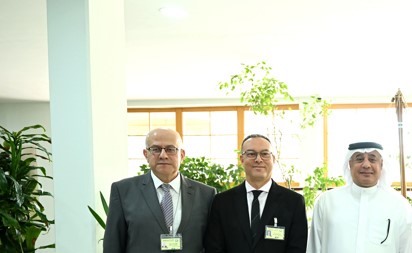
Finance Minister Dr. Yaqoub Al-Rifai affirmed that elevating the government financial management system and enhancing its efficiency and effectiveness constitute a fundamental pillar in the journey of reform and development, reflecting the state’s continuous commitment to strengthening the principles of integrity, transparency, and governance, optimizing the use of public resources, and safeguarding public funds.
He made these remarks in a speech delivered on Sunday at the launch ceremony for the program aimed at enhancing integrity, transparency, and governance in financial performance within government entities. The event was held at the Arab Institute for Planning and is implemented by the Financial Supervisory Authority.
Al-Rifai added that the role of the Financial Supervisory Authority is central to supporting this system through its oversight and financial responsibilities, promoting compliance with legislation and regulations, and providing advice and guidance to government entities. These efforts contribute to improving the quality of financial performance, enhancing the efficient use of state resources, and supporting reform and development initiatives.
He explained that the launch of this development plan translates the ongoing drive to continuously improve government performance, invest in national competencies, and keep pace with changes and advancements in financial management and oversight, in line with the objectives and aspirations of the “Kuwait 2035” Vision for a more efficient and effective government administration.
Al-Rifai noted that the success of these efforts requires the integration and coordination of roles among various state agencies and institutions, working as a unified team, based on the belief that improving financial performance is a shared responsibility. He emphasized that the ultimate goal is to enhance the efficiency of state institutions, protect their assets, and support the country’s development trajectory.
Al-Rifai expressed his gratitude and appreciation to the head of the Financial Supervisory Authority and all its staff for their dedicated efforts in fulfilling their national responsibilities.
For her part, Nida Al-Suhli, the acting head of the Financial Supervisory Authority, stated that the launch of the program represents one of the authority’s strategic initiatives aimed at shifting from a procedural oversight approach to a broader concept focused on capacity building, strengthening prevention, disseminating knowledge, and embedding sound financial practices.
Al-Suhli added that the implementation of the program spans four fiscal years, from April 1, 2026, to March 31, 2030, providing an appropriate timeframe for phased and sustainable work, measuring outcomes, and developing tools and practices in response to evolving conditions in the government work environment.
She clarified that the importance of this program extends beyond the authority and the entities subject to its oversight, noting that it is directly linked to Kuwait’s development journey and supports two fundamental pillars of the state’s development plan.
Al-Suhli indicated that the first pillar, “Effective Government Administration,” is embodied in efforts to build institutional capabilities characterized by efficiency, governance, integrity, and transparency in the management of public funds.
She stated that the second pillar, “Creative Human Capital,” involves investing in people as the cornerstone of any sustainable institutional development, by qualifying and empowering government financial personnel to keep pace with recent advancements in financial management, oversight, and governance.
Al-Suhli noted that the program is linked to the concept of the knowledge economy by enhancing specialized financial knowledge, leveraging best practices, and utilizing financial and technical analysis tools. These measures contribute to supporting the quality of financial decision-making, improving the efficiency of public spending, and strengthening the foundations for sustainable development within the framework of the “Kuwait 2035” Vision.
Al-Suhli highlighted that since its establishment, the authority has achieved significant milestones in safeguarding public funds, including through prior and preventive oversight exercised by financial supervisors to prevent and correct erroneous financial procedures before their execution. This effort has contributed to preserving approximately 1.5 billion dinars of public funds.
She added that this achievement is not merely a figure but embodies the value of preventive oversight and its role in supporting a fundamental national and developmental goal: enhancing the efficiency of public spending and achieving the optimal use of public resources.
