Yaqoub Al-Rifai: Elevating the Government Financial Management System and Enhancing Its Efficiency and Effectiveness
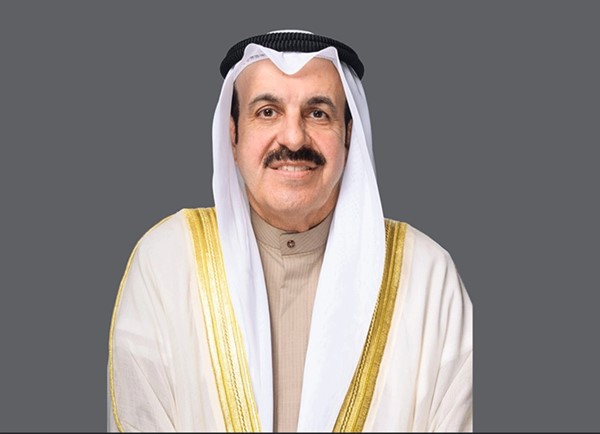
Finance Minister Dr. Yaqoub Al-Rifai stated that elevating the government financial management system and enhancing its efficiency and effectiveness constitute a fundamental pillar in the journey of reform and development. This reflects the state’s continuous commitment to strengthening the principles of integrity, transparency, and governance, optimizing the use of public resources, and safeguarding public funds.
He made these remarks during the launch conference for the Financial Supervisory Authority’s Development Plan. Al-Rifai noted that the project represents a significant step in the ongoing development of financial and supervisory operations in Kuwait.
In his address, Al-Rifai emphasized the pivotal role of the Financial Supervisory Authority in supporting this system through its supervisory and financial responsibilities, reinforcing compliance with legislation and regulations, and providing advice and guidance to government entities. These efforts contribute to improving the quality of financial performance, enhancing the efficient use of state resources, and supporting reform and development initiatives.
He added that the launch of this development plan translates the direction toward continuously improving government performance, investing in national competencies, and keeping pace with changes and developments in financial management and supervision, in line with the objectives and aspirations of the “Kuwait 2035” Vision for a more efficient and effective government administration.
He further stated, “Undoubtedly, the success of these efforts requires the integration and synergy of roles among the various state agencies and institutions, working as one team, in recognition that improving financial performance is a shared responsibility. Ultimately, the goal is to enhance the efficiency of state institutions, protect their assets, and support their developmental trajectory.”
For her part, Nida Dawood Al-Suhli, the Acting Head of the Financial Supervisory Authority, said that this occasion marks an important milestone in the Authority’s journey, represented by the launch of its development plan through the program “Enhancing Integrity, Transparency, and Governance in Financial Performance of Government Entities.”
She added that the presence of the Finance Minister, alongside a distinguished group of officials from government entities, reflects the importance of institutional partnership in elevating the public financial management system and underscores that protecting public funds and improving their efficient use is a shared national and institutional responsibility.
She noted, “The Financial Supervisory Authority Law No. (23) of 2015 stipulates fundamental objectives, foremost among which are ensuring transparency, integrity, and clarity in public financial performance, and providing financial advice and guidance to the entities under its supervision.” From this perspective, the Authority’s role extends beyond merely identifying observations or correcting financial procedures; it also contributes to building a more efficient, aware, and compliant government financial environment, and supports government entities with the advice and expertise needed to address the root causes of errors and observations and to elevate their financial practices.
In this context, the launch of the “Enhancing Integrity, Transparency, and Governance in Financial Performance of Government Entities” program is one of the Authority’s strategic initiatives. It aims to shift from a concept of procedural oversight to a broader approach focused on capacity development, strengthening prevention, disseminating knowledge, and embedding sound financial practices.
She indicated that the implementation of the program spans four fiscal years, from April 1, 2026, to March 31, 2030, providing an appropriate timeframe for phased and sustainable work, measuring results, and developing tools and practices in response to evolving conditions in the government work environment.
It noted that the importance of this program extends beyond the scope of the entity and the bodies subject to its oversight, as it is directly linked to Kuwait’s development trajectory and supports two fundamental pillars of the state’s development plan.
It pointed out that the first pillar, “Effective Government Management,” is embodied in the effort to build institutional capabilities characterized by efficiency, governance, integrity, and transparency in the management of public funds. The second pillar, “Creative Human Capital,” is represented by investing in people, regarded as the cornerstone of any sustainable institutional development, through the qualification of government financial cadres and enabling them to keep pace with recent developments in financial management, oversight, and governance.
It highlighted that the program is linked to the concept of the knowledge economy by enhancing specialized financial knowledge, leveraging best practices, and utilizing financial and technical analysis tools, thereby contributing to improving the quality of financial decision-making, enhancing the efficiency of public expenditure, and strengthening the prerequisites for sustainable development within the framework of the “Kuwait 2035” vision.
She stated, “What we aspire to achieve through this initiative is not merely the implementation of a series of workshops, but the creation of a sustainable institutional impact; an impact that reflects on the daily practices of employees in financial sectors, on the quality of procedures and systems, on the level of compliance with legislation and directives, and on the efficiency of public resource management.”
She affirmed that the program complements national trends in governance and anti-corruption and aligns with the “National Guide for Institutional Governance in the Government Administrative Apparatus,” approved by the Honorable Council of Ministers under Decision No. (377) of 2021. In particular, the guide emphasizes the importance of enhancing transparency, accountability, and integrity, reducing potential risks associated with corruption, and promoting the efficient use of resources and reinforcing accountability for their management.
She noted that since its establishment about ten years ago, the Financial Supervisory Authority has achieved significant milestones in safeguarding public funds. The prior and preventive oversight exercised by financial supervisors has contributed to preventing or correcting erroneous financial procedures before their execution, thereby helping to preserve approximately 1.5 billion Kuwaiti dinars of public funds. A financial observation detected after disbursement often requires corrective measures, which may lead to the recovery of amounts, legal proceedings, or disputes, all of which impose additional financial and administrative costs on the state. In contrast, when a flaw is identified before the completion of disbursement or commitment, we protect public funds from the outset and prevent waste before it occurs.
She affirmed that this achievement is not merely a figure, but embodies the value of preventive oversight and its role in supporting a fundamental national and developmental objective: enhancing the efficiency of public expenditure and achieving the optimal use of public resources. Accordingly, we view the upcoming phase as an extension of this role, but with more advanced tools, broader partnerships, and greater investment in knowledge and human capabilities.
She concluded by saying, “I am confident that the integration of efforts, the exchange of expertise, and the unification of vision regarding the importance of integrity, transparency, and governance will contribute to building a more efficient and sustainable government financial system, and will deliver real added value to the development journey of our beloved nation.”
For his part, Abdulrahman Al-Hadeeb, Head of the Administrative Development Department and Director of the Program for Enhancing Integrity, Transparency, and Governance in Financial Performance of Government Entities, stated that the “Program for Enhancing Integrity, Transparency, and Governance in Financial Performance of Government Entities” commenced implementation on April 1, 2026, and spans four fiscal years through March 2030. The program was designed with clear quantitative and qualitative targets, enabling a transition from planning to execution and measurement, and fostering performance development based on actual outcomes. Annually, the program aims to enhance the efficiency and capabilities of 400 financial employees from various government entities by conducting 20 specialized applied workshops in financial and supervisory fields. In addition, it provides consultancy services for the development of five legislative instruments per year, thereby strengthening integrity, transparency, and governance in government financial performance.
He added, “The program relies on practically measuring the impact of the workshops by targeting an improvement of at least 30% in the results of financial performance evaluations of employees after participating in the workshops, compared to pre-participation evaluation results. This confirms that the workshops are not merely activities that end upon completion, but rather a means to achieve tangible and measurable development in knowledge, skills, and practice.”
He noted that the Authority has ensured, in designing the program, that the workshop topics are directly linked to the practical needs and challenges within the government financial work environment. The first-year plan for 2026/2027 includes 20 specialized workshops covering key topics such as: addressing observations and exemptions noted in the Authority’s reports; procurement committee operations, practices, and tenders; financial and governmental accounting; artificial intelligence and its applications in accounting and auditing; internal audit; risk management; budget preparation; monitoring of government contracts; financial investigations; and anti-corruption and anti-money laundering efforts, among other related subjects.
He mentioned that some workshops will be repeated to expand the scope of benefit and enable participation by the largest possible number of targeted employees. A fundamental aspect of the program is measuring impact and ensuring sustainability; the level of improvement will be monitored after the workshops are conducted, participants’ feedback will be analyzed, and evaluation results will be utilized to continuously develop workshop content in line with legislative and technological updates and the evolution of financial management and supervisory practices.
He indicated that through this program, the Authority aims to enhance financial performance in government entities, strengthen governance and compliance with financial regulations, and build qualified national human resources capable of applying best practices. This will support transparency and financial discipline, contribute to improving the efficiency of public spending, and enhance the business and investment environment. He added, “We believe that achieving these targets requires close cooperation with various government entities and translating the knowledge and skills acquired through the workshops into actual, sustainable practices and procedures within the work environment.”
On this occasion, he extended sincere thanks and appreciation to His Excellency the Minister of Finance for his support and backing of the Financial Supervisory Authority, his commitment to enabling the Authority to achieve its objectives, and his support for initiatives that contribute to developing the government’s financial and supervisory work system.
He expressed hope that this program will represent an advanced practical step toward enhancing financial knowledge, consolidating governance, supporting compliance and transparency, and building qualified national capabilities that efficiently contribute to developing the government financial management system and supporting the development journey in our country.
